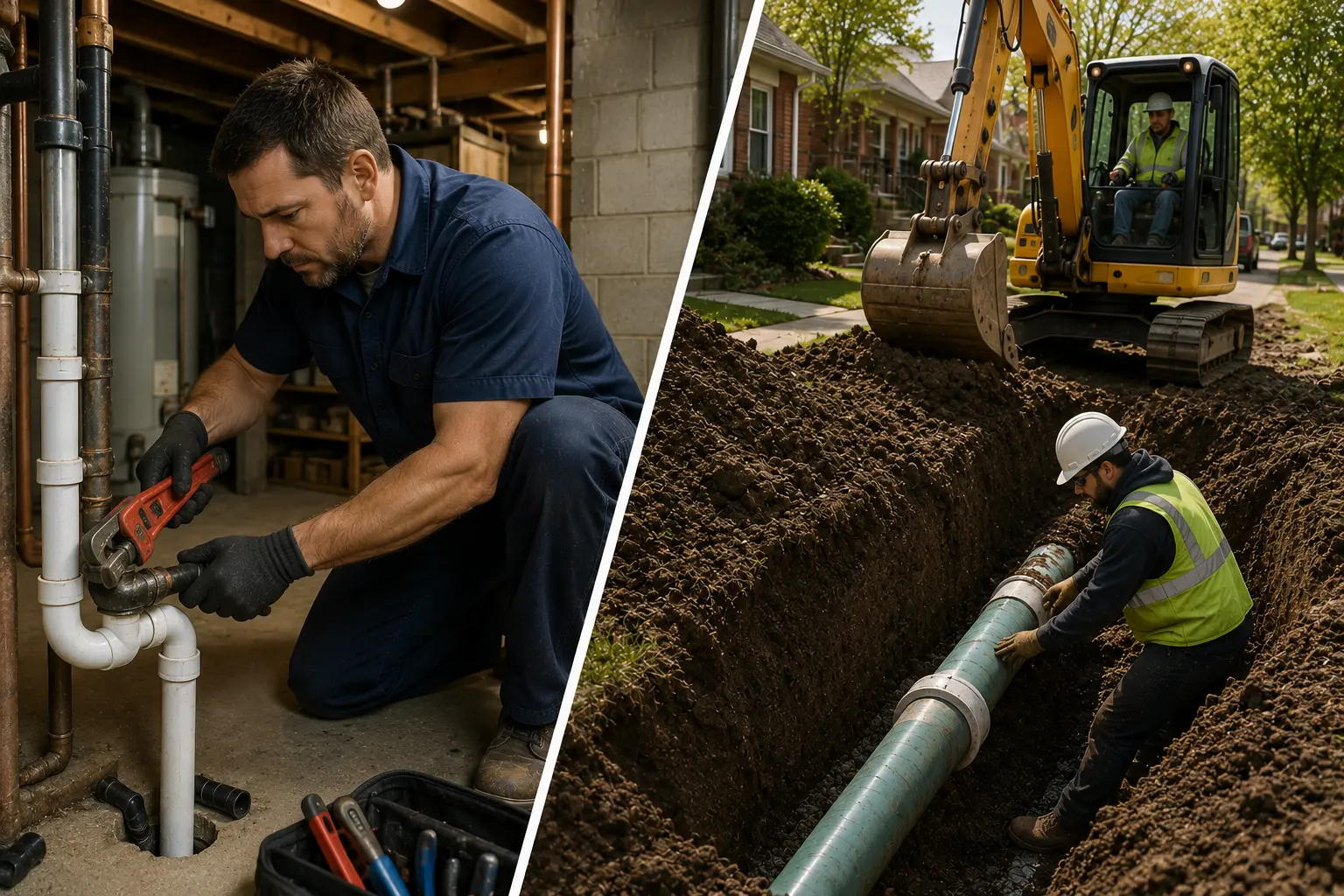
Homeowners often use the terms “plumber” and “sewer contractor” interchangeably, but they are not always the same thing. A licensed plumber may handle a wide range of plumbing issues inside and around the home, while a sewer contractor may focus more specifically on underground sewer line inspection, repair, excavation, replacement, and related outside drainage work.
The difference matters when a sewer problem becomes serious. A clogged toilet, slow drain, sewer backup, or broken underground pipe may require different expertise, equipment, permits, and repair methods. Hiring the wrong type of contractor can lead to incomplete repairs, unnecessary replacement recommendations, or confusion about who is qualified to perform the work.
This guide explains the difference between a licensed plumber and a sewer contractor, when each may be appropriate, what Chicago homeowners should ask before hiring, and how to compare qualifications before approving sewer work. For more help evaluating contractors and quotes, visit the Contractor Selection & Quotes hub.
Key Takeaways
- A licensed plumber generally handles plumbing systems, fixtures, drains, water lines, and code-related plumbing work.
- A sewer contractor often specializes in underground sewer line inspection, excavation, repair, lining, or replacement.
- Some companies provide both plumbing and sewer services, but homeowners should verify qualifications for the specific job.
- Major sewer repairs may require permits, inspections, excavation experience, specialized equipment, and written documentation.
- Chicago’s older sewer infrastructure makes local sewer experience especially important.
- Homeowners should compare licensing, insurance, inspection findings, estimates, warranties, and project scope before hiring.
Do You Need a Licensed Plumber or a Sewer Contractor?
For routine plumbing issues, fixture problems, minor drain clogs, and many interior plumbing repairs, a licensed plumber is often the right starting point. For underground sewer line problems involving camera inspections, recurring backups, excavation, pipe lining, pipe bursting, or full sewer replacement, a sewer-focused contractor may be needed. Many Chicago homeowners should look for a properly licensed and insured professional with specific experience handling sewer line diagnosis, permits, repair methods, and local underground conditions.
What Does a Licensed Plumber Usually Do?
A licensed plumber is trained and authorized to work on plumbing systems. This can include supply lines, drain lines, fixtures, water heaters, interior piping, and code-compliant plumbing installations or repairs.
Depending on the company and the plumber’s experience, plumbing services may include:
- Fixture repairs and replacements
- Toilet, sink, tub, and shower issues
- Drain cleaning
- Water heater installation and repair
- Leak detection and repair
- Water line work
- Sump pump and ejector pump work
- Interior drain and waste piping
- Code-related plumbing corrections
A plumber may also perform sewer inspections or sewer repairs if the company has the proper equipment, experience, and qualifications. However, not every plumber specializes in underground sewer work.
What Does a Sewer Contractor Usually Do?
A sewer contractor typically focuses on sewer line problems outside or beneath the home. This may involve diagnosing underground pipe conditions, locating damaged sections, excavating, replacing pipe, or using trenchless repair methods when appropriate.
Sewer-focused services may include:
- Sewer camera inspections
- Sewer line locating
- Root intrusion diagnosis
- Spot sewer repairs
- Traditional excavation
- Sewer line replacement
- Pipe lining
- Pipe bursting
- Cleanout installation
- Coordination with permits and inspections
Sewer contractors often need excavation planning, utility awareness, pipe material knowledge, restoration planning, and experience working around older underground infrastructure. For major projects, those details can matter as much as the plumbing itself.
How the Roles Overlap
In practice, the line between plumber and sewer contractor can overlap. Some licensed plumbing companies also specialize in sewer repair and replacement. Some sewer contractors employ licensed plumbers or work under plumbing licenses where required. Other companies focus mainly on drain cleaning or excavation and may have more limited plumbing capabilities.
Because the terms can overlap, homeowners should avoid hiring based on the label alone. Instead, ask whether the contractor has experience with the exact type of sewer problem at your property.
Useful questions include:
- Do you handle underground sewer line repairs regularly?
- Are you licensed and insured for this type of work?
- Do you perform camera inspections and sewer locating?
- Do you handle permits and inspections?
- Do you perform excavation or subcontract it?
- Do you offer repair options besides full replacement?
- What warranty applies to this type of work?
If you are trying to evaluate who to hire, start with How to Choose a Sewer Repair Contractor in Chicago.
When a Licensed Plumber May Be the Right Choice
A licensed plumber is often the right choice when the problem appears to involve fixtures, interior piping, routine drain issues, or plumbing code compliance.
Examples include:
- A leaking toilet or sink
- A clogged fixture drain
- A water heater issue
- A leaking supply line
- A sump pump or ejector pump problem
- Interior drain pipe repair
- Plumbing work during remodeling
A plumber may also be the best first call when you are not sure whether the problem is a fixture issue, drain issue, or main sewer line issue. However, if symptoms point to the main sewer line, the plumber should be able to explain whether a sewer camera inspection or sewer specialist is needed.
When a Sewer Contractor May Be the Better Fit
A sewer-focused contractor may be a better fit when the problem appears to involve the main sewer line, underground pipe damage, recurring backups, or major repair planning.
Examples include:
- Repeated main line backups
- Tree roots in the sewer line
- Collapsed or cracked underground pipe
- Offset pipe joints
- A suspected sewer line belly
- Need for excavation
- Pipe lining or pipe bursting evaluation
- Full or partial sewer line replacement
Before approving major sewer work, homeowners should understand whether the recommendation is supported by inspection findings. The article Should You Get a Sewer Camera Inspection Before Hiring a Contractor? explains why that step can be important.
Key Differences to Compare
The table below shows practical differences homeowners should consider when deciding whom to hire.
| Category | Licensed Plumber | Sewer Contractor |
|---|---|---|
| Typical Focus | Interior plumbing, fixtures, drains, water lines, code-related plumbing work | Underground sewer inspection, repair, excavation, replacement, and trenchless methods |
| Common Equipment | Drain machines, plumbing tools, leak repair equipment, fixture tools | Sewer cameras, locating equipment, excavation equipment, lining or replacement tools |
| Best Fit For | Fixture problems, interior leaks, routine drain issues, plumbing repairs | Recurring main sewer backups, damaged sewer lines, replacement planning |
| Project Complexity | Can range from simple repairs to complex plumbing work | Often involves underground access, permits, excavation, restoration, and utility considerations |
| Questions to Ask | Are you licensed for this work? Do you diagnose main sewer issues? | Do you handle permits, inspections, locating, excavation, and warranty documentation? |
Why Licensing and Insurance Matter
Sewer work can involve significant property risk. Excavation may affect driveways, sidewalks, landscaping, foundations, utility lines, and public areas. Interior sewer problems may involve sewage exposure, basement damage, or plumbing code issues.
Before hiring, ask for proof of:
- Appropriate licensing
- General liability insurance
- Workers’ compensation coverage
- Business registration where applicable
- Experience with similar sewer projects
Do not rely on verbal claims alone. A qualified contractor should be able to provide documentation and explain who is responsible for each part of the work.
If a contractor avoids these questions, review Red Flags to Watch for in Sewer Repair Contractors.
Chicago-Specific Considerations
Chicago-area sewer work often involves older infrastructure, dense neighborhoods, and property layouts that can complicate repair decisions. Whether you hire a plumber, sewer contractor, or company that does both, local experience is important.
Older Pipe Materials
Many Chicago homes have aging clay, cast iron, or other older sewer materials. These can crack, separate, corrode, or allow tree roots to enter. A contractor should understand how these materials fail and what repair options are realistic.
Basements and Sewer Backup Risk
Many Chicago properties have basements. A main sewer backup can cause serious damage and may require careful diagnosis to determine whether the cause is a blockage, damaged lateral, pump issue, or broader drainage problem.
Alleys, Sidewalks, and Tight Lots
Urban access can affect excavation and restoration. Sewer work may involve narrow side yards, garages, fences, alleys, sidewalks, parkways, or other difficult access conditions.
Permits and Inspections
Major sewer work may require permits and inspections. Homeowners should ask who handles those responsibilities and whether permit costs are included in the estimate.
Public Property and Utility Coordination
If sewer work affects public areas or underground utilities, the contractor should explain how those issues will be handled before work begins.
How Contractor Type Can Affect Cost
Cost differences often depend less on the title “plumber” or “sewer contractor” and more on the project scope, equipment, repair method, and included services.
Costs may vary based on:
- Whether the issue is inside the home or underground
- Whether camera inspection and locating are needed
- Pipe depth and length
- Type of pipe damage
- Repair method
- Excavation access
- Permits and inspections
- Concrete, pavement, or landscaping restoration
- Warranty coverage
A plumber may be less expensive for routine drain or fixture work. A sewer contractor may be more appropriate for major underground repairs. The most important step is making sure the estimate matches the actual problem.
When reviewing pricing, use the Sewer Repair Estimate Checklist to compare what is included.
What Should Be Included in the Estimate?
Whether the estimate comes from a licensed plumber, sewer contractor, or full-service plumbing company, it should be clear and written.
A sewer-related estimate should include:
- Diagnosis of the problem
- Inspection findings or camera footage reference
- Recommended repair method
- Pipe section being repaired or replaced
- Materials
- Excavation details
- Permit responsibilities
- Inspection requirements
- Cleanup and debris removal
- Restoration responsibilities
- Warranty terms
- Payment schedule
- Exclusions
If the estimate is vague, ask for clarification. For a more detailed breakdown, see What Should Be Included in a Sewer Repair Quote?.
Questions to Ask Before Hiring Either One
Before hiring a plumber or sewer contractor, ask:
- Are you licensed and insured for this type of work?
- How often do you handle this exact sewer problem?
- Will you perform or review a camera inspection?
- Can I see the inspection findings?
- What repair options are available?
- Why are you recommending this specific repair?
- Will permits or inspections be required?
- Who performs the excavation or restoration?
- What is included in the written estimate?
- What warranty applies?
For larger replacement decisions, homeowners should also read Questions to Ask Before Sewer Line Replacement.
Common Mistakes and Warning Signs
Homeowners often run into trouble when they hire based on assumptions instead of verified qualifications.
Common mistakes include:
- Assuming every plumber specializes in sewer replacement
- Assuming every sewer contractor is properly licensed for all plumbing work
- Approving replacement without reviewing camera evidence
- Accepting a vague estimate
- Ignoring permit responsibilities
- Failing to confirm insurance coverage
- Not comparing multiple opinions for major work
- Choosing the cheapest bid without reviewing exclusions
- Relying on verbal warranty promises
Warning signs include pressure to sign immediately, refusal to provide documentation, unclear repair explanations, and estimates that leave out important project details.
Should You Get Multiple Estimates?
For minor plumbing repairs, one trusted licensed professional may be enough. For major sewer repair or replacement, multiple estimates can be useful because different contractors may recommend different methods.
Multiple estimates can help you compare:
- Diagnosis
- Repair method
- Pipe length
- Materials
- Permits
- Restoration
- Warranty
- Total scope of work
If the project is expensive or the recommendations conflict, reviewing more than one proposal can help you make a better decision. The article Do You Need Multiple Sewer Repair Estimates? explains when additional bids are worth getting.
Frequently Asked Questions
Is a sewer contractor the same as a plumber?
Not always. Some licensed plumbers perform sewer work, and some sewer contractors specialize in underground sewer repair. The important question is whether the professional is qualified, insured, and experienced with the specific work your property needs.
Should I call a plumber first for a sewer backup?
For a first-time backup or unclear plumbing issue, a licensed plumber may be a reasonable starting point. If backups recur or the main sewer line appears damaged, a sewer camera inspection or sewer-focused contractor may be needed.
Who should perform a sewer camera inspection?
A qualified plumber, sewer contractor, or inspection professional may perform a sewer camera inspection. Homeowners should ask for clear findings, footage when available, and an explanation of how the results support any recommended repair.
Can a plumber replace a sewer line?
Some plumbing companies are equipped and qualified to replace sewer lines, while others are not. Homeowners should verify licensing, insurance, excavation experience, permitting knowledge, and sewer-specific experience before hiring.
Does a sewer contractor need insurance?
Yes. Sewer work can involve excavation, property damage risks, underground utilities, and worker safety concerns. Homeowners should request proof of liability insurance and workers’ compensation coverage before signing a contract.
Who is better for trenchless sewer repair?
Trenchless repair requires specialized equipment and experience. The best choice is a contractor or plumbing company that regularly performs trenchless work and can explain whether your pipe condition is suitable for that method.
Will homeowners insurance care whether I hire a plumber or sewer contractor?
Insurance coverage depends on the policy and cause of damage, but insurers may request documentation, invoices, inspection findings, or proof that work was performed by a qualified professional. Homeowners should contact their insurer when a claim may be involved.
Conclusion
The difference between a licensed plumber and a sewer contractor is not always about the job title. It is about qualifications, experience, equipment, scope of work, and whether the professional is suited to the specific sewer problem at your property.
For routine plumbing issues, a licensed plumber may be the right choice. For underground sewer damage, recurring backups, camera inspections, excavation, trenchless repair, or replacement planning, a sewer-focused contractor or qualified plumbing company with sewer expertise may be more appropriate.
Chicago homeowners should ask specific questions, verify documentation, review inspection findings, and compare written estimates before approving major sewer work. The right professional should be able to explain the problem clearly and provide a proposal that matches the actual condition of the sewer line.