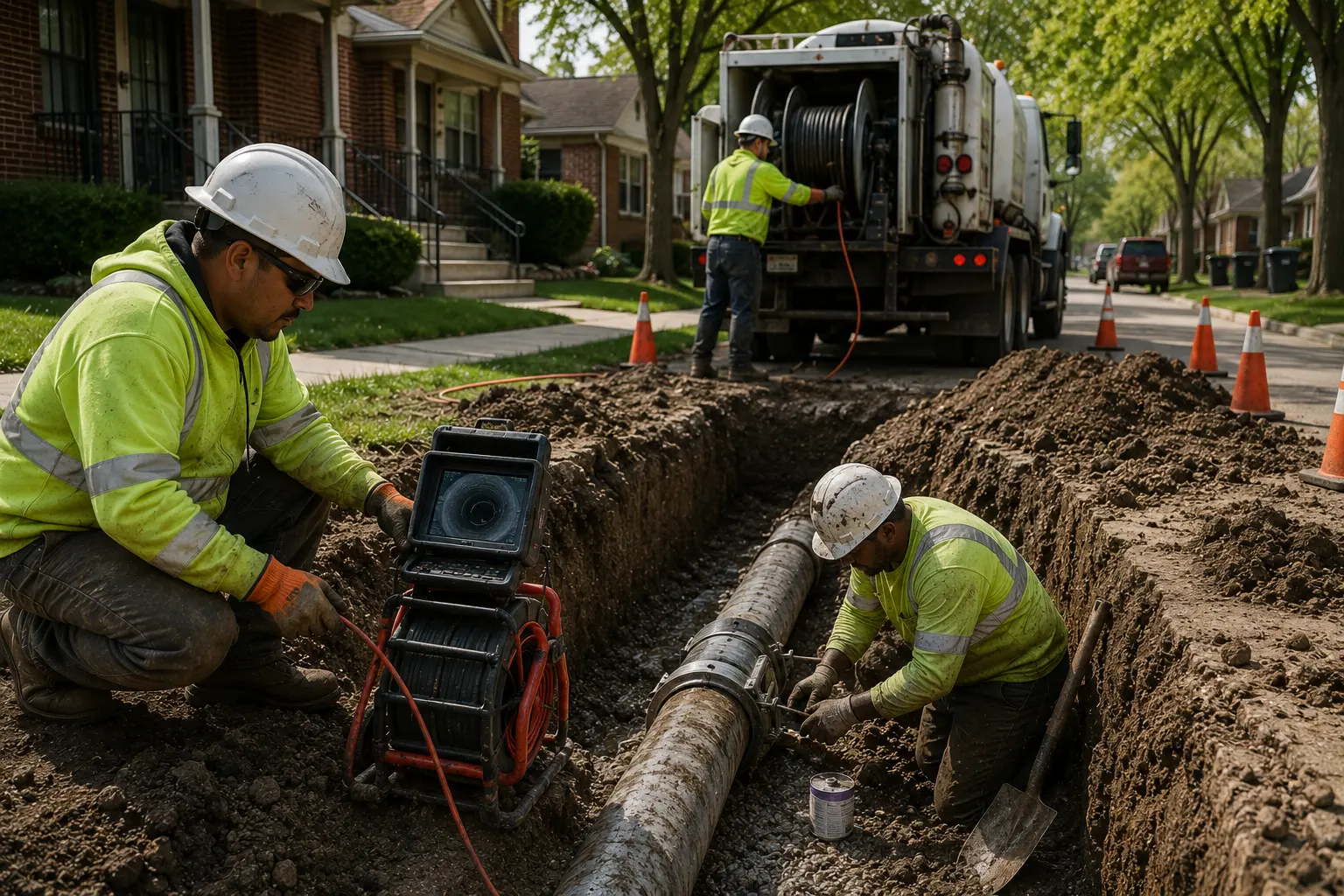
Searching for the best sewer repair companies in Chicago can feel urgent when drains are backing up, sewage odors are present, or a contractor has already warned that the sewer line may need major work. But the “best” company is not always the one with the most ads, the lowest price, or the fastest promise.
For homeowners, the right sewer repair company is the one that can properly diagnose the problem, explain the repair options, provide a detailed written estimate, handle permits when required, protect the property during work, and stand behind the repair with clear warranty terms.
This guide explains how to evaluate sewer repair companies in Chicago, what qualifications matter, how to compare reviews and estimates, and what warning signs should make you slow down before hiring. For more contractor-focused guidance, visit the Contractor Selection & Quotes hub.
Key Takeaways
- The best sewer repair company depends on the specific problem, property, budget, and repair method needed.
- Look for proper licensing, insurance, sewer-specific experience, and familiarity with Chicago-area conditions.
- Do not choose based on price alone; compare diagnosis, scope, materials, permits, restoration, and warranty.
- Camera inspection findings can help confirm whether a repair recommendation is reasonable.
- Strong reviews matter, but homeowners should read the details behind the rating.
- Be cautious of high-pressure sales tactics, vague estimates, and contractors who avoid documentation.
- Multiple estimates are often helpful for major sewer replacement projects.
How Do You Find the Best Sewer Repair Company in Chicago?
The best sewer repair company in Chicago is usually a properly licensed and insured contractor with strong sewer-specific experience, clear communication, detailed written estimates, documented inspection findings, local permitting knowledge, realistic repair options, and written warranty terms. Homeowners should compare companies based on scope, diagnosis, reviews, qualifications, and transparency rather than choosing only by the lowest price or fastest availability.
Start by Defining the Type of Sewer Help You Need
Before comparing companies, identify what kind of problem you are trying to solve. Not every company is the right fit for every sewer issue.
Some homeowners need simple drain cleaning. Others need a camera inspection, root intrusion diagnosis, spot repair, trenchless repair, excavation, or full sewer line replacement.
Common sewer-related situations include:
- Recurring main line backups
- Tree roots in the sewer line
- Cracked or collapsed pipe
- Offset joints
- Slow drains throughout the home
- Sewage odors
- Water or sewage in the basement
- Standing water in the yard
- A failed real estate sewer inspection
A company that is excellent at routine drain cleaning may not be the best choice for complex excavation or full sewer replacement. Likewise, a sewer replacement contractor may not be needed for a minor interior fixture issue.
If you are unsure whether you need a plumber or a sewer-focused contractor, review Licensed Plumber vs Sewer Contractor: What’s the Difference?.
Look for Sewer-Specific Experience
Sewer repair requires more than general plumbing knowledge when the problem involves underground pipe conditions, excavation, trenchless methods, or replacement planning.
A qualified sewer repair company should be able to discuss:
- Pipe materials commonly found in Chicago homes
- Sewer camera inspection findings
- Pipe locating and depth estimates
- Traditional excavation
- Spot repairs
- Pipe lining or pipe bursting when appropriate
- Permit and inspection requirements
- Restoration responsibilities
- Warranty limitations
When speaking with a company, ask how often they handle projects similar to yours. Experience with your specific issue matters more than a general claim that the company “does sewer work.”
For a broader hiring framework, see How to Choose a Sewer Repair Contractor in Chicago.
Verify Licensing, Insurance, and Qualifications
Major sewer repair can involve excavation, underground utilities, public property, sewage exposure, heavy equipment, and potential damage to landscaping, concrete, driveways, sidewalks, or basement areas. Documentation matters.
Before hiring, ask for proof of:
- Appropriate licensing for the work being performed
- General liability insurance
- Workers’ compensation coverage
- Business registration where applicable
- Experience with similar sewer projects
- Permit handling experience
A reputable company should not become defensive when asked for documentation. If a contractor avoids basic qualification questions, that is a reason to slow down.
Use Camera Inspection Findings Carefully
A sewer camera inspection can help homeowners understand what is happening inside the pipe before approving major repair work. This is especially helpful when a contractor recommends replacement, excavation, or trenchless repair.
A useful inspection should help identify:
- The type of defect
- The location of the problem
- Whether the issue is isolated or widespread
- Whether roots, cracks, collapse, offsets, or standing water are visible
- Whether the proposed repair matches the condition of the pipe
Ask the company to explain the footage clearly. If possible, request a copy of the video, still images, or written findings.
If you are deciding whether an inspection should happen before hiring, read Should You Get a Sewer Camera Inspection Before Hiring a Contractor?.
Compare Companies by More Than Reviews
Reviews are useful, but they should not be the only factor. A company can have many positive reviews and still be a poor fit for your specific sewer problem.
When reading reviews, look for comments about:
- Clear explanations
- Accurate diagnosis
- Honest recommendations
- Fair pricing
- Respect for the property
- Cleanup after work
- Permit handling
- Warranty support
- How problems were resolved
Pay attention to repeated patterns. One negative review may not mean much. Repeated complaints about pressure tactics, poor cleanup, surprise charges, or unreturned calls deserve more attention.
For a more detailed approach, see How to Evaluate Sewer Contractor Reviews.
Compare Written Estimates Line by Line
The best sewer repair company should provide a clear written estimate. A vague estimate makes it difficult to compare companies or understand what you are actually buying.
A good estimate should clarify:
- Diagnosis
- Repair method
- Pipe section being repaired or replaced
- Materials
- Excavation requirements
- Permits
- Inspection responsibilities
- Cleanup
- Restoration
- Warranty
- Payment schedule
- Exclusions
Use a written checklist when comparing proposals. The Sewer Repair Estimate Checklist can help identify missing details before you sign.
What to Compare Between Sewer Repair Companies
| Comparison Factor | What to Look For | Why It Matters |
|---|---|---|
| Diagnosis | Clear explanation backed by inspection findings | Helps confirm the repair is necessary |
| Experience | Similar sewer projects in Chicago-area homes | Local conditions can affect repair complexity |
| Estimate Detail | Written scope, materials, permits, and exclusions | Prevents surprise costs later |
| Repair Options | Explanation of alternatives where appropriate | Helps avoid unnecessary full replacement |
| Restoration | Clear responsibility for concrete, pavement, lawn, and cleanup | Restoration can affect the true project cost |
| Warranty | Written terms, exclusions, and claim process | Protects against unclear promises |
| Communication | Responsive, clear, and consistent answers | Good communication matters during disruptive work |
Understand the Repair Methods Each Company Offers
Some companies offer only certain repair methods. That can influence what they recommend.
Common sewer repair options include:
- Drain cleaning: Removes clogs but does not repair structural pipe damage.
- Spot repair: Fixes one damaged section when the rest of the pipe is serviceable.
- Traditional excavation: Exposes and replaces damaged pipe directly.
- Pipe lining: Installs a liner inside the existing pipe when conditions allow.
- Pipe bursting: Replaces pipe by breaking the old pipe while pulling new pipe into place.
- Full replacement: Replaces a larger section or the entire sewer line.
A company should explain why its recommended method fits your pipe condition. If one company recommends full replacement and another recommends a smaller repair, ask each to explain the difference.
For a deeper comparison process, read How to Compare Sewer Replacement Quotes.
Chicago-Specific Considerations
Chicago sewer work can involve conditions that make local experience especially important. A sewer repair company should understand more than basic pipe repair.
Older Sewer Materials
Many Chicago homes have older clay, cast iron, or other aging sewer materials. These pipes may crack, separate, corrode, or allow tree roots to enter through joints.
Basement Backup Risk
Because many Chicago homes have basements, sewer backups can cause significant interior damage. Companies should evaluate the cause carefully before recommending major repairs.
Tree-Lined Neighborhoods
Mature trees can contribute to root intrusion in older sewer lines. A company should explain whether roots are the primary issue or a symptom of damaged pipe joints.
Alleys, Sidewalks, and Parkways
Sewer lines may run through or near areas that complicate excavation and restoration. Quotes should address access, public property, and restoration responsibilities.
Permits and Inspections
Major sewer work may require permits or inspections. A company familiar with local procedures can better explain what is required and how scheduling may affect the project.
When the “Best” Company May Not Be the Biggest Company
Larger companies may offer broader availability, more equipment, financing options, and established processes. Smaller companies may provide more direct communication, specialized expertise, or lower overhead. Neither is automatically better.
Instead of focusing on company size, compare:
- Who performs the inspection
- Who explains the findings
- Who supervises the work
- Whether subcontractors are used
- How change orders are handled
- How warranties are documented
- How communication works during the project
The best fit is the company that can solve the specific sewer problem with a clear scope, fair documentation, and appropriate qualifications.
Cost Factors to Discuss Before Hiring
Sewer repair and replacement costs can vary widely because each property is different. Instead of asking only for a total price, ask what factors are driving the estimate.
Major cost factors include:
- Pipe depth
- Pipe length
- Repair method
- Pipe material
- Excavation access
- Concrete, driveway, or sidewalk removal
- Landscaping restoration
- Permits and inspections
- Emergency timing
- Warranty coverage
A company that can explain these factors clearly is usually easier to evaluate than one that only gives a lump-sum price.
Common Mistakes and Warning Signs
Be cautious if a sewer repair company:
- Pressures you to sign immediately
- Will not show camera inspection findings
- Provides only a vague written estimate
- Does not discuss permits or inspections
- Cannot explain the repair method
- Pushes full replacement without discussing alternatives
- Refuses to provide proof of insurance
- Demands full payment upfront
- Offers only verbal warranty promises
- Has repeated review complaints about the same issues
If you notice any of these issues, review Red Flags to Watch for in Sewer Repair Contractors before moving forward.
Questions to Ask Before Choosing a Company
Before hiring, ask practical questions that reveal how the company works.
- What did you find in the sewer line?
- Can I see the camera footage or inspection report?
- Why are you recommending this repair?
- Are there less invasive alternatives?
- What exactly is included in the estimate?
- What is excluded?
- Will permits be required?
- Who handles inspections?
- What restoration is included?
- What warranty applies?
- Who will perform the work?
- How are unexpected problems handled?
For larger replacement projects, the article Questions to Ask Before Sewer Line Replacement provides a more complete homeowner question list.
Should You Get Multiple Estimates?
For routine drain cleaning, multiple estimates may not always be necessary. For major sewer repair or replacement, they are often helpful.
Multiple estimates can help reveal differences in:
- Diagnosis
- Repair method
- Pipe length included
- Permit responsibilities
- Restoration work
- Warranty coverage
- Total project scope
If estimates differ significantly, ask why. One contractor may be including work another left out, or one may be recommending a different solution entirely.
Frequently Asked Questions
Who are the best sewer repair companies in Chicago?
The best company depends on the specific sewer problem, property conditions, repair method needed, and homeowner priorities. Instead of relying only on a ranking, homeowners should compare licensing, insurance, sewer experience, inspection findings, estimates, reviews, warranties, and communication.
Should I hire a plumber or a sewer contractor?
For routine plumbing problems, a licensed plumber may be appropriate. For underground sewer line damage, recurring backups, excavation, pipe lining, or replacement, a sewer-focused contractor or qualified plumbing company with sewer experience may be a better fit.
How many sewer companies should I call?
For major sewer replacement or expensive repairs, calling two or three companies can help you compare recommendations, pricing, repair methods, and warranty terms.
Should a sewer company provide camera footage?
For major repair recommendations, homeowners should ask to see camera footage or inspection findings. The company should explain what the footage shows and how it supports the proposed work.
Is the lowest sewer repair quote usually the best?
Not necessarily. A low quote may exclude permits, restoration, debris removal, inspections, cleanouts, or warranty coverage. Compare the full scope before deciding.
Can homeowners insurance help pay for sewer repair?
Coverage depends on the policy, cause of damage, and any sewer or service line endorsements. Homeowners should contact their insurer before assuming sewer repair or replacement will be covered.
What is the biggest warning sign when hiring a sewer company?
One of the biggest warning signs is pressure to approve major work without clear inspection evidence, a written estimate, permit discussion, or warranty terms.
Conclusion
The best sewer repair company in Chicago is not simply the company with the biggest advertising presence or the lowest quoted price. The best choice is the company that can diagnose the problem clearly, explain the available repair options, provide a detailed written estimate, handle local requirements, and document warranty coverage.
Chicago homeowners should take time to compare qualifications, reviews, inspection findings, repair methods, and written proposals before approving major sewer work. A careful hiring process can help reduce the risk of unnecessary repairs, surprise costs, and poor workmanship.