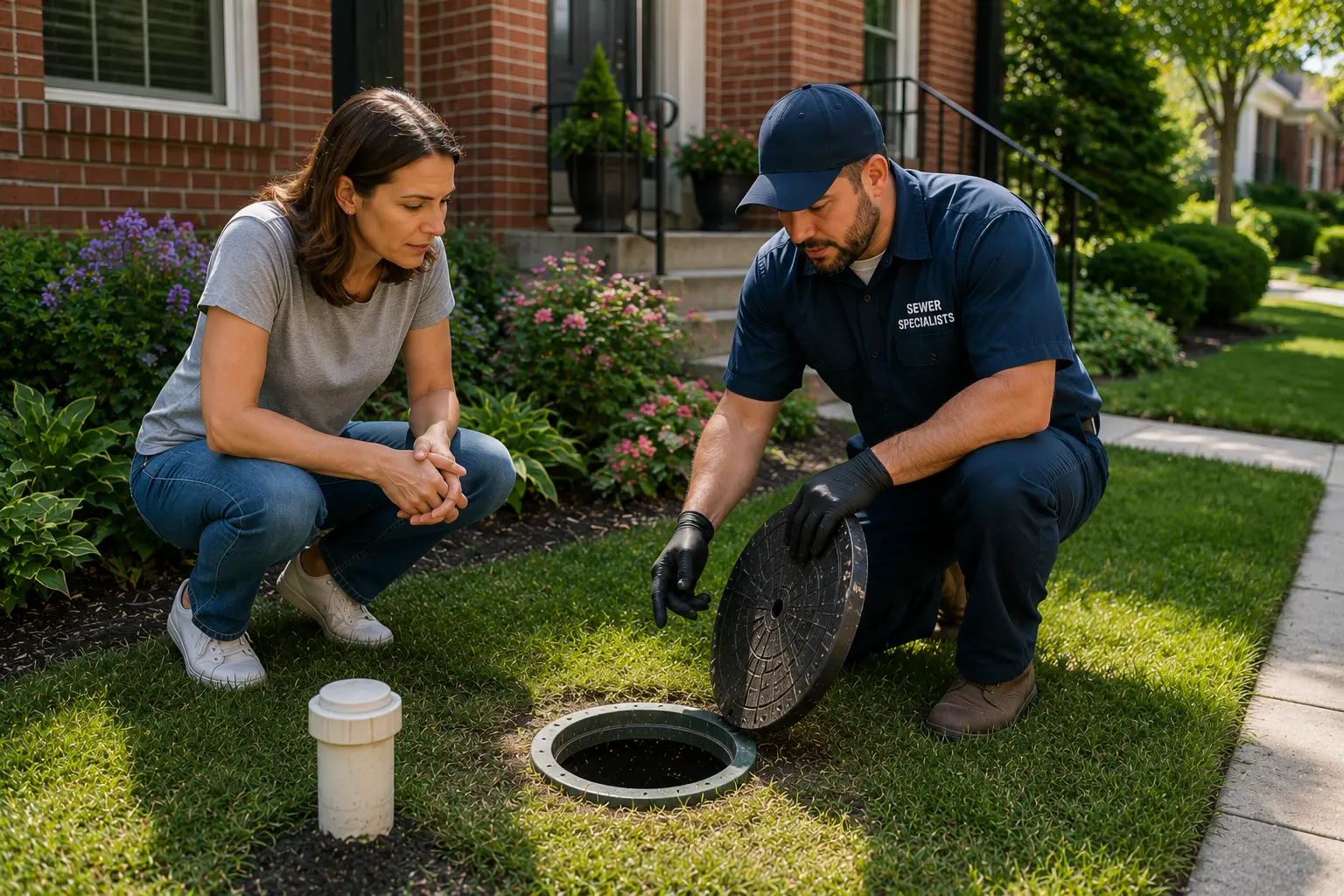
A sewer cleanout is one of the most important access points in a home’s plumbing system, but many homeowners do not know where it is, what it does, or why it matters until a sewer problem occurs. When the main sewer line needs inspection, cleaning, or emergency clearing, the cleanout often provides the most direct way to reach the pipe.
Sewer cleanout maintenance is simple but important. Homeowners should know where the cleanout is located, keep it visible and accessible, protect the cap from damage, avoid covering it with landscaping or hardscaping, and pay attention to signs of overflow or sewer odors.
For Chicago homeowners, cleanout access can be especially valuable because many homes have older sewer lines, mature trees, basement drains, and a higher risk of backups during heavy rain. A buried or damaged cleanout can make a stressful sewer problem harder, slower, and more expensive to address.
Key Takeaways
- A sewer cleanout provides access to the main sewer line for inspection, cleaning, and maintenance.
- Homeowners should know where the cleanout is located before a sewer emergency happens.
- Cleanouts should remain visible, accessible, capped, and protected from damage.
- A missing or damaged cleanout cap can allow debris, pests, rainwater, or surface water into the sewer system.
- Cleanout overflow, sewage odor, or standing wastewater can indicate a sewer line blockage.
- Older Chicago homes may have difficult-to-find cleanouts, interior cleanouts, or no modern cleanout at all.
What Should Homeowners Know About Sewer Cleanout Maintenance?
Homeowners should know where the sewer cleanout is, keep it accessible, make sure the cap is secure, avoid covering it with landscaping or concrete, and inspect the area periodically for damage, odors, or signs of overflow.
A well-maintained cleanout does not prevent every sewer problem, but it can make sewer inspection, cleaning, and emergency service easier when the main line needs attention.
What Is a Sewer Cleanout?
A sewer cleanout is an access point connected to the home’s drain or sewer line. It usually has a removable cap that allows a technician to insert a camera, cleaning cable, hydro jetting hose, or other equipment into the sewer line.
Cleanouts may be located:
- Outside near the foundation
- In the yard
- Near the property line
- In a basement utility area
- In a crawl space
- Along the sewer line route between the house and the street or alley
Not every older home has a modern, easy-to-access cleanout. Some properties may have older access points, buried cleanouts, or cleanouts located in inconvenient areas.
Cleanout access is a practical part of Sewer Line Maintenance for Homeowners because it affects how easily the sewer line can be evaluated and maintained.
Why Sewer Cleanout Maintenance Matters
A cleanout is not just a plumbing detail. It can affect how quickly and safely a sewer problem is diagnosed.
When a cleanout is accessible, it may allow sewer professionals to inspect or clear the line without removing toilets, cutting into piping, or using less convenient access points. When the cleanout is buried, broken, missing, or blocked, maintenance may become more complicated.
Maintaining the cleanout can help with:
- Sewer camera inspections
- Preventative sewer cleaning
- Root removal
- Hydro jetting access
- Emergency blockage clearing
- Locating the sewer line route
- Identifying backup sources
Cleanout access becomes especially important when a homeowner is trying to reduce backup risk. For broader prevention guidance, see How to Prevent Sewer Line Backups.
How to Find Your Sewer Cleanout
Finding a cleanout is not always obvious, especially in older Chicago homes. Some cleanouts are visible and clearly capped. Others may be hidden behind stored items, covered by landscaping, buried under soil, or located inside the basement.
Common Places to Check
- Along the exterior wall closest to the bathroom or utility area
- Near the basement floor drain or main plumbing stack
- In the front yard between the home and the street
- In the rear yard if the sewer exits toward an alley
- Near the foundation where the main drain leaves the home
- Inside a utility room, crawl space, or unfinished basement area
What It May Look Like
A cleanout may appear as a white, black, or metal pipe cap. It may sit flush with the ground, extend above grade, or be mounted on a vertical pipe indoors.
Some cleanouts are labeled. Others are not.
Homeowner tip: Once you locate the cleanout, take a photo and note its location. During a sewer backup or emergency, it is much easier to find when you already know where it is.
What Good Sewer Cleanout Maintenance Includes
Keep the Cleanout Accessible
The most important maintenance step is keeping the cleanout easy to reach. Avoid covering it with mulch, soil, landscape stone, patios, decks, fencing, storage, or heavy objects.
If the cleanout is indoors, keep the area around it clear enough for inspection or maintenance equipment.
Make Sure the Cap Is Secure
The cleanout cap should be properly installed and intact. A missing or loose cap may allow debris, rainwater, pests, or surface water to enter the sewer system.
A damaged cap should be replaced with the correct size and type. Homeowners should avoid forcing mismatched caps or makeshift covers into place.
Protect It From Damage
Outdoor cleanouts can be damaged by lawn equipment, vehicles, foot traffic, frost movement, or construction work. Indoor cleanouts can be damaged by stored items or accidental impact.
If a cleanout is located in a driveway or high-traffic area, it may need a protective cover or proper grade-level fitting.
Watch for Odors or Moisture
Sewage odors, damp soil, or visible wastewater around a cleanout can indicate a sewer problem. These signs should not be ignored.
Signs a Sewer Cleanout May Need Attention
A cleanout should not regularly leak, smell, overflow, or move. Any unusual condition around the cleanout may point to a maintenance issue or a larger sewer line problem.
- The cap is missing or cracked
- The cleanout is buried or inaccessible
- Wastewater appears around the cap
- The area smells like sewage
- The cleanout pipe is cracked or tilted
- Soil around the cleanout is consistently wet
- The cap appears pushed upward or displaced
- The cleanout is blocked by landscaping or hardscaping
If wastewater is coming out of the cleanout, the sewer line may be blocked or overloaded. This can be related to roots, grease, debris, pipe damage, or heavy rain conditions.
Cleanouts and Sewer Line Cleaning
Cleanouts play a major role in sewer line cleaning. When the main sewer line needs to be cleared, an accessible cleanout can provide a direct route to the blockage.
Without a usable cleanout, a technician may need to access the sewer line through a removed toilet, basement drain, roof vent, or another less convenient location. These alternatives may be more disruptive and may not provide the best angle for clearing the line.
Cleanout access can affect:
- How quickly the line can be inspected
- Whether cleaning equipment can reach the blockage
- Whether hydro jetting is practical
- How much disruption occurs inside the home
- Whether the sewer line route can be confirmed
For homeowners comparing cleaning intervals, see How Often Should a Sewer Line Be Cleaned?.
Cleanouts and Hydro Jetting
Hydro jetting uses pressurized water to clean the inside of sewer pipes. A proper cleanout can make hydro jetting more practical by providing access for the hose and allowing debris to move through the line more effectively.
However, hydro jetting is not appropriate for every sewer line. Older or damaged pipes may need inspection before high-pressure cleaning is considered.
An accessible cleanout can make it easier to inspect pipe condition before deciding whether hydro jetting is suitable.
More information is available in Hydro Jetting for Preventative Sewer Maintenance.
Chicago-Specific Cleanout Considerations
Chicago homeowners may face cleanout challenges that are less common in newer suburban construction.
Older Homes May Have Unusual Cleanout Locations
Older homes may have cleanouts in basements, under stairs, behind stored items, near old utility areas, or in exterior locations that have changed over time because of remodeling or landscaping.
Some cleanouts may be difficult to identify without tracing the plumbing layout.
Alleys, Parkways, and Sewer Routing Can Vary
Depending on the neighborhood and property layout, the sewer line may run toward the street, alley, or another municipal connection point. This can affect where cleanouts are located.
Mature Trees Increase the Value of Access
If roots are a recurring concern, cleanout access becomes even more important. Root-related sewer issues often require inspection, cleaning, and monitoring over time.
For root-specific guidance, see Tree Root Prevention for Sewer Lines.
Basement Backups Make Fast Access Important
Many Chicago homes include basement floor drains, laundry areas, or finished basement space. If the main sewer line backs up, fast access to the cleanout can help reduce delay during diagnosis.
Homeowners worried about basement risk should also review How to Prevent Basement Sewer Backups.
Additional resources are available in the Prevention & Maintenance hub.
Should You Add or Upgrade a Sewer Cleanout?
Some homes have no accessible modern cleanout. Others have a cleanout that is damaged, poorly located, too small, or difficult to use.
Adding or upgrading a cleanout may be worth considering when:
- The existing cleanout is buried or inaccessible
- The home has recurring sewer clogs
- The sewer line requires frequent inspection or cleaning
- Access currently requires removing a toilet
- The property has older pipes or root intrusion
- Basement backups have occurred before
- A repair project already exposes part of the sewer line
The decision depends on cost, access, pipe depth, location, and future maintenance needs. For some homeowners, a better cleanout can make future sewer service easier and less disruptive. For others, the existing access may be adequate.
| Situation | Cleanout Decision | Homeowner Consideration |
|---|---|---|
| Cleanout is visible and usable | Maintain access | Keep the cap secure and the area clear |
| Cleanout is buried | Locate and expose it | Buried access can delay emergency service |
| No known cleanout exists | Evaluate whether adding one makes sense | May be helpful for older or problem-prone lines |
| Cleanout is damaged | Repair or replace the fitting | A damaged cap or pipe may allow debris or water in |
Cost Factors for Cleanout Maintenance or Installation
Cleanout-related costs vary depending on the location, condition, and complexity of the work. Simple cap replacement is very different from installing a new exterior cleanout on a deep sewer line.
Common cost factors include:
- Whether the cleanout already exists
- Whether the cap or fitting is damaged
- Whether excavation is required
- How deep the sewer line is
- Whether the cleanout is indoors or outdoors
- Whether concrete, landscaping, or hardscaping must be disturbed
- Whether sewer line repairs are needed at the same time
- Whether the work is planned or part of an emergency response
For broader planning, Sewer Line Maintenance Plan Cost explains how maintenance needs can affect long-term homeowner budgeting.
Important: A cleanout is not the same as a sewer repair. It provides access. If the sewer line has roots, collapse, offset joints, or severe damage, the underlying pipe problem may still need diagnosis and repair.
Common Sewer Cleanout Mistakes
- Not knowing where the cleanout is located
- Covering the cleanout with soil, mulch, stone, or concrete
- Building a deck, patio, or fence over access
- Ignoring a missing or cracked cap
- Assuming sewage odor near the cleanout is normal
- Waiting until a backup occurs to locate the cleanout
- Using the cleanout as a drain for outdoor water
- Trying to open a stuck cleanout cap without understanding the risk of pressure or wastewater release
These mistakes can make future sewer problems harder to diagnose and may increase the disruption involved in maintenance or emergency clearing.
Warning Signs Near a Cleanout
The area around a sewer cleanout can provide early warning signs of trouble.
Callout: Possible sewer line warning signs include:
- Wastewater bubbling from the cleanout
- Sewage odor around the cap
- Wet soil when there has been no rain
- Toilets gurgling when water is used
- Basement drains backing up
- Repeated clogs after cleaning
These signs may indicate a blockage, root intrusion, sewer line damage, or backup risk. If symptoms are recurring, a sewer inspection is often more useful than repeated temporary clearing.
Frequently Asked Questions
Where is the sewer cleanout usually located?
It may be outside near the foundation, in the yard, near the property line, in a basement, or along the main sewer route. In Chicago homes, location can vary depending on age, layout, and whether the sewer exits toward the street or alley.
What happens if I cannot find my sewer cleanout?
If the cleanout cannot be found, the home may have a buried, hidden, older, or inaccessible cleanout. A sewer professional may be able to locate it by tracing the line, inspecting plumbing routes, or using locating equipment during a camera inspection.
Should a sewer cleanout cap always be installed?
Yes. The cap helps keep debris, pests, surface water, and odors from entering or escaping the sewer system. A missing or damaged cap should be addressed.
Can a cleanout prevent sewer backups?
A cleanout does not prevent backups by itself. It provides access for inspection, cleaning, and maintenance. That access can make it easier to address backup risks before they become severe.
Is sewage coming out of the cleanout an emergency?
Sewage coming out of a cleanout can indicate a blockage or surcharge condition. Homeowners should avoid contact with wastewater and treat the situation seriously, especially if drains inside the home are also backing up.
Does homeowners insurance cover cleanout repairs?
Routine maintenance and normal wear are usually not covered. Coverage may vary if damage is tied to a covered event or if the homeowner has service line coverage. Policy language should be reviewed carefully.
Should older Chicago homes add an exterior cleanout?
It may be worth considering if the home has recurring sewer issues, no accessible cleanout, root intrusion, or repeated need for sewer cleaning. The decision depends on access, pipe depth, cost, and long-term maintenance needs.
Conclusion
Sewer cleanout maintenance is a small but important part of protecting a home’s drainage system. Knowing where the cleanout is, keeping it accessible, maintaining the cap, and watching for warning signs can make sewer inspections and maintenance much easier.
For Chicago homeowners, cleanout access is especially valuable because older sewer lines, mature trees, finished basements, and heavy rain events can increase sewer-related risks. A cleanout does not solve sewer problems by itself, but it can make diagnosis, cleaning, and long-term maintenance more practical.
The best time to locate and maintain the cleanout is before a backup occurs. Once wastewater is entering the home, easy access can make a difficult situation less complicated.