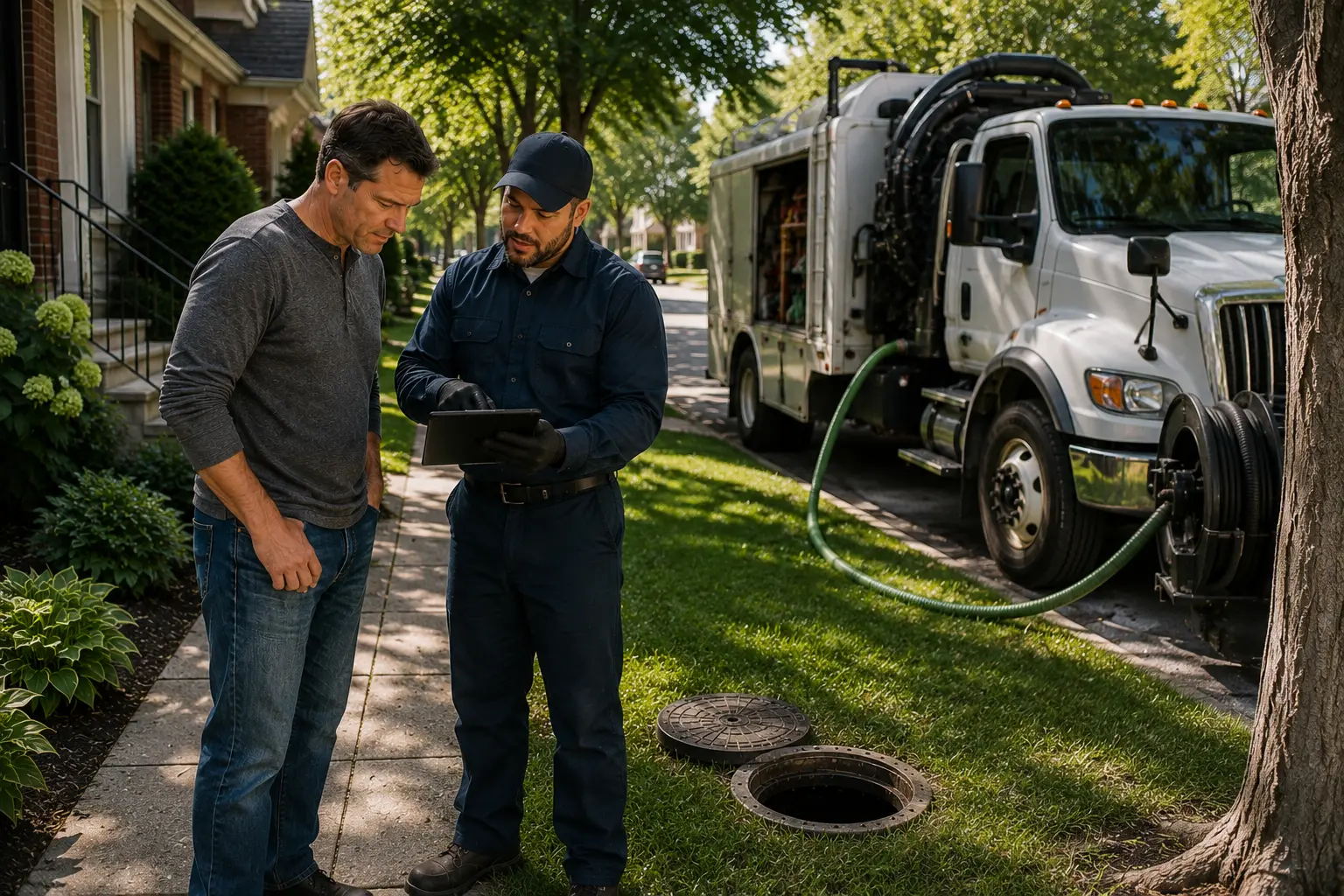
Sewer line cleaning is one of the most common preventative maintenance questions homeowners ask, especially after dealing with slow drains, recurring clogs, or a previous sewer backup. The right cleaning schedule depends on the home, the sewer line condition, nearby trees, pipe material, and past problems.
There is no single schedule that fits every property. Some sewer lines may go many years without needing professional cleaning, while older Chicago homes with clay pipes, mature trees, or recurring root intrusion may require more frequent attention.
The best approach is to base cleaning frequency on actual risk factors rather than waiting for a full blockage. A sewer camera inspection, maintenance history, and warning signs inside the home can all help determine when cleaning is needed.
Key Takeaways
- There is no universal sewer cleaning schedule for every home.
- Older homes, clay sewer pipes, tree roots, and previous backups often justify more frequent cleaning.
- Homes with no symptoms and newer sewer lines may not need routine cleaning as often.
- A sewer camera inspection can help determine whether cleaning is actually needed.
- Preventative cleaning can reduce backup risk, but it does not fix broken, collapsed, or severely damaged pipes.
- Chicago homeowners should pay special attention to tree roots, finished basements, and heavy rain conditions.
How Often Should You Clean a Sewer Line?
A sewer line should be cleaned when inspections, symptoms, or property conditions show that buildup, roots, grease, or debris are restricting flow. For higher-risk homes, cleaning may be considered on a recurring maintenance schedule. For lower-risk homes, cleaning may only be needed when an inspection shows a developing problem.
Chicago homeowners with older pipes, mature trees, recurring clogs, or a prior backup should be more proactive than homeowners with newer sewer lines and no drainage history.
Why Sewer Cleaning Frequency Varies
Sewer lines do not all age or fail the same way. Two similar houses on the same block may have very different maintenance needs depending on pipe material, tree exposure, prior repairs, and household habits.
A home with modern PVC sewer piping and no large trees nearby may need very little routine cleaning. A century-old home with clay tile pipe, mature parkway trees, and a history of basement drain backups may need closer monitoring and more frequent maintenance.
The goal is not to clean the sewer line as often as possible. The goal is to clean it often enough to prevent avoidable blockages while avoiding unnecessary work.
For a broader overview of upkeep, see Sewer Line Maintenance for Homeowners.
Factors That Determine How Often a Sewer Line Should Be Cleaned
Pipe Age and Material
Older sewer lines are more likely to have rough interior surfaces, cracks, joint gaps, and low spots that collect debris. Clay pipe, common in many older Chicago homes, can be especially vulnerable to root intrusion at pipe joints.
Newer plastic sewer lines are generally smoother and less likely to catch debris, but they are not immune to problems. Poor installation, settling soil, or improper slope can still create drainage issues.
Tree Root Exposure
Tree roots are one of the most important factors in sewer cleaning frequency. Roots can enter through small cracks or loose joints, then grow inside the pipe until they restrict flow.
If roots have appeared in a prior sewer inspection, the line may need periodic monitoring and cleaning. Homeowners should also review Tree Root Prevention for Sewer Lines to understand long-term prevention options.
Previous Sewer Backups
A previous backup is a strong reason to take sewer maintenance seriously. Even after the immediate blockage is cleared, the underlying cause may remain.
If the backup was caused by roots, grease, a belly in the line, or pipe damage, the same issue can return unless it is monitored or corrected.
Related guidance is available in How to Prevent Sewer Line Backups.
Household Size and Usage
A larger household usually places more demand on the sewer line. More showers, laundry cycles, toilet use, dishwashing, and food waste can increase the amount of material moving through the system.
Rental properties, multi-family buildings, and homes with frequent guests may need closer attention than lightly used single-family homes.
Grease and Drain Habits
Grease, wipes, food scraps, paper towels, and other non-flushable items can accelerate sewer buildup. Even small amounts repeated over time can create a restriction.
For prevention inside the home, see What Not to Flush: Protecting Your Sewer Line.
General Sewer Cleaning Frequency Guidelines
The table below provides practical maintenance guidance, not a fixed rule. A camera inspection is usually the best way to determine whether cleaning is necessary.
| Home or Sewer Condition | Maintenance Approach | Why It Matters |
|---|---|---|
| Newer sewer line with no symptoms | Clean only when inspection or symptoms indicate a problem | Routine cleaning may not be necessary if flow is clear and the pipe is in good condition |
| Older home with no known issues | Consider periodic inspection before deciding on cleaning | Hidden pipe conditions may exist even without obvious symptoms |
| Known tree root intrusion | Monitor regularly and clean when roots begin restricting flow | Roots often return unless the pipe defect is repaired |
| Prior sewer backup | Use inspection history to create a maintenance schedule | Recurring backups often indicate an unresolved underlying issue |
| Frequent slow drains or clogs | Inspect before repeated cleaning | The problem may be structural rather than simple buildup |
Inspection Before Cleaning: Why It Matters
Cleaning a sewer line without understanding the cause of the problem can lead to repeated service calls and frustration. A camera inspection can show whether the issue is grease, roots, debris, damaged pipe, poor slope, or collapse.
This matters because cleaning is not always the right solution.
Cleaning can help with:
- Grease buildup
- Small root intrusions
- Sludge accumulation
- Soft blockages
- Debris restricting flow
Cleaning cannot permanently fix:
- Collapsed sewer pipe
- Severely cracked pipe
- Major offset joints
- Significant pipe bellies
- Repeated intrusion through broken sections
Homeowner tip: If a sewer line needs to be cleaned again and again, the question should change from “How often should I clean it?” to “Why does it keep clogging?”
Cleaning Methods Homeowners Should Understand
Mechanical Augering or Rodding
Mechanical cleaning tools can break through many common blockages and restore flow. This method is often used when a sewer line is actively clogged.
However, clearing a path through the blockage does not always clean the full pipe wall. If grease, roots, or sludge remain, the problem may return.
Hydro Jetting
Hydro jetting uses pressurized water to scour the inside of the sewer line. It can be useful for grease, sludge, and certain root conditions when the pipe is structurally sound enough for the process.
Because hydro jetting can be more aggressive than basic clearing methods, an inspection may be recommended first, especially for older or damaged sewer lines.
For more detail, read Hydro Jetting for Preventative Sewer Maintenance.
Root Cutting
Root cutting removes root masses from inside the pipe. It can restore flow, but it may not solve the underlying opening that allowed roots into the line.
If roots repeatedly return, homeowners may need to consider repair options rather than relying only on cleaning.
Chicago-Specific Sewer Cleaning Considerations
Chicago homeowners often face a combination of older sewer lines, mature trees, basements, and heavy rainfall. These factors can make sewer cleaning and inspection more important than in newer suburban developments.
Older Homes and Clay Sewer Lines
Many older Chicago properties were built with clay sewer pipes. Clay can perform for a long time, but the joints can separate, crack, or allow roots to enter.
Cleaning may help keep the line open, but repeated root problems often indicate a pipe condition that deserves closer evaluation.
Mature Parkway Trees
Large street trees are common in Chicago neighborhoods. Even when a tree appears far from the house, its roots may extend toward sewer lines in search of moisture.
Basement Backup Risk
Many Chicago homes have basement floor drains, laundry areas, bathrooms, or finished living space below grade. If the main sewer line becomes blocked, the basement is often the first place where wastewater appears.
Homeowners with basement concerns should also review How to Prevent Basement Sewer Backups.
Heavy Rain and Municipal Sewer Stress
During major storms, sewer systems can face increased demand. Private sewer line maintenance will not prevent every municipal surcharge event, but keeping the private line clear can reduce avoidable backup risks.
More homeowner resources are available in the Prevention & Maintenance hub.
Signs Your Sewer Line May Need Cleaning Soon
Homeowners should pay attention to drainage changes. A single slow sink may be a local drain issue, but multiple symptoms throughout the home may point to the main sewer line.
- Several drains are slow at the same time
- Toilets gurgle when other fixtures are used
- Water backs up into a tub or shower
- Basement floor drains smell or bubble
- Clogs keep returning after being cleared
- Outdoor sewage odors appear near the sewer line route
- The cleanout shows signs of overflow or standing wastewater
If these symptoms appear, cleaning may be needed, but inspection is often the better first step when the problem is recurring.
Cost Factors That Affect Sewer Line Cleaning
Sewer cleaning costs vary because every property is different. Homeowners should be cautious about assuming one advertised price applies to every sewer condition.
Common cost factors include:
- Whether the line is partially clogged or fully blocked
- How accessible the sewer cleanout is
- The length and depth of the sewer line
- The severity of roots, grease, or debris
- Whether camera inspection is included
- The cleaning method used
- Whether emergency service is needed
For homeowners budgeting for ongoing upkeep, Sewer Line Maintenance Plan Cost explains how maintenance planning can affect long-term expenses.
Important: The cheapest cleaning visit is not always the best value if it only clears a temporary opening and does not identify the underlying cause of repeated clogs.
When Cleaning Is Not Enough
Sewer cleaning is a maintenance tool, not a cure for every sewer problem.
If the sewer line has a serious structural defect, repeated cleaning may only delay the need for repair. Warning signs that cleaning alone may not be enough include:
- Roots return soon after cleaning
- The same section clogs repeatedly
- A camera inspection shows broken or collapsed pipe
- The line has a significant belly that holds water
- There are visible offsets or separations between pipe sections
- Backups continue despite regular maintenance
In these situations, homeowners may need to compare continued maintenance with repair or replacement options. The right decision depends on pipe condition, backup history, cost, property disruption, and risk tolerance.
Common Mistakes Homeowners Make
- Waiting for a sewage backup before thinking about maintenance
- Assuming all slow drains are harmless
- Using chemical drain cleaners repeatedly
- Cleaning the line without ever inspecting it
- Ignoring tree root findings on a prior camera report
- Letting the sewer cleanout become buried or inaccessible
- Choosing a cleaning schedule without considering actual pipe condition
Maintaining cleanout access is especially important because it can affect how easily the sewer line can be inspected or cleaned. See Sewer Cleanout Maintenance: What Homeowners Should Know for more detail.
Frequently Asked Questions
Should every sewer line be cleaned once a year?
Not necessarily. Some higher-risk sewer lines may need regular cleaning, but others do not. The better approach is to base cleaning frequency on inspection findings, pipe condition, tree exposure, and prior clog history.
How do I know if my sewer line needs cleaning or repair?
A camera inspection is often the clearest way to tell. Cleaning may be appropriate for roots, grease, sludge, or soft blockages. Repair may be needed if the pipe is collapsed, severely cracked, badly offset, or repeatedly clogging in the same area.
Are older Chicago homes more likely to need sewer cleaning?
Many older Chicago homes have aging sewer lines, mature tree exposure, and basement plumbing fixtures. These factors can increase the value of preventative inspections and, when needed, cleaning.
Can sewer cleaning prevent all backups?
No. Cleaning can reduce the risk of backups caused by buildup, roots, or debris, but it cannot prevent every backup. Municipal sewer surcharges, severe pipe damage, or major structural defects may require other solutions.
Does homeowners insurance cover sewer line cleaning?
Routine sewer cleaning is generally considered maintenance and is usually not covered by homeowners insurance. Sewer backup damage may require a separate water or sewer backup endorsement, depending on the policy.
Is hydro jetting better than regular sewer cleaning?
Hydro jetting can be more thorough for grease, sludge, and certain debris conditions, but it is not always the right choice. Older or damaged pipes may need inspection before hydro jetting is considered.
What if my sewer line keeps clogging after cleaning?
Recurring clogs usually indicate an underlying problem that needs diagnosis. Roots, pipe bellies, collapsed sections, offsets, or heavy grease buildup may continue causing issues unless the cause is addressed.
Conclusion
How often a sewer line should be cleaned depends on the condition of the pipe, the age of the home, tree root exposure, prior backup history, and how the household uses the drainage system. There is no one-size-fits-all schedule.
For Chicago homeowners, the safest approach is to combine good drain habits, accessible cleanouts, periodic inspections, and cleaning when conditions justify it. Preventative cleaning can be useful, but it should be part of a larger maintenance strategy rather than a substitute for diagnosing structural sewer problems.
When cleaning is guided by inspection results and real risk factors, homeowners can make better decisions, reduce avoidable backups, and plan for long-term sewer maintenance more confidently.