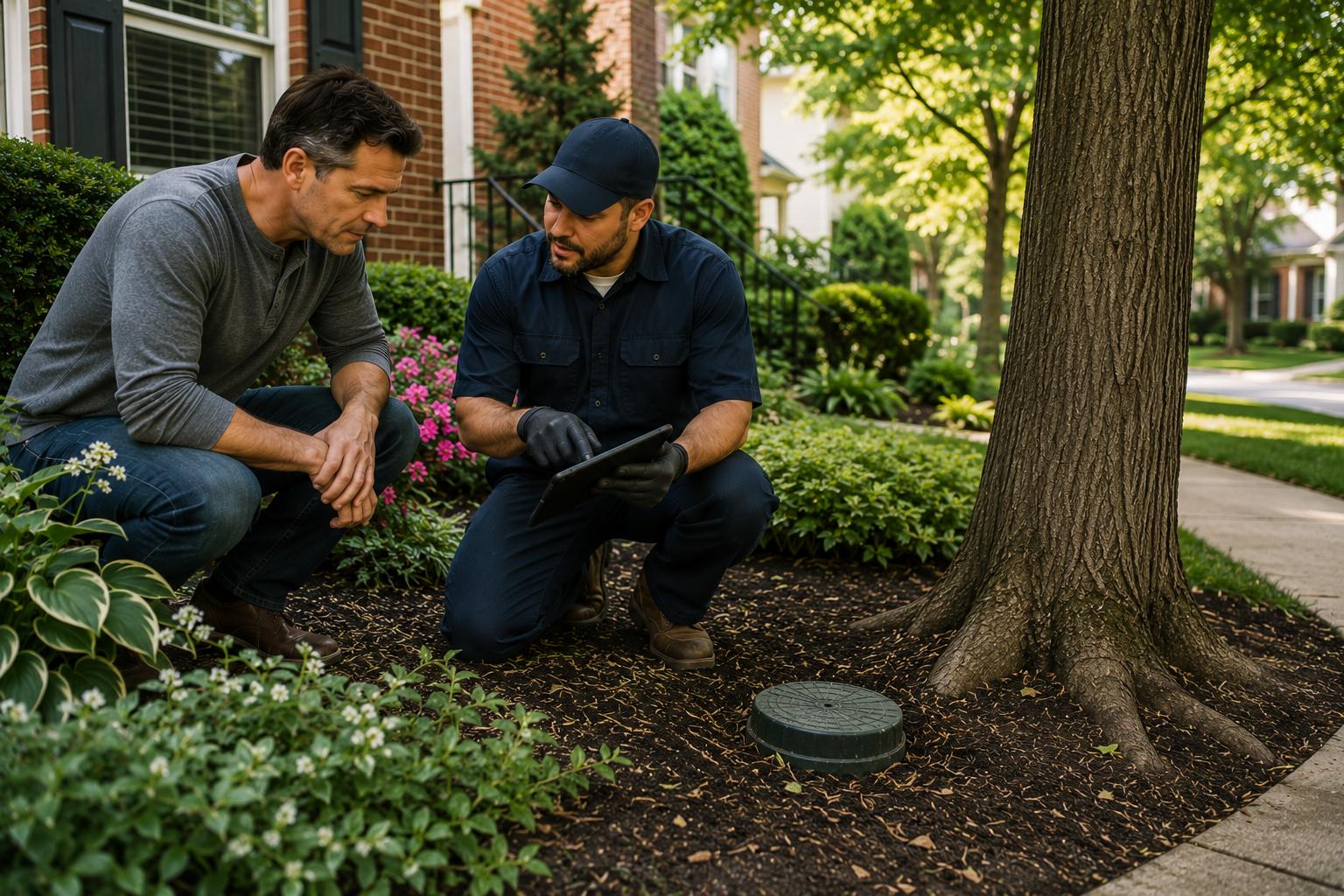
Tree roots are one of the most common reasons sewer lines clog, back up, or require repeated cleaning. Roots naturally grow toward moisture, and an aging sewer pipe can provide exactly what they are looking for: water, nutrients, and a small opening where they can enter.
Tree root prevention for sewer lines is not about removing every tree near a home. It is about understanding where the sewer line runs, choosing landscaping carefully, monitoring older pipes, maintaining cleanouts, and addressing small root problems before they become major blockages.
For Chicago homeowners, this is especially important. Many neighborhoods have mature parkway trees, older clay sewer pipes, finished basements, and aging underground infrastructure. A proactive approach can help reduce the risk of recurring sewer clogs, basement backups, and expensive emergency repairs.
Key Takeaways
- Tree roots enter sewer lines through cracks, loose joints, pipe separations, or deteriorated materials.
- Older clay sewer lines are especially vulnerable because roots can enter at joints or damaged sections.
- Preventing root problems starts with knowing where the sewer line runs before planting trees or shrubs.
- Routine camera inspections can identify early root intrusion before a full blockage occurs.
- Cleaning can remove roots temporarily, but repeated root intrusion may indicate a pipe defect that needs repair.
- Chicago homes with mature trees and older sewer lines should be more proactive about maintenance.
How Do You Prevent Tree Roots From Damaging Sewer Lines?
The best way to prevent tree roots from damaging sewer lines is to know the sewer line location, avoid planting large trees near the pipe route, choose sewer-safe landscaping, schedule inspections for older lines, maintain cleanout access, and address root intrusion early.
If roots have already entered the sewer line, preventative cleaning may help manage the problem, but repeated root growth usually means there is an opening in the pipe that should be inspected and evaluated.
Why Tree Roots Grow Into Sewer Lines
Tree roots do not break into a perfectly sealed sewer pipe because they are aggressive or unusual. In most cases, roots enter where the pipe already has a weakness.
Common entry points include:
- Cracked pipe walls
- Separated pipe joints
- Offset connections
- Loose clay tile joints
- Small gaps caused by soil movement
- Deteriorated pipe materials
Once a small root finds moisture inside the pipe, it can continue growing. Over time, that root mass can catch toilet paper, grease, wipes, and other debris. Eventually, wastewater flow becomes restricted or blocked.
Tree root intrusion is one reason homeowners should treat sewer maintenance as an ongoing responsibility rather than a one-time repair. For a broader maintenance overview, see Sewer Line Maintenance for Homeowners.
Why Chicago Homes Are Vulnerable to Root Intrusion
Tree root problems can happen anywhere, but Chicago has several conditions that make them especially relevant.
Older Sewer Pipes
Many older Chicago homes were built with clay sewer lines. Clay pipe can last a long time, but the joints between pipe sections can create opportunities for root entry as the line ages.
Cracks, shifting soil, and deteriorated connections can make the problem worse.
Mature Parkway Trees
Chicago neighborhoods often have large, established trees along streets, parkways, alleys, and property lines. These trees provide shade and neighborhood character, but their roots may extend farther than homeowners expect.
A tree does not need to be directly beside the house to affect a sewer line. Roots can travel toward moisture sources underground.
Basement Backup Risk
Many Chicago homes have basement floor drains, laundry areas, bathrooms, or finished basement living space. When a root blockage restricts the main sewer line, wastewater may back up through the lowest drains first.
Homeowners concerned about this risk should also review How to Prevent Basement Sewer Backups.
Heavy Rain and System Stress
Heavy rain can add stress to drainage systems. A sewer line that is already partially restricted by roots may be more likely to cause problems when water usage or system pressure increases.
Additional seasonal guidance is available in Preventing Sewer Problems During Heavy Rain.
Step 1: Find Out Where Your Sewer Line Runs
Before planting trees, building landscaping beds, installing hardscaping, or planning yard improvements, homeowners should understand the sewer line route.
The sewer line usually runs from the house toward the street, alley, or municipal connection, but the exact path can vary. Older properties may have unusual layouts, shared access issues, or previous repairs that changed the route.
Ways to identify the sewer line route may include:
- Reviewing property records or old repair documents
- Looking for exterior cleanout locations
- Having the sewer line located during a camera inspection
- Checking where the line exits the foundation
- Asking for documentation after any sewer repair or replacement work
Homeowner tip: Do not assume the sewer line runs in a perfectly straight path. Older properties may have bends, offsets, or past repairs that make the route less obvious.
Step 2: Plant Trees and Shrubs Carefully
Landscaping decisions can affect long-term sewer risk. The safest approach is to keep large trees away from known sewer line routes whenever possible.
Before planting, consider:
- The mature size of the tree
- The likely root spread
- The sewer line location
- The age and material of the sewer pipe
- Whether the property has had previous root problems
Small ornamental trees, shrubs, and shallow-rooted plants are usually less risky than large, fast-growing trees. However, no plant choice is a substitute for a structurally sound sewer line.
| Landscaping Choice | Sewer Line Risk | Homeowner Consideration |
|---|---|---|
| Large shade trees near the sewer route | Higher | Roots may eventually seek pipe moisture if openings exist |
| Small ornamental trees | Moderate to lower | Still consider mature root spread before planting |
| Shallow-rooted shrubs | Lower | Often better near utility areas, but placement still matters |
| Grass or simple planting beds | Lower | Usually least disruptive near sewer access points |
Step 3: Keep the Sewer Cleanout Accessible
A sewer cleanout provides access to the main sewer line for inspection, cleaning, and maintenance. If roots become a concern, cleanout access can make diagnosis and service less disruptive.
Problems occur when cleanouts are buried, hidden under landscaping, blocked by fencing, covered by hardscaping, or damaged.
Homeowners should:
- Know where the cleanout is located
- Keep the cleanout cap visible and accessible
- Avoid planting directly over cleanout access
- Protect the cleanout from lawn equipment or vehicle damage
- Check that the cap is not missing or broken
For more detail, see Sewer Cleanout Maintenance: What Homeowners Should Know.
Step 4: Use Camera Inspections to Catch Root Problems Early
A sewer camera inspection is one of the most useful tools for identifying root intrusion. Instead of guessing why drains are slowing down, a camera inspection can show whether roots, grease, debris, pipe damage, or another issue is restricting flow.
Camera inspections can help answer important questions:
- Are roots present inside the sewer line?
- Where are roots entering?
- Is the pipe cracked, separated, or offset?
- Is cleaning enough, or is repair worth considering?
- How severe is the restriction?
This information matters because root management is not always the same as sewer repair. A small root intrusion may be monitored or cleaned, while repeated root growth through a broken joint may require a more permanent solution.
Step 5: Clean the Line Before Roots Become a Full Blockage
Preventative sewer cleaning can remove roots before they become dense enough to block wastewater flow. This is especially useful for homes with a documented history of root intrusion.
However, cleaning should be based on actual conditions. Cleaning too rarely may allow roots to create a backup. Cleaning too often without inspecting the pipe may waste money or delay needed repairs.
For guidance on timing, see How Often Should a Sewer Line Be Cleaned?.
Mechanical Root Cutting
Mechanical root cutting can open the line by removing roots from inside the pipe. It may restore flow quickly, but it does not seal the crack or joint where roots entered.
Hydro Jetting
Hydro jetting uses pressurized water to clean the inside of the sewer line. It can be useful for certain root, grease, and sludge conditions when the pipe is structurally sound enough for the process.
Learn more in Hydro Jetting for Preventative Sewer Maintenance.
When Root Prevention Becomes a Repair Decision
Root prevention is most effective when the pipe is still structurally stable. Once roots repeatedly enter through the same damaged section, cleaning may become a temporary solution rather than a long-term fix.
Homeowners may need to consider repair options when:
- Roots return quickly after cleaning
- The same pipe section clogs repeatedly
- A camera inspection shows broken or collapsed pipe
- Pipe joints are severely separated
- The sewer line has major offsets or low spots
- Basement backups continue despite maintenance
The decision usually comes down to risk, cost, disruption, and how often problems return. A homeowner with occasional minor root growth may choose monitoring and periodic cleaning. A homeowner with repeated backups and a damaged pipe may decide repair is more practical.
Important: Repeated sewer cleaning can become expensive over time. If roots keep returning, the underlying pipe condition should be evaluated rather than assuming another cleaning will solve the problem permanently.
Cost Factors for Tree Root Prevention and Maintenance
Tree root prevention costs vary widely because the right approach depends on the property and pipe condition. Homeowners should avoid thinking of root prevention as one fixed service.
Cost factors may include:
- Whether the sewer line needs inspection only
- Whether roots are already present
- How severe the root intrusion is
- How accessible the cleanout is
- The cleaning method used
- The age and condition of the pipe
- Whether excavation or pipe repair is needed
- Whether basement backup damage has already occurred
Maintenance planning can help homeowners compare the cost of periodic inspections and cleaning with the risk of emergency service, cleanup, or repair. For broader budgeting context, see Sewer Line Maintenance Plan Cost.
How Tree Roots Contribute to Sewer Backups
Roots rarely cause a backup all at once. In most cases, the process develops gradually.
- A small opening forms in the sewer pipe.
- Fine roots enter through the opening.
- The roots grow inside the pipe where moisture is available.
- Toilet paper, grease, wipes, and debris catch on the roots.
- The restriction becomes large enough to slow or block flow.
- Wastewater backs up into the home through low drains.
This is why early warning signs matter. Slow drains, gurgling toilets, and recurring clogs should not be ignored, especially in homes with known tree exposure.
For a broader prevention checklist, read How to Prevent Sewer Line Backups.
Common Mistakes Homeowners Make With Tree Roots and Sewer Lines
- Planting large trees without locating the sewer line first
- Assuming roots cannot reach a sewer line because a tree is across the yard
- Clearing roots repeatedly without inspecting the pipe
- Ignoring slow drains after previous root problems
- Burying or covering the sewer cleanout with landscaping
- Assuming chemical treatments are a complete long-term solution
- Waiting until sewage backs up before scheduling maintenance
Many root-related sewer problems become more expensive because early warning signs are dismissed as normal drain issues. Recurring symptoms deserve closer attention.
Warning Signs of Tree Roots in a Sewer Line
Tree root intrusion can resemble other sewer problems, but certain patterns are worth watching.
- Clogs return after being cleared
- Multiple fixtures drain slowly at the same time
- Toilets bubble or gurgle
- Basement floor drains smell or back up
- Water backs up into tubs or showers
- Outdoor sewage odors appear near the sewer route
- A sewer inspection previously showed roots
Homeowner decision point: If root symptoms are recurring, a camera inspection is usually more useful than guessing whether the issue is roots, grease, pipe damage, or a municipal sewer problem.
Frequently Asked Questions
Can tree roots really break into a sewer line?
Tree roots usually enter through an existing weakness such as a crack, loose joint, or separated pipe section. Once roots find moisture inside the line, they can grow and create a blockage over time.
How do I know if roots are in my sewer line?
Common signs include recurring clogs, slow drains throughout the house, gurgling toilets, basement drain odors, and backups that return after cleaning. A sewer camera inspection is the clearest way to confirm root intrusion.
Should I remove a tree if roots are in my sewer line?
Not always. Tree removal does not automatically repair the damaged pipe or remove existing roots inside the line. The better first step is usually to inspect the sewer pipe and understand where roots are entering.
How often should roots be cleaned from a sewer line?
There is no universal schedule. Cleaning frequency should depend on inspection findings, how quickly roots return, pipe condition, and backup history. Repeated root cleaning may indicate the pipe needs repair.
Are older Chicago homes more likely to have root problems?
Many older Chicago homes have clay sewer lines, mature trees, and long-established underground infrastructure. These factors can increase the likelihood of root intrusion, especially if pipe joints have separated or cracked.
Does homeowners insurance cover tree root damage to sewer lines?
Coverage depends on the policy. Routine maintenance and gradual root intrusion are often treated differently from sudden covered damage. Homeowners should review their policy and any sewer or service line endorsements carefully.
Can hydro jetting remove tree roots?
Hydro jetting may help with some root and debris conditions when the pipe is suitable for the process. Severe root masses, broken pipe sections, or collapsed lines may require other methods or repairs.
Conclusion
Tree root prevention for sewer lines begins with awareness. Homeowners should know where the sewer line runs, choose landscaping carefully, keep cleanouts accessible, and pay attention to early drainage symptoms.
For Chicago homeowners, root prevention is especially important because mature trees and older sewer pipes are common. Preventative inspections and cleaning can help manage root risks, but repeated root intrusion usually points to a pipe defect that should be evaluated.
The most practical approach is to combine smart landscaping, regular monitoring, good drain habits, and timely inspections. That gives homeowners the best chance of reducing sewer backups, avoiding unnecessary emergency costs, and making informed repair decisions when needed.