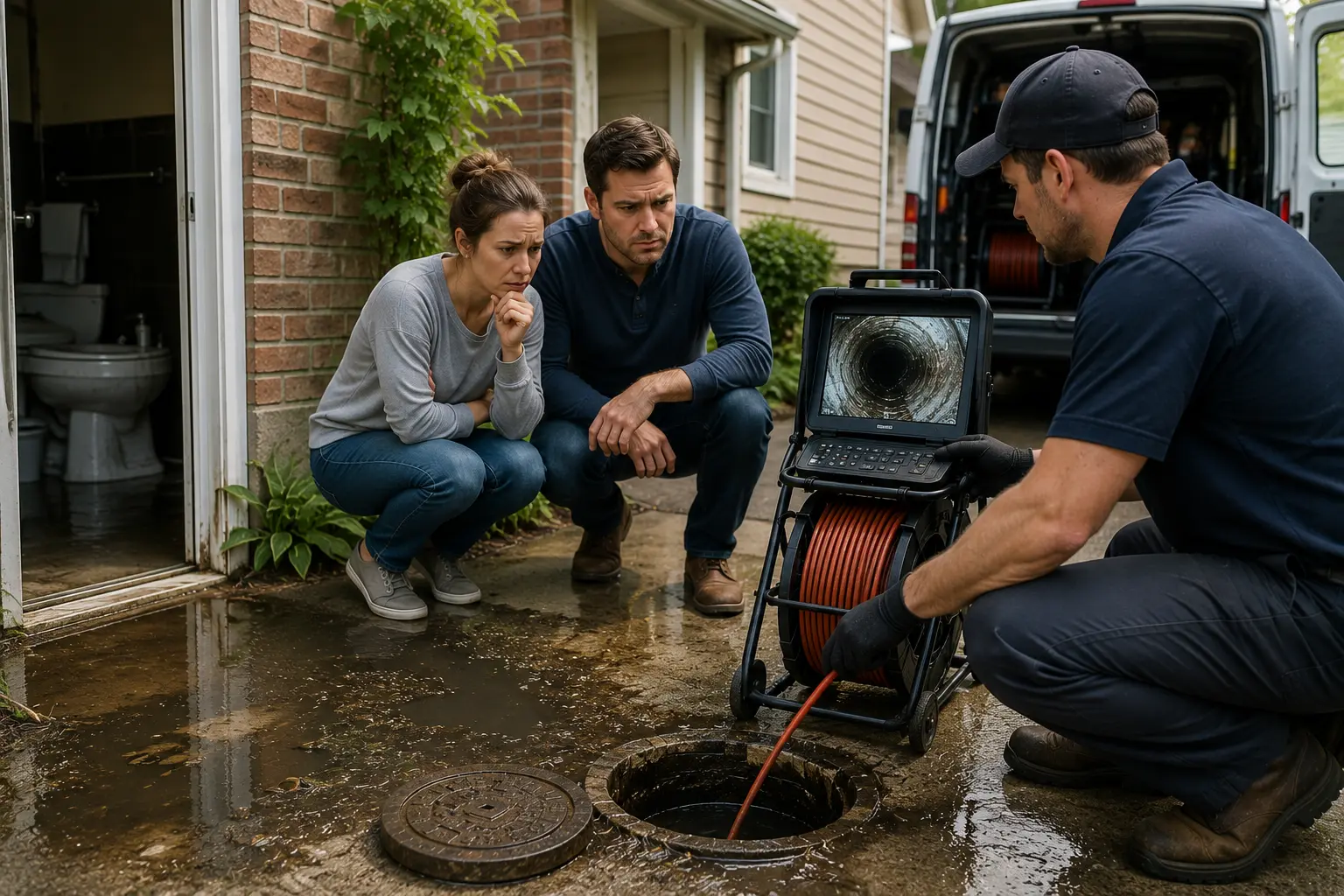
A sewer backup is one of the most stressful plumbing problems a homeowner can face. Once wastewater enters a basement, floor drain, tub, or lower-level fixture, the immediate priority is cleanup and safety. But after the visible mess is handled, an important question remains: why did the backup happen in the first place?
A sewer inspection after a sewer backup helps identify whether the problem was caused by a temporary blockage, tree roots, a damaged sewer line, a collapsed pipe section, heavy buildup, or another condition that may lead to another backup. For Chicago homeowners, this step is especially important because many homes have older sewer lines, mature nearby trees, and basement plumbing that can be vulnerable when the main line is restricted.
In many cases, clearing the line is only the first step. A camera inspection can provide the evidence needed to understand the cause, evaluate repair options, document the condition of the pipe, and decide whether further action is necessary.
For more homeowner-focused inspection guidance, visit the Sewer Inspections & Diagnosis hub.
Key Takeaways
- A sewer inspection after a backup helps determine why the backup occurred, not just whether the line is currently flowing.
- Drain cleaning may remove the immediate blockage without identifying the underlying cause.
- A sewer camera inspection can reveal roots, cracks, offsets, bellies, buildup, collapse risks, and other hidden defects.
- Chicago homes with older clay or cast iron sewer lines may be at higher risk for recurring backups.
- Inspection documentation can help homeowners compare repair options, maintain records, and communicate with insurance or contractors when needed.
- The best time to inspect is often after the line is cleared enough for the camera to pass through safely.
Why Inspect the Sewer Line After a Backup?
You should consider a sewer inspection after a sewer backup because the backup is usually a symptom of an underlying restriction or defect. A camera inspection can show whether the issue was caused by roots, pipe damage, heavy buildup, a sagging section, or a temporary obstruction.
Without an inspection, homeowners may only know that the line was cleared. They may not know whether the same problem is likely to return.
What a Sewer Inspection Looks For After a Backup
A sewer inspection after a backup usually involves sending a waterproof camera through the main sewer line once access is available. The camera allows the technician to evaluate the interior of the pipe and document visible defects.
The inspection may identify:
- Tree roots entering through joints or cracks
- Grease, sludge, wipes, or debris buildup
- Cracked or broken pipe sections
- Offset joints that catch waste and paper
- Low spots where water and solids collect
- Collapsed or partially collapsed pipe sections
- Corrosion or deterioration in older pipe materials
- Improper previous repairs or material transitions
For a broader explanation of what camera inspections can reveal, see What Does a Sewer Camera Inspection Show?.
Why Clearing the Backup Is Not Always Enough
When a sewer backup occurs, the immediate goal is to restore drainage. This may involve rodding, hydro jetting, or other drain cleaning methods. Once the line begins flowing again, it can feel like the problem has been solved.
However, drain cleaning does not always identify the reason the blockage formed. A line may drain again temporarily while still containing roots, cracks, sagging sections, or damaged pipe walls.
Important homeowner point: A sewer line can be cleared and still remain at risk for another backup. The inspection helps determine whether the cause was temporary or structural.
A homeowner who experiences repeated backups should not rely only on the fact that the line was opened. The pattern matters. If the same line keeps clogging, an inspection can help explain why.
When Should the Inspection Be Done?
The right timing depends on the condition of the line and the severity of the backup. In many cases, the inspection is most useful after the blockage has been cleared enough for the camera to travel through the pipe.
If the camera cannot pass through heavy roots, standing water, a solid obstruction, or a collapsed section, the inspection may be limited. The technician may need to clear the line first, inspect as far as possible, or recommend additional evaluation.
Common timing scenarios include:
| Situation | Inspection Timing | Why It Matters |
|---|---|---|
| Backup has just occurred | After immediate cleanup and line access are addressed | Safety and basic drainage usually come first. |
| Line was recently cleared | Soon after clearing, while the event is fresh | The inspection may reveal the cause before conditions change. |
| Camera cannot pass | After additional clearing or partial evaluation | A blockage that stops the camera may itself be significant evidence. |
| Insurance claim is involved | Before major repairs when possible | Documentation may help show pipe condition and cause. |
| Recurring backups | As soon as practical after another event | Repeated problems often indicate a deeper issue. |
If you are unsure whether the timing is right, review When Should You Get a Sewer Scope Inspection?.
Chicago-Specific Considerations After a Sewer Backup
Chicago homes face several sewer-related conditions that can make post-backup inspections especially useful.
Older Sewer Materials
Many Chicago homes still have older clay tile, cast iron, or mixed-material sewer lines. These materials can function for many years, but they may also develop cracks, separated joints, corrosion, or root openings over time.
Basement Plumbing
Chicago homes often have basements with floor drains, laundry fixtures, bathrooms, storage areas, or finished living spaces. When a sewer line backs up, the lowest fixtures in the home are usually the most vulnerable.
Mature Trees
Tree roots are a common concern in older neighborhoods. Roots can enter small openings in the pipe and gradually create a blockage. Even if the roots are cut out during drain cleaning, they may return if the pipe defect remains.
Heavy Rain and Combined Sewer Concerns
Some Chicago sewer issues are influenced by heavy rain, neighborhood drainage, or municipal sewer capacity. A private sewer camera inspection focuses on the homeowner’s line, but it can help distinguish private line defects from broader drainage concerns.
Historic Repairs and Unknown Pipe Routes
Older properties may have had partial repairs over the years. A camera inspection can sometimes reveal pipe transitions, older patchwork, or unclear routing that may affect future repair decisions.
Homeowners with older properties may also find Sewer Inspections for Older Chicago Homes useful.
What the Inspection Report Should Include
After a sewer backup, documentation matters. Homeowners should request more than a vague statement that the line “has roots” or “looks bad.” Clear documentation can help support repair decisions and provide a record for future reference.
A useful inspection report may include:
- Video footage of the inspection
- Still images of major defects
- The distance from the access point to each defect
- Pipe material if visible
- Approximate location of the problem area
- Notes about whether the full line was inspected
- Limitations such as standing water, debris, or blocked camera access
- Recommendations for cleaning, monitoring, repair, or further evaluation
If you need help understanding the report, see How to Read a Sewer Scope Report.
How Inspection Results Affect Repair Decisions
A post-backup inspection can lead to several different next steps. The right decision depends on what the camera shows, how severe the problem is, whether backups have happened before, and the homeowner’s tolerance for future risk.
Maintenance and Monitoring
If the inspection shows minor buildup or limited root intrusion, the homeowner may choose cleaning and periodic monitoring rather than immediate repair. This may be reasonable when the pipe is otherwise stable and the risk appears manageable.
Targeted Repair
If the problem is isolated to one section, a spot repair may be considered. This decision depends on pipe depth, location, accessibility, and whether the rest of the line appears serviceable.
More Extensive Replacement
If the inspection shows widespread deterioration, repeated defects, collapse risk, or multiple failing sections, replacement may be part of the discussion. A camera inspection helps homeowners understand whether the issue is localized or part of a larger pattern.
Additional Diagnostic Testing
Some problems require more than camera footage. If there are concerns about sewer gas, unknown connections, or leaks, other testing may be appropriate. For example, Sewer Line Smoke Testing Explained covers one type of diagnostic test used in specific situations.
Cost Factors After a Sewer Backup
Costs after a sewer backup can vary significantly because there may be multiple separate issues involved: cleanup, drain clearing, inspection, repairs, restoration, and sometimes insurance coordination.
Inspection-related cost factors may include:
- Whether there is an accessible cleanout
- Whether the line must be cleared before the camera can pass
- Whether video footage and a written report are included
- Whether line locating is needed
- Whether the inspection is performed during an emergency visit
- Whether additional diagnostic tests are required
Repair-related cost factors may include:
- Pipe depth
- Pipe material
- Length of damaged pipe
- Location under yard, sidewalk, driveway, or basement slab
- Accessibility for equipment
- Permit and restoration requirements
- Whether the problem is isolated or widespread
If the defect must be physically located before repair planning, Sewer Line Depth and Location Explained may help explain why depth and location matter.
Insurance Considerations After a Sewer Backup
Homeowners often wonder whether insurance will pay for a sewer inspection after a backup. The answer depends on the policy, the cause of the backup, whether sewer backup coverage or service line coverage exists, and how the claim is handled.
Some policies may cover cleanup from a covered sewer backup but exclude the pipe repair itself. Others may include optional endorsements that provide limited coverage for service line damage. Diagnostic costs may or may not be reimbursed depending on the circumstances.
Practical documentation tip: Keep copies of inspection videos, written reports, cleanup invoices, plumber notes, photos of damage, and any communication with insurance. Documentation can be useful even if coverage is uncertain.
Homeowners should review their policy language and speak directly with their insurer or agent before assuming what is covered.
Common Mistakes Homeowners Make After a Sewer Backup
Stopping After the Line Is Cleared
Clearing the line restores flow, but it does not always identify the cause. Without inspection, the same condition may lead to another backup.
Waiting Too Long to Investigate
Delaying inspection can make it harder to connect the backup to the pipe condition. Prompt documentation may be useful for decision-making and insurance records.
Accepting Vague Explanations
Statements like “probably roots” or “old pipe” are less useful than video evidence and location details.
Ignoring Repeat Backups
A second or third backup should be treated as a warning sign. Repeated sewer issues often point to a recurring obstruction or structural defect.
Not Asking for the Video
Homeowners should request inspection footage whenever possible. Video can help compare opinions and provide a record of the pipe’s condition.
Overlooking Poor Inspection Quality
A rushed or incomplete inspection can create false confidence. Learn what to watch for in Signs a Sewer Inspection Was Done Poorly.
Frequently Asked Questions
Do I need a sewer inspection after every backup?
Not always, but it is strongly worth considering after a significant backup, a recurring backup, or any situation where the cause is unclear. If the line was simply cleared without identifying the problem, an inspection can provide important context.
Should the sewer line be cleaned before the camera inspection?
Often, yes. If the line is blocked by roots, debris, or standing waste, the camera may not be able to pass or provide clear footage. Cleaning may be needed before a complete inspection is possible.
Can a sewer camera inspection prove what caused the backup?
It can often show likely causes such as roots, cracks, buildup, offsets, bellies, or collapse. However, some conditions may require additional evaluation, especially if the line cannot be fully inspected or if municipal sewer conditions are also involved.
How soon should I inspect after a sewer backup?
After immediate cleanup and safety concerns are handled, inspection should be considered as soon as practical. Prompt inspection can help document the condition of the line while the event is still fresh.
Will insurance cover the inspection?
Coverage depends on the policy and claim circumstances. Some policies may cover certain diagnostic costs connected to a covered loss, while others may not. Homeowners should review policy language and speak with their insurer.
What if the inspection finds tree roots?
Tree roots may be managed with cleaning in some situations, but recurring root intrusion often indicates an opening in the pipe. The next step depends on how severe the roots are and whether the pipe is structurally damaged.
What if the camera cannot get through the line?
A camera that cannot pass may indicate a severe blockage, roots, collapse, or heavy buildup. This limitation should be documented, and further clearing or evaluation may be needed.
Can an inspection prevent another sewer backup?
The inspection itself does not prevent backups, but it can identify the conditions that make another backup more likely. That information helps homeowners choose maintenance, repair, or monitoring steps.
Conclusion
A sewer inspection after a sewer backup helps homeowners move beyond cleanup and understand the reason the backup happened. This is especially important in Chicago, where older sewer lines, mature trees, basements, and past repairs can create hidden risks underground.
By documenting the condition of the sewer line, homeowners can make better decisions about cleaning, repairs, insurance documentation, and future prevention. A backup may be the first visible warning sign, but the inspection is what helps reveal whether the problem is temporary, recurring, or structural.