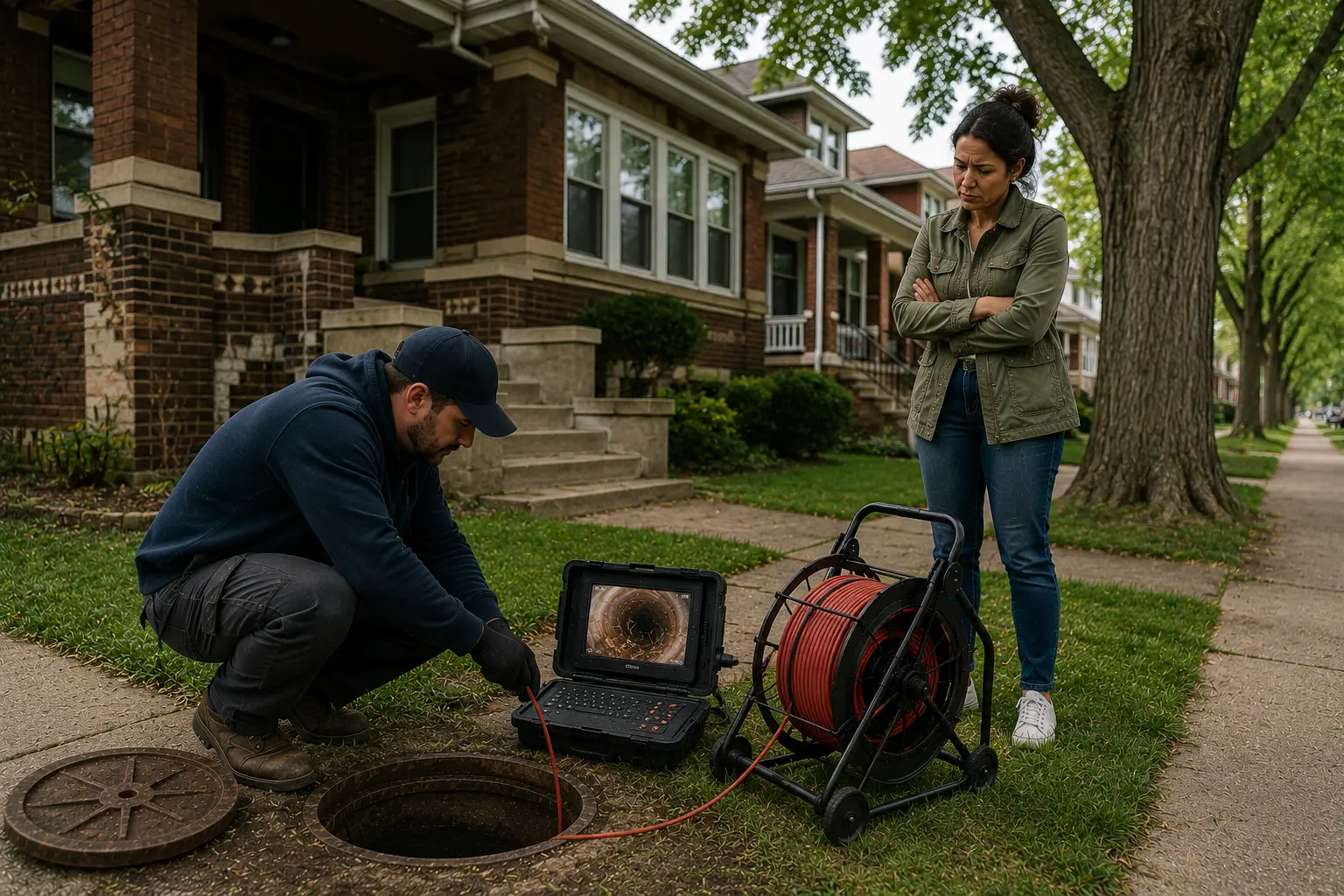
Older Chicago homes often have character, solid construction, and established neighborhoods, but they can also come with sewer systems that are decades old. A home may look well maintained on the surface while the underground sewer line has aging clay pipe, cast iron deterioration, root intrusion, offsets, partial repairs, or other hidden defects.
A sewer inspection for an older Chicago home gives homeowners a clearer view of the private sewer line before a backup, repair decision, home purchase, or renovation creates urgency. The goal is not to assume every older sewer line is failing. The goal is to understand the actual condition of the pipe so decisions are based on evidence rather than age alone.
For many older properties, a sewer camera inspection can help identify whether the line is stable, needs cleaning, should be monitored, or requires further evaluation. It can also help locate defects, document pipe material, and reveal past repairs that may not be obvious from property records.
For more homeowner-focused resources on sewer inspections and diagnosis, visit the Sewer Inspections & Diagnosis hub.
Key Takeaways
- Older Chicago homes often have sewer lines made from clay, cast iron, or mixed materials.
- A standard home inspection usually does not provide a detailed view inside the underground sewer line.
- Sewer inspections can reveal roots, cracks, offsets, pipe bellies, corrosion, buildup, collapse risks, and prior repairs.
- Older homes with basements, mature trees, past backups, or unknown sewer history are strong candidates for inspection.
- Camera inspection findings should be reviewed along with location, depth, access, and repair history.
- Not every older sewer line needs replacement, but hidden problems should be documented before they become emergencies.
Should Older Chicago Homes Get Sewer Inspections?
Yes, many older Chicago homes should have a sewer inspection, especially if the sewer line has never been scoped, the home has mature trees nearby, the basement has experienced drain problems, the property is being purchased, or there is no clear documentation of sewer replacement. A camera inspection can reveal hidden pipe conditions that are not visible during a normal walkthrough.
Age alone does not prove a sewer line is bad, but it does increase the value of knowing what is actually underground. A sewer inspection helps homeowners separate normal aging from defects that may require cleaning, monitoring, repair, or replacement planning.
Why Older Chicago Homes Deserve Extra Sewer Attention
Chicago has many homes built long before modern sewer materials and current installation practices became common. Over time, underground pipes can be affected by soil movement, tree roots, corrosion, settlement, past repairs, heavy use, and seasonal freeze-thaw cycles.
Older homes may also have incomplete records. A homeowner might know that “some sewer work” was done years ago without knowing what section was repaired, what material was used, whether permits were involved, or whether the rest of the line remains original.
A sewer inspection helps create a current record of pipe condition. For a general overview of the inspection process, see Sewer Camera Inspection in Chicago: What Homeowners Should Know.
Common Sewer Line Materials in Older Homes
The material of the sewer line can influence what defects are most likely to appear. A camera inspection may help identify visible pipe material, although some sections may be obscured by water, debris, or limited access.
| Pipe Material | Common Concerns | Why Inspection Matters |
|---|---|---|
| Clay tile | Separated joints, cracking, root intrusion, offsets | Roots often enter through joints or damaged sections. |
| Cast iron | Corrosion, scaling, rough interior surfaces, deterioration | Internal wear may reduce flow or weaken the pipe. |
| Concrete or older masonry-related components | Surface deterioration, joint issues, infiltration | Condition can vary widely depending on age and installation. |
| PVC replacement sections | Material transitions, slope issues, connection quality | Newer sections may be sound, but transitions need review. |
| Mixed materials | Uneven connections, mismatched repairs, settlement points | Transitions between old and new pipe can create weak spots. |
What a Sewer Inspection Can Reveal in an Older Home
A sewer inspection can show much more than whether water is currently flowing. It can help identify the condition of the pipe and whether current symptoms may become recurring problems.
Common findings include:
- Tree root intrusion
- Cracked clay pipe
- Broken or missing pipe sections
- Offset joints
- Pipe bellies or standing water
- Corroded cast iron
- Grease, sludge, or debris buildup
- Improper prior repairs
- Material transitions
- Collapsed or partially collapsed sections
- Camera access limitations
For a deeper explanation of visible inspection findings, read What Does a Sewer Camera Inspection Show?.
When Older Homes Should Be Inspected
Older homes may benefit from inspection at several key decision points. The right timing depends on symptoms, property history, and upcoming plans.
Before Buying an Older Chicago Home
A sewer scope can be especially valuable during a home purchase. The underground sewer line is not usually evaluated in detail during a standard home inspection, and repairs after closing can be expensive and disruptive.
Buyers should pay close attention if the property has mature trees, a finished basement, prior water damage, slow drains, or no sewer repair documentation. See Sewer Inspection Before Buying a House for buyer-specific guidance.
After a Sewer Backup
A backup may be the first obvious sign of a long-developing problem. After cleanup and line clearing, a camera inspection can help determine whether the cause was temporary or structural.
For more detail, review Sewer Inspection After a Sewer Backup.
When Drain Problems Keep Returning
Repeated clogs, slow drains throughout the house, gurgling fixtures, and frequent rodding can point to an issue in the main sewer line rather than a simple fixture clog.
Before Major Renovations or Landscaping
If a homeowner plans to finish a basement, replace a driveway, build a garage, install a patio, or make major landscaping changes, locating and inspecting the sewer line first can prevent future surprises.
When Sewer History Is Unknown
If no one can confirm whether the line has been inspected, cleaned, repaired, or replaced, a baseline sewer scope can create useful documentation.
Chicago-Specific Considerations for Older Homes
Older Chicago properties often have conditions that make sewer inspections more useful and more complex.
Mature Trees and Root Intrusion
Tree-lined streets are part of many Chicago neighborhoods, but roots can enter older sewer lines through cracks, loose joints, and separated sections. A camera inspection can show whether roots are light, severe, isolated, or widespread.
Basement Fixtures and Backup Risk
Many older homes have basement floor drains, laundry areas, utility sinks, or bathrooms. If the main sewer line becomes restricted, the lowest fixtures in the house may be the first places where a backup appears.
Mixed Repair Histories
A sewer line may contain original clay, older cast iron, newer PVC, and spot repairs from different decades. Transitions between materials can be important inspection points.
Urban Access Challenges
Repair access may be complicated by sidewalks, parkways, gangways, garages, alleys, fences, patios, landscaping, and neighboring structures. Knowing where the defect is located can matter as much as knowing what the defect is.
Older Records May Be Incomplete
Older homes may not have clear sewer documentation. Even when a seller or prior owner mentions past work, a camera inspection can help confirm what is visible today.
Chicago homeowner tip: In an older home, ask whether the inspection identifies pipe material, defect location, distance from the access point, and whether the line was fully inspected. Those details are often more useful than a simple “pass” or “fail.”
How Depth and Location Affect Older Sewer Lines
In older Chicago homes, a sewer defect should not be evaluated only by what it looks like on camera. Homeowners also need to know where it is located and how difficult it may be to access.
A cracked pipe under open yard space may involve a different repair discussion than a similar crack under a basement slab, garage, driveway, sidewalk, or parkway. Depth also matters because deeper lines can involve more excavation, safety planning, and restoration.
If the inspection identifies a defect, line locating may help connect the camera finding to the physical property. For more detail, see Sewer Line Depth and Location Explained.
What a Good Inspection Report Should Include
Older sewer lines often have more than one issue, so documentation matters. Homeowners should avoid relying only on vague comments such as “old pipe” or “roots in the line.”
A useful sewer scope report should include:
- The access point used
- The direction the camera traveled
- Total distance inspected
- Pipe material observations
- Visible defects and approximate distances
- Whether roots, cracks, offsets, bellies, corrosion, or collapse were observed
- Whether standing water or debris limited visibility
- Whether the full line was inspected
- Photos or video footage when available
- Clear recommendations tied to the evidence
For help reviewing inspection results, see How to Read a Sewer Scope Report.
Cost Factors for Older Home Sewer Inspections and Follow-Up
The cost of a sewer inspection and any follow-up work can vary widely. Homeowners should focus on what is included and what information the inspection provides rather than assuming all inspections are equivalent.
Inspection cost factors may include:
- Whether there is an accessible cleanout
- Whether the line needs cleaning before inspection
- Whether video footage is provided
- Whether a written report is included
- Whether electronic locating is performed
- Whether depth estimates are needed
- Whether multiple access points must be used
- Whether the inspection is part of a real estate transaction or emergency visit
Repair cost factors may include:
- Pipe depth
- Defect location
- Length of affected pipe
- Pipe material
- Access through yard, basement, sidewalk, driveway, or alley
- Restoration of concrete, landscaping, or finished areas
- Permit and inspection requirements
- Whether defects are isolated or widespread
Because older homes often have more unknowns, documentation and locating can be valuable before comparing repair estimates.
Maintenance, Monitoring, Repair, or Replacement?
A sewer inspection does not automatically mean the line needs replacement. The right next step depends on the condition of the pipe, severity of defects, symptom history, and future risk.
| Inspection Result | Possible Next Step | Decision Factor |
|---|---|---|
| Clear older line with minor wear | Document condition and monitor | No current symptoms or major defects |
| Light roots | Cleaning and periodic monitoring | Whether roots are recurring or worsening |
| Repeated root intrusion | Further evaluation or repair planning | Root severity and pipe opening location |
| Offset joint | Monitor or repair depending on restriction | Whether debris catches and backups occur |
| Pipe belly | Evaluate severity and backup history | Length of standing water and symptom pattern |
| Cracked or broken pipe | Repair estimate or replacement discussion | Structural condition and access |
| Collapse or severe obstruction | Repair planning | Urgency, location, and ability to restore flow |
Related Diagnostic Tools for Older Homes
Camera inspection is often the primary tool for older sewer lines, but other diagnostic methods may be useful depending on the concern.
Line Locating
Locating helps identify the route, depth, and surface location of defects. This is especially helpful when older lines run under concrete, garages, sidewalks, or mature landscaping. Learn more in Sewer Line Locating Services: What to Expect.
Smoke Testing
Smoke testing can help investigate sewer odors, hidden openings, venting problems, and improper connections. It is not a replacement for camera inspection but may be useful in specific situations.
Dye Testing
Dye testing can help trace water movement through drains, downspouts, or suspected connections. It may be helpful when basement water or unclear drainage routing is part of the concern.
Common Mistakes Homeowners Make With Older Sewer Lines
Assuming Old Automatically Means Failed
Some older sewer lines remain functional for many years. The inspection should determine actual condition, not simply judge the pipe by age.
Assuming No Symptoms Means No Problem
A sewer line can have roots, offsets, or early deterioration before a backup occurs. Lack of symptoms does not always mean lack of risk.
Skipping Inspection During a Home Purchase
Older homes can have hidden sewer defects that a standard inspection may not reveal. Buyers should consider sewer scope inspection as part of due diligence.
Accepting Vague Findings
Comments like “old clay line” or “some roots” are not enough. Homeowners need severity, location, footage, and recommendations.
Ignoring Location and Access
A defect’s location can affect repair difficulty. A problem under a driveway, basement slab, sidewalk, or garage may require more planning.
Trusting Poor Documentation
If the inspection lacks video, distance measurements, or clear explanations, it may not be reliable enough for major decisions. Review Signs a Sewer Inspection Was Done Poorly.
Frequently Asked Questions
Should every older Chicago home have a sewer inspection?
Not every older home needs immediate inspection, but many benefit from one, especially if the sewer history is unknown, the property has mature trees, the home has a basement, or the owner is buying, selling, renovating, or dealing with drain issues.
What sewer problems are most common in older homes?
Common issues include tree root intrusion, clay pipe cracks, separated joints, offset pipe sections, cast iron corrosion, buildup, pipe bellies, partial collapses, and prior repairs that may not have been documented.
Can a standard home inspection find sewer problems?
A standard home inspection may identify visible plumbing concerns, but it usually does not provide a camera view inside the underground sewer line. A sewer scope is a separate diagnostic step.
Does an older sewer line always need to be replaced?
No. Some older lines may only need cleaning, monitoring, or targeted repair. Replacement decisions depend on pipe condition, severity of defects, repair history, location, and risk of future backups.
How often should an older sewer line be inspected?
There is no universal schedule. Inspection timing depends on symptoms, tree root history, prior backups, pipe condition, age, and whether the homeowner is planning major work or a sale.
Can sewer inspection findings help with insurance?
Inspection findings may help document pipe condition after a backup or service line issue. Coverage depends on the policy, endorsements, exclusions, and claim circumstances.
What if the inspection finds roots but the line still drains?
Roots can be present before a full blockage occurs. The next step depends on severity, recurrence, pipe condition, and whether the roots indicate a crack or open joint.
What if no cleanout is visible?
Older homes may have hidden, buried, interior, or outdated access points. The inspector may need to identify the best available access or recommend adding a proper cleanout if future maintenance is likely.
Conclusion
Sewer inspections are especially valuable for older Chicago homes because underground sewer lines may contain original materials, root intrusion, corrosion, past repairs, or hidden defects that are not visible from inside the house. A sewer line can function today while still carrying risks that homeowners should understand.
A good inspection helps document the pipe material, condition, defect locations, access limitations, and likely next steps. It can help homeowners decide whether to monitor, clean, locate, repair, or plan for replacement based on evidence rather than assumptions.
For older properties, the best approach is practical and balanced: do not panic because a sewer line is old, but do not ignore the underground system simply because drains currently work. A clear sewer inspection can turn uncertainty into a more informed maintenance and repair plan.