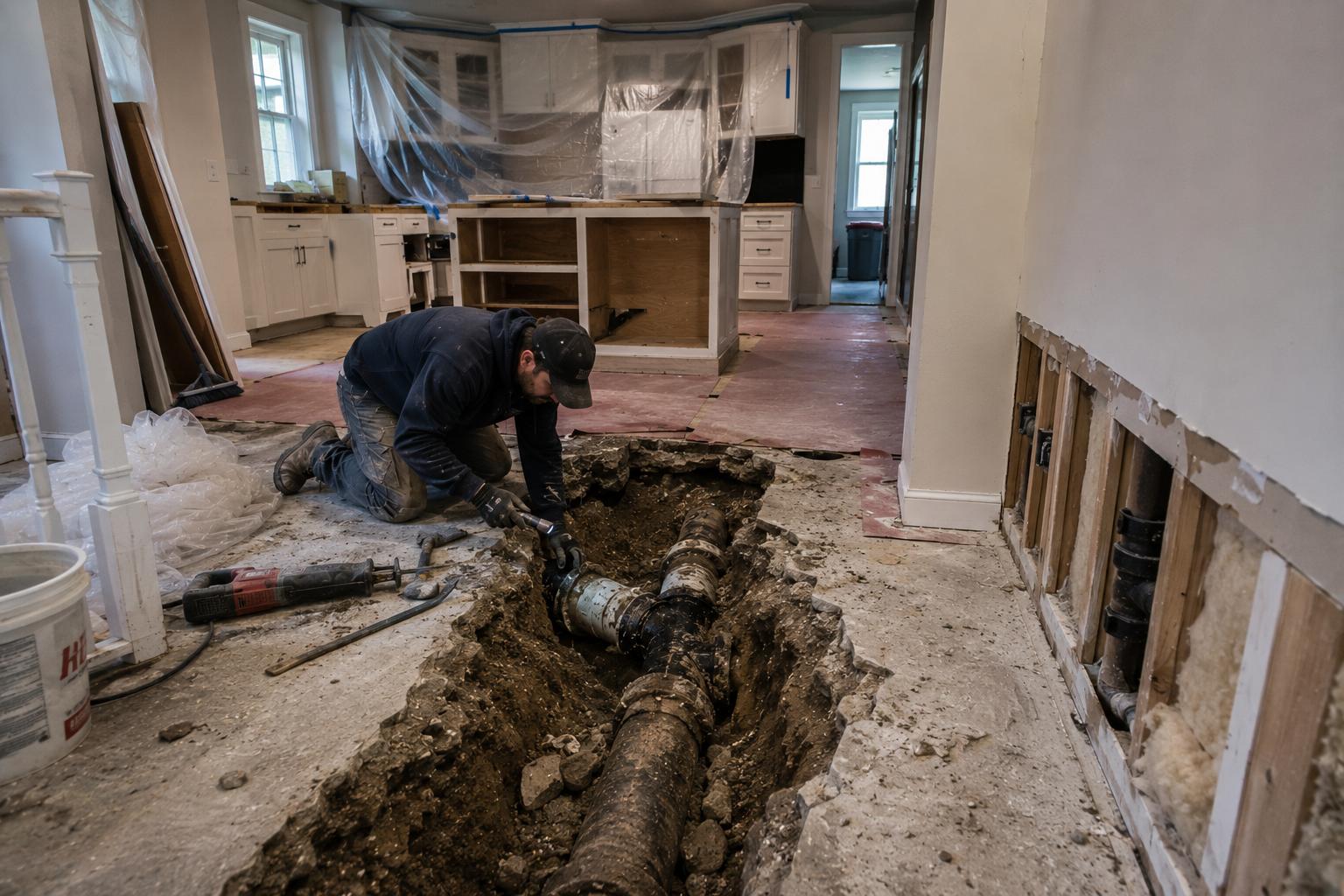
Home renovations can make an older Chicago house more comfortable, functional, and valuable. Finished basements, added bathrooms, new laundry rooms, kitchen remodels, rear additions, and converted living spaces can all improve how a home works day to day. But after renovation, some homeowners begin noticing sewer problems that were not obvious before.
Sewer problems after a home renovation may be caused by increased plumbing demand, improper drain connections, construction debris, changes to basement plumbing, or an older sewer line that was already weak before the project began. In Chicago, many older homes still have clay sewer pipe, mature tree root exposure, lower-level drains, and sewer systems that were not designed for modern fixture layouts.
The key question is whether the renovation caused the problem, exposed an existing issue, or placed new demand on an aging sewer line. Understanding that distinction can help homeowners decide whether the next step should be cleaning, inspection, repair, replacement, or a closer review of the renovation work. For more older-property guidance, visit the Older Chicago Homes & Property Types resource hub.
Key Takeaways
- Sewer problems after renovation may be caused by construction debris, added fixtures, poor drainage design, or pre-existing sewer defects.
- Older Chicago homes may have clay sewer pipe, roots, offsets, bellies, or partially deteriorated lines that become more noticeable after remodeling.
- Finished basements and added lower-level bathrooms can increase sewer backup risk if the main line is already compromised.
- A sewer camera inspection can help determine whether the issue is inside the renovated plumbing or in the main sewer line.
- Homeowners should not assume a renovated interior means the underground sewer line was updated.
- Repair decisions should be based on the cause, location, severity, and recurrence of the problem.
Why Sewer Problems Can Show Up After Renovation
Sewer problems can appear after a renovation because the project may add new plumbing fixtures, increase water use, disturb old pipes, send debris into drain lines, or reveal a weakness that already existed in the sewer system. A home may look newly updated inside while the underground sewer line remains decades old.
In older Chicago homes, this is especially important. If the home has clay sewer pipe, root intrusion, offset joints, a sewer belly, or a partially restricted main line, a renovation may make symptoms appear more often. A sewer inspection can help determine whether the problem is related to the renovation work, the main sewer line, or both.
Common Renovations That Can Reveal Sewer Problems
Not every renovation creates sewer risk. However, certain projects are more likely to involve drain lines, basement plumbing, or increased sewer demand.
Finished Basement Projects
Finishing a basement often adds flooring, drywall, bathrooms, laundry areas, wet bars, or new drains. These improvements can make the basement more useful, but they can also increase the consequences of a sewer backup.
Homeowners with newly finished lower levels should review Sewer Repair for Homes With Finished Basements and Sewer Backup Problems in Chicago Basements.
Added Bathrooms
Adding a bathroom increases wastewater flow and creates new drain connections. If the main sewer line is partially blocked or poorly sloped, the added fixture load may expose a problem that was already developing.
Kitchen Remodels
Kitchen renovations may involve new sink lines, dishwashers, disposals, or drain rerouting. Grease, food debris, construction material, or poor slope can contribute to drainage complaints after the project.
Laundry Room Relocation
Moving laundry to a basement, upper floor, or new utility area can change drain demand. Washing machines discharge large volumes of water quickly, which may expose restrictions in older drain or sewer lines.
Home Additions and Unit Conversions
Adding living space, converting a single-family home to multi-unit use, or creating a garden-level living area can increase the number of fixtures and users relying on the sewer system.
For multi-unit concerns, see Sewer Repair for Two-Flats in Chicago and Sewer Repair for Multi-Family Buildings.
Was the Sewer Problem Caused by the Renovation?
Homeowners often assume that if a sewer issue appeared after renovation, the contractor must have caused it. Sometimes that may be true. Other times, the renovation simply revealed an existing sewer weakness.
| Possible Cause | How It Happens | What to Investigate |
|---|---|---|
| Construction debris | Mortar, grout, drywall compound, wipes, or debris enter drains | Check branch lines and main line for blockage |
| Added fixture demand | New bathrooms, laundry, or kitchens increase flow | Evaluate whether the main sewer line can handle use |
| Poor drain slope | New piping does not drain properly by gravity | Inspect renovated drain layout |
| Improper connection | New plumbing ties into the system incorrectly | Review work quality and connection points |
| Old clay pipe weakness | Existing pipe cracks, roots, or offsets become more noticeable | Perform sewer camera inspection |
| Pre-existing partial blockage | Renovation increases use of a line already restricted | Compare symptoms before and after renovation |
Practical note: Timing alone does not prove cause. A sewer camera inspection, review of renovation plumbing, and symptom history are usually needed to understand what changed.
Common Sewer Problems After Renovation
Slow Drains Throughout the Home
If multiple fixtures drain slowly after renovation, the problem may involve the main sewer line or a shared drain branch. This is different from one slow sink or shower, which may be localized.
Basement Floor Drain Backups
Basement backups after renovation are especially concerning. If a new bathroom, laundry room, or finished space was added, the backup may indicate that the lower-level plumbing is connected to a sewer line with existing restrictions.
Recurring Clogs
A single clog after construction may be caused by debris. Repeated clogs may point to pipe defects, roots, poor slope, or a recurring obstruction.
Gurgling Fixtures
Gurgling toilets, tubs, or basement drains can indicate poor venting, partial blockage, or main line restriction. The location of the sound matters.
Sewer Odors
Sewer odors after renovation may come from dry traps, venting issues, improper connections, damaged drains, or sewer line problems. The source should be identified before assuming the cause.
Backups During Laundry or Heavy Water Use
Large water discharges can reveal a partially blocked or poorly sloped sewer line. If backups occur when the washing machine drains, the main line or branch line may be struggling to handle flow.
Why Older Chicago Homes Are More Vulnerable
Many older Chicago homes were built before modern plumbing layouts and fixture expectations became common. A home may have originally had fewer bathrooms, less laundry demand, and no finished basement plumbing.
Renovations can change how the sewer system is used without replacing the underground line. That can create problems when the existing sewer lateral is already aging or partially restricted.
Clay Sewer Pipe
Clay pipe is common in older Chicago homes. It can crack, shift, separate at joints, and allow root intrusion over time. A renovation may increase flow through a pipe that was already near failure.
For more information, see Clay Sewer Pipes in Chicago Homes: Risks and Replacement Options.
Tree Root Intrusion
Homes near mature trees may already have roots inside the sewer line. Increased water use after renovation may make root-related restrictions more noticeable.
Related guidance is available in Sewer Issues in Homes Near Large Trees.
Older Property Types
Chicago bungalows, greystones, two-flats, and rental properties may have older sewer lines, limited access, and a history of partial repairs. These homes often need extra sewer attention before and after major remodeling.
For a broader overview, see Common Sewer Problems in Older Chicago Homes.
How a Sewer Camera Inspection Helps
A sewer camera inspection can help separate a renovation-related drain problem from an existing underground sewer issue. It can show whether the main line is damaged, blocked, or structurally compromised.
A sewer camera inspection may reveal:
- Construction debris inside the line
- Grease, sludge, or buildup
- Roots entering the pipe
- Cracked clay pipe
- Offset joints
- Standing water from a sewer belly
- Collapsed sections
- Improper transitions between old and new pipe
- Evidence of prior partial repairs
For buyers evaluating a recently renovated older home, inspection can be especially useful before closing. See Sewer Inspection Before Buying a Chicago Home.
Repair Options After Renovation-Related Sewer Symptoms
The right solution depends on the source of the problem. Homeowners should avoid approving major sewer work until the location and cause are understood.
Drain Cleaning
Cleaning may be enough if the issue is caused by construction debris, grease buildup, or a simple blockage. However, cleaning does not fix cracked pipe, poor slope, roots, offsets, or collapse.
Correction of Renovation Plumbing
If the problem is caused by poor drain slope, improper venting, or an incorrect connection, the solution may involve correcting the newly installed plumbing rather than replacing the sewer line.
Spot Repair
If inspection shows one damaged section, a spot repair may be appropriate. This may apply to a root entry point, cracked area, or weak transition between old and new pipe.
Partial Replacement
Partial replacement may be considered when a longer section is damaged but the entire line does not require replacement. Homeowners should ask what older sections will remain.
Full Sewer Line Replacement
Full replacement may be considered when the sewer line has widespread deterioration, repeated root intrusion, major offsets, collapse, or a history of recurring backups. This is a larger decision but may protect a newly renovated home from repeated damage.
Cost Factors Homeowners Should Consider
Sewer problems after renovation can be frustrating because the homeowner has often just invested money into the property. The cost depends on whether the issue is minor, localized, structural, or related to the renovation work itself.
Cost factors may include:
- Whether the problem is in a branch drain or main sewer line
- Whether inspection or locating is needed
- Presence of construction debris
- Pipe material and condition
- Depth and location of the damaged section
- Whether excavation is required
- Whether trenchless methods are possible
- Access through finished basement areas, yard, sidewalk, or gangway
- Concrete, flooring, drywall, or landscaping restoration
- Whether permits or inspections are required
- Whether a contractor warranty or renovation scope may apply
| Situation | Likely Cost Concern |
|---|---|
| Construction debris clog | Cleaning and possible branch drain evaluation |
| Poorly sloped new drain | Correction of renovation plumbing |
| Roots in old clay pipe | Cleaning, spot repair, or replacement decision |
| Backup into finished basement | Cleanup and restoration in addition to sewer repair |
| Collapsed sewer line | Excavation or replacement scope |
| Defect under new finishes | Access and restoration may increase disruption |
Chicago-Specific Renovation Considerations
Finished Basement Conversions
Chicago homeowners often finish basements to add living space, offices, bedrooms, or family rooms. If sewer conditions are not evaluated first, a backup can damage the new finishes soon after the project is complete.
Older Two-Flats and Multi-Family Renovations
Renovating a two-flat or multi-family building may increase plumbing demand across multiple units. Added kitchens, bathrooms, laundry rooms, or garden-level spaces can place more stress on aging sewer lines.
Rental Property Renovations
Rental property owners may renovate to improve tenant appeal or increase rent potential. Sewer problems after renovation can affect tenant use, habitability, and operating costs.
For rental-specific concerns, see Sewer Replacement for Rental Properties.
Recent Renovation Before Sale
If sewer issues appear after a renovation and before listing, sellers should document the diagnosis and any repairs. Buyers may ask whether the sewer line was inspected during the remodeling process.
Related selling concerns are covered in Sewer Line Problems Before Selling a House.
Insurance, Warranty, and Responsibility Questions
When sewer problems appear after renovation, homeowners often wonder whether insurance, the contractor, or the homeowner is responsible. The answer depends on the facts.
Questions to consider include:
- Was the problem caused by construction debris?
- Was new plumbing connected correctly?
- Was the sewer line inspected before renovation?
- Was the damaged pipe outside the renovation scope?
- Did the contractor provide any warranty on plumbing work?
- Does homeowners insurance include sewer backup or service line coverage?
- Are wear, roots, age, or deterioration excluded?
- Is there documentation of the issue before and after renovation?
Important: Insurance may treat sudden water damage differently from age-related sewer failure. Contractor responsibility may depend on the renovation contract, scope of work, workmanship, and evidence of cause.
Common Mistakes Homeowners Make
Assuming the Renovation Contractor Caused Every Sewer Issue
The timing may be suspicious, but older sewer lines can fail after renovation because the project increased usage or exposed a pre-existing weakness.
Assuming the Sewer Line Was Updated Because the Interior Was Updated
New bathrooms, flooring, and fixtures do not prove the underground sewer line was replaced.
Restoring Finished Areas Before Diagnosing the Sewer
If a newly finished basement backs up, restoring the finishes before fixing the sewer problem may lead to repeated damage.
Ignoring Camera Inspection
Without inspection footage, it can be difficult to determine whether the problem is debris, roots, poor slope, cracked pipe, or collapse.
Adding Basement Plumbing Without Evaluating Sewer Capacity
Bathrooms, laundry areas, and wet bars may work properly only if the existing sewer line can handle the additional demand.
Failing to Keep Renovation Records
Contracts, permits, invoices, inspection records, and sewer footage can be important if questions arise after the project.
Frequently Asked Questions
Can a home renovation cause sewer problems?
Yes. Renovation work can contribute to sewer problems if debris enters drains, plumbing is connected improperly, drain slope is poor, or new fixtures increase demand on an older sewer line.
Why did my sewer start backing up after finishing the basement?
The new basement plumbing may have exposed an existing main line problem, or the work may have introduced a drainage issue. A sewer inspection can help identify the cause.
Does a newly renovated home still need a sewer inspection?
Yes, especially if the home is older. Interior renovations do not necessarily mean the underground sewer line was updated or inspected.
Can construction debris clog a sewer line?
Yes. Materials such as grout, mortar, drywall compound, wipes, dirt, or debris can enter drains during renovation and create blockages.
Who is responsible if sewer problems appear after renovation?
Responsibility depends on the cause, contract, scope of work, workmanship, insurance coverage, and documentation. Homeowners may need inspection evidence to determine what happened.
Will insurance cover sewer problems after renovation?
Coverage varies. Insurance may exclude age-related deterioration, roots, or wear. Sewer backup or service line endorsements may apply in some situations, but homeowners should review the policy carefully.
Should I inspect the sewer line before remodeling an older Chicago home?
It is often wise, especially before finishing a basement, adding bathrooms, relocating laundry, or buying a recently renovated older home. Inspection can identify problems before new finishes are installed.
Conclusion
Sewer problems after a home renovation can be frustrating because they often appear after a homeowner has already invested in improving the property. In older Chicago homes, the issue may come from construction debris, new plumbing demand, poor drain design, or an aging sewer line that was already vulnerable.
The most practical approach is to identify where the problem is, determine whether it is related to the renovation or the main sewer line, and document the findings clearly. A finished home should not rest on an unknown sewer system. For older Chicago properties, sewer evaluation is an important part of protecting renovation work, basement improvements, and long-term property value.