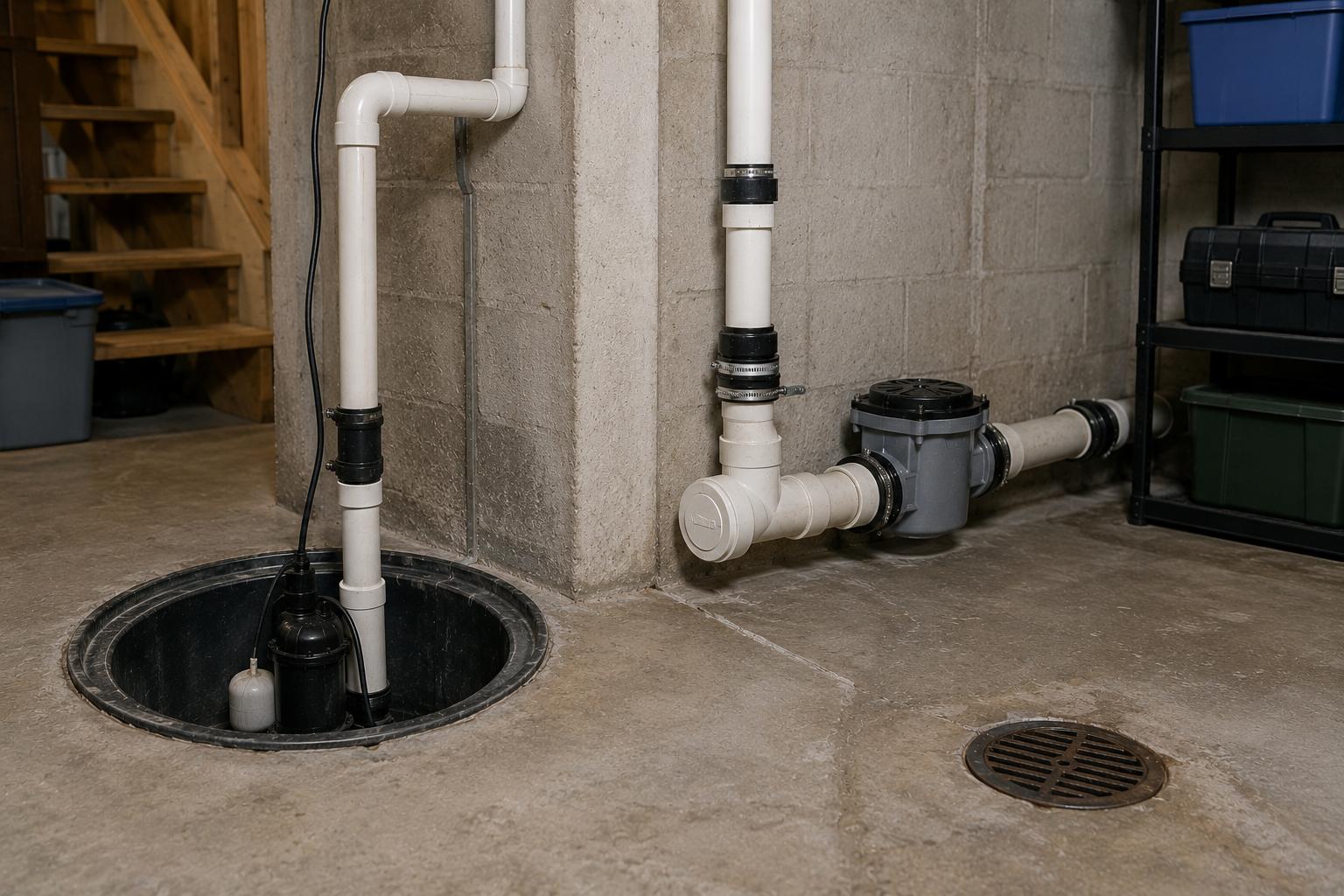
Basement water problems can be confusing because different issues can look similar at first. A wet basement may be caused by groundwater, a failed sump pump, a clogged sewer line, a municipal sewer surcharge, or wastewater backing up through a floor drain. The right solution depends on knowing the difference.
A sump pump problem usually involves groundwater or foundation drainage. A sewer backup problem involves wastewater coming from the home’s drain or sewer system. These are separate issues with different warning signs, different risks, and different prevention methods.
For Chicago homeowners, understanding the difference matters because many homes have basements, older sewer lines, mature trees, combined drainage concerns, and below-grade fixtures. Misidentifying the problem can lead to the wrong repair, repeated damage, and unnecessary costs.
Key Takeaways
- Sump pump problems usually involve groundwater entering around the foundation or sump pit.
- Sewer backup problems involve wastewater backing up through drains, toilets, showers, tubs, or floor drains.
- Clear water near the sump pit is different from sewage-smelling water from a floor drain.
- A sump pump does not prevent sewage from backing up through plumbing fixtures.
- A backwater valve does not replace a sump pump or solve groundwater problems.
- Chicago homeowners with basements should understand both risks before choosing repairs or upgrades.
What Is the Difference Between a Sump Pump Problem and a Sewer Backup?
A sump pump problem usually means groundwater is not being removed from the sump pit or foundation drainage system. A sewer backup means wastewater is reversing or unable to drain properly through the sewer line, often showing up through basement floor drains, showers, toilets, or laundry drains.
If the water is clear and near the sump pit, the issue may involve groundwater or pump failure. If the water smells like sewage, contains waste, or comes up through plumbing fixtures, it is more likely a sewer backup problem.
What a Sump Pump Is Designed to Do
A sump pump is designed to collect and discharge groundwater that gathers around the foundation. Water enters a sump pit, and the pump moves that water away from the home through a discharge line.
Sump pumps are commonly used to help manage:
- Groundwater around the foundation
- Water collected by drain tile systems
- Hydrostatic pressure below the basement floor
- Rain-related seepage into the sump pit
- Foundation drainage concerns
A sump pump does not normally move sewage from toilets, sinks, showers, or floor drains. It is not a substitute for sewer line maintenance or sewer backup protection.
What a Sewer Backup Is
A sewer backup occurs when wastewater cannot flow away from the home properly or when sewer flow reverses toward the property. Instead of leaving through the main sewer line, wastewater can come back through the lowest available drains.
In a basement, sewer backups may appear through:
- Floor drains
- Basement showers or tubs
- Basement toilets
- Laundry sinks
- Utility drains
- Other below-grade plumbing fixtures
Common causes include tree roots, grease buildup, wipes, damaged sewer pipe, clogs, or heavy rain conditions that overload part of the sewer system. For a deeper prevention guide, see How to Prevent Basement Sewer Backups.
How to Tell Which Problem You Have
The source, smell, timing, and appearance of the water can provide useful clues.
| Clue | More Likely Sump Pump Problem | More Likely Sewer Backup |
|---|---|---|
| Water appearance | Clear or muddy groundwater | Wastewater, gray water, or sewage-contaminated water |
| Smell | Earthy, musty, or no strong odor | Sewage odor or drain smell |
| Where water appears | Near sump pit, foundation wall, or floor cracks | Floor drain, toilet, shower, tub, or laundry drain |
| When it happens | During rain, snowmelt, or high groundwater | During plumbing use, heavy rain, or sewer surcharge |
| Related symptoms | Pump not running, pit overflowing, discharge problem | Gurgling drains, slow toilets, backups from fixtures |
Important: If water may contain sewage, avoid contact and treat it as a contamination risk. Sewer backups are not the same as ordinary rainwater seepage.
Common Sump Pump Problems
Power Failure
A sump pump cannot operate during an outage unless it has a working backup power source. Heavy storms can bring both rainfall and power loss, which makes battery backup systems worth considering for some homes.
Pump Failure
Sump pumps can fail because of age, mechanical wear, switch problems, clogged intakes, or improper sizing. A pump that does not activate when the pit fills can allow groundwater to overflow into the basement.
Clogged or Frozen Discharge Line
The pump may work properly, but the discharge line may be blocked, frozen, disconnected, or draining too close to the foundation. If water cannot leave the property correctly, it may return to the sump pit or basement area.
Overwhelmed Pump Capacity
During unusually heavy rain or rapid snowmelt, the amount of water entering the sump pit may exceed the pump’s capacity.
Common Sewer Backup Problems
Tree Roots in the Sewer Line
Roots can enter older sewer pipes through cracks or loose joints. Once inside, they collect waste, grease, wipes, and paper products until flow is restricted.
This is a common concern in older Chicago neighborhoods with mature trees. Homeowners can learn more in Tree Root Prevention for Sewer Lines.
Grease, Wipes, and Non-Flushable Materials
Many sewer backups begin with everyday drain habits. Wipes, paper towels, grease, hygiene products, and food debris can build up inside the line.
For a practical household checklist, see What Not to Flush: Protecting Your Sewer Line.
Damaged or Aging Sewer Pipe
Older sewer lines may crack, settle, separate, or collapse. When structural damage is present, cleaning may provide only temporary relief.
Municipal Sewer Surcharge
During heavy rain, wastewater or stormwater conditions can place stress on sewer systems. If flow reverses toward the home, basement drains may be vulnerable.
Additional storm guidance is available in Preventing Sewer Problems During Heavy Rain.
Why the Difference Matters
Choosing the wrong solution can waste money and leave the home exposed to the original problem.
For example, replacing a sump pump will not fix sewage backing up through a floor drain. Installing a backwater valve will not stop groundwater from entering a sump pit. Hydro jetting a sewer line will not repair foundation drainage problems.
The right diagnosis helps homeowners decide whether they need:
- Sump pump repair or replacement
- Battery backup or discharge line correction
- Sewer camera inspection
- Sewer cleaning or hydro jetting
- Root management
- Pipe repair
- Backwater valve evaluation
- Insurance coverage review
For ongoing sewer-side prevention, review Sewer Line Maintenance for Homeowners.
When to Suspect a Sewer Line Problem Instead of a Sump Pump Issue
A sump pump issue is not usually connected to toilets, sinks, tubs, or showers. If plumbing fixtures are involved, the sewer or drain system deserves closer attention.
Warning signs of a sewer problem include:
- Basement floor drains smell like sewage
- Water backs up into a basement shower or tub
- A toilet gurgles when laundry drains
- Multiple drains slow down at the same time
- Wastewater appears after toilets are flushed
- The sewer cleanout shows standing water or overflow
- Clogs return soon after clearing
An accessible cleanout can make diagnosis easier. See Sewer Cleanout Maintenance: What Homeowners Should Know.
When to Suspect a Sump Pump or Groundwater Problem
If the water is clear, appears near the sump pit, or enters along foundation walls, the issue may involve groundwater management rather than the sewer line.
Possible signs include:
- The sump pit is full and the pump is not running
- The pump runs but water does not discharge properly
- Water appears near foundation wall cracks
- Water enters during rain but no drains are backing up
- The basement has seepage without sewage odor
- The discharge line is frozen, blocked, or disconnected
- The pump runs constantly during storms
These conditions may require pump evaluation, discharge correction, foundation drainage improvements, or backup power planning rather than sewer cleaning.
Backwater Valves and Sump Pumps Are Not Interchangeable
A backwater valve and a sump pump protect against different basement water risks.
A sump pump moves groundwater away from the foundation. A backwater valve helps block reverse sewer flow during certain surcharge conditions.
Some homes may need both types of protection, depending on their risk profile. Others may need only one, or neither, if the underlying risk is low.
Homeowners considering sewer-side backup protection should review Backwater Valve Installation in Chicago.
Homeowner decision point: Do not choose equipment based only on where water appears. Choose the solution based on where the water is coming from.
Chicago-Specific Considerations
Older Basements and Below-Grade Fixtures
Many Chicago homes have basement bathrooms, laundry areas, utility sinks, and floor drains. These fixtures can make sewer backup risks more serious because they sit below the main living area.
Mature Trees and Older Sewer Lines
Tree roots and aging sewer materials are common contributors to sewer restrictions. A sewer backup that appears to be a basement water problem may actually start underground in the main sewer line.
Heavy Rain Events
Heavy rain can reveal both sump pump problems and sewer backup risks. A storm can cause groundwater to rise while also stressing sewer systems. That means timing alone is not enough to identify the cause.
Finished Basement Risk
Finished basements make accurate diagnosis more important. Flooring, drywall, furniture, utilities, storage, and mechanical systems can all be damaged by either groundwater or sewage, but the cleanup and prevention strategies differ.
More related prevention resources are available in the Prevention & Maintenance hub.
Cost Factors and Homeowner Decision Points
Costs depend on what is actually causing the basement water problem. A sump pump repair, sewer cleaning, camera inspection, backwater valve installation, and sewer pipe repair are very different projects.
| Possible Issue | Likely Evaluation Needed | Potential Solution Category |
|---|---|---|
| Sump pit overflowing | Pump and discharge line check | Pump repair, replacement, backup power, discharge correction |
| Sewage from floor drain | Sewer inspection or cleaning evaluation | Main line cleaning, root removal, repair, backwater protection |
| Water during heavy rain | Determine whether water is groundwater or sewage | Sump system work, sewer evaluation, or both |
| Recurring basement backups | Pattern review and camera inspection | Maintenance plan, backwater valve, pipe repair, or cleaning |
| Finished basement at risk | Preventative assessment | Backup protection, maintenance, insurance review |
For sewer-related budgeting, see Sewer Line Maintenance Plan Cost.
Homeowners should also review insurance coverage. Standard homeowners policies may treat groundwater, sump overflow, sewer backup, and flood damage differently. Sewer or water backup coverage may require a separate endorsement.
Common Mistakes Homeowners Make
- Assuming all basement water is a sump pump problem
- Assuming all storm-related water is a sewer backup
- Ignoring sewage odors from floor drains
- Replacing a sump pump without checking sewer symptoms
- Installing a backwater valve without diagnosing private sewer clogs
- Using chemical drain cleaners repeatedly
- Waiting until a finished basement is damaged before evaluating risk
- Not reviewing insurance coverage until after a loss
Practical Checklist for Identifying the Problem
- Note where the water first appeared
- Check whether it came from a drain or fixture
- Look for sewage odor or waste material
- Check whether the sump pit is full or overflowing
- Listen for gurgling toilets or drains
- Check whether multiple fixtures are slow
- Document whether the problem happened during rain or plumbing use
- Locate the sewer cleanout and note any overflow
- Review whether the home has prior backup history
- Avoid contact with water that may contain sewage
Frequently Asked Questions
Can a bad sump pump cause sewage to come up through a floor drain?
Usually no. A sump pump handles groundwater, not sewage from the plumbing system. Sewage coming through a floor drain is more likely related to the sewer or drain system.
Can a sewer backup happen during heavy rain?
Yes. Heavy rain can contribute to sewer surcharge conditions or expose private sewer restrictions. However, rain can also cause groundwater problems, so the source of the water still needs to be identified.
How can I tell if basement water is sewage?
Sewage may have a strong odor, contain waste, or come up through plumbing fixtures such as floor drains, showers, tubs, toilets, or laundry drains. Clear water near a sump pit may point more toward groundwater.
Does a backwater valve replace a sump pump?
No. A backwater valve helps reduce reverse sewer flow risk. A sump pump removes groundwater from a sump pit. They address different problems.
Should I inspect the sewer line if my basement floods?
If water came from drains, smelled like sewage, or appeared with gurgling fixtures or slow drains, a sewer inspection may be appropriate. If water came from foundation seepage or a full sump pit, sump and drainage evaluation may be more relevant.
Does insurance cover sump pump failure or sewer backup?
Coverage depends on the policy. Sump overflow, sewer backup, flood damage, and groundwater seepage may be treated differently. Homeowners should review their policy and ask about water backup or service line endorsements.
Are Chicago basements more prone to these problems?
Many Chicago homes have older basements, below-grade plumbing fixtures, mature trees, and aging sewer infrastructure. These factors can increase both groundwater and sewer backup concerns, especially during heavy rain.
Conclusion
Sump pump problems and sewer backup problems can both lead to basement water, but they are not the same issue. A sump pump problem usually involves groundwater. A sewer backup involves wastewater from the plumbing or sewer system.
For Chicago homeowners, the difference matters because the wrong solution can leave the original risk untouched. Replacing a sump pump will not stop sewage from backing up through a floor drain, and a backwater valve will not remove groundwater from around the foundation.
The best first step is to identify the source of the water, document the warning signs, and match the prevention strategy to the actual problem. That may involve sump pump maintenance, sewer line inspection, backwater valve evaluation, drain habit changes, insurance review, or a combination of measures.