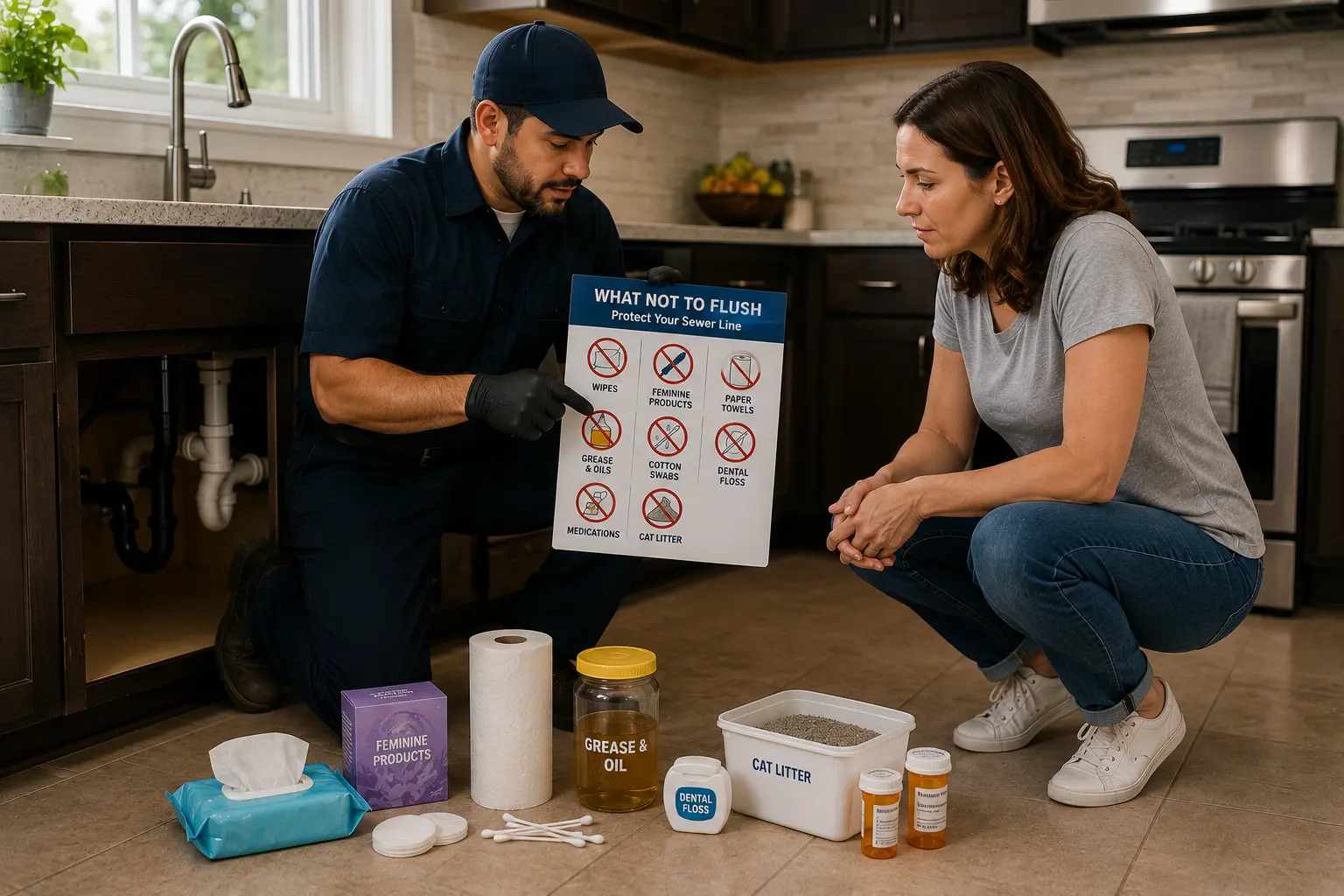
What goes down a toilet can affect much more than the toilet itself. Many sewer line clogs begin with everyday items that seem harmless at the time: wipes, paper towels, grease, hygiene products, cotton swabs, dental floss, and other materials that do not break down the way toilet paper does.
To protect a sewer line, homeowners should flush only human waste and toilet paper. Everything else should be kept out of the toilet and disposed of another way. This simple habit can reduce the risk of main line clogs, sewer backups, basement drain problems, and unnecessary emergency cleaning.
For Chicago homeowners, careful flushing habits are especially important because many homes have older sewer lines, clay pipe sections, mature tree exposure, and basement plumbing fixtures that are vulnerable when the main line backs up.
Key Takeaways
- Only human waste and toilet paper should be flushed.
- Flushable wipes can still contribute to sewer clogs and backups.
- Paper towels, hygiene products, cotton swabs, and dental floss should never go down the toilet.
- Grease and food waste can create sewer restrictions even when they are rinsed down sinks instead of flushed.
- Older Chicago sewer lines may be more vulnerable to buildup because of roots, cracks, offsets, and rough pipe interiors.
- Good flushing habits are a simple part of long-term sewer line maintenance.
What Should Never Be Flushed?
Do not flush wipes, paper towels, feminine hygiene products, diapers, cotton swabs, dental floss, medications, cigarette butts, cat litter, grease, food scraps, or cleaning products. Even if an item fits down the toilet, that does not mean it belongs in the sewer line.
The safest rule is simple: toilets are for human waste and toilet paper only. Everything else should go in the trash or be disposed of according to local disposal guidance.
Why Flushing the Wrong Items Damages Sewer Lines
A toilet can move many items out of sight quickly, but the sewer line still has to carry those items away from the home. Materials that do not dissolve, break apart, or move smoothly can collect inside the pipe.
Over time, these materials may catch on:
- Tree roots inside the sewer line
- Grease buildup along pipe walls
- Rough clay pipe interiors
- Offset pipe joints
- Low spots or bellies in the line
- Existing debris or partial blockages
Once debris begins to collect, the sewer line can narrow gradually. Eventually, wastewater may slow down, gurgle, or back up into tubs, showers, toilets, or basement floor drains.
Good drain habits are one of the simplest parts of Sewer Line Maintenance for Homeowners.
Items You Should Never Flush
Flushable Wipes
Flushable wipes are one of the most common sources of confusion. Even when a wipe is marketed as flushable, it may not break down quickly enough inside a residential sewer line.
Wipes can snag on roots, rough pipe surfaces, and small obstructions. They can also combine with grease and paper products to form larger blockages.
Paper Towels and Tissues
Paper towels are designed to stay strong when wet. That is useful for cleaning, but bad for sewer lines. Facial tissues can also break down differently than toilet paper.
Toilet paper is designed to disintegrate more readily in water. Paper towels and tissues should go in the trash.
Feminine Hygiene Products
Tampons, pads, applicators, and wrappers should never be flushed. These products can expand, absorb water, and create clogs inside toilets, branch drains, or the main sewer line.
Diapers and Baby Wipes
Diapers and baby wipes are not safe for toilets. Diapers can expand dramatically, and baby wipes can remain intact long enough to contribute to serious blockages.
Cotton Swabs, Cotton Balls, and Makeup Pads
Cotton products do not dissolve like toilet paper. They can gather inside pipe bends or catch on existing buildup.
Dental Floss
Dental floss may seem too small to matter, but it can wrap around debris and roots. Over time, it can contribute to tangled obstructions inside a drain or sewer line.
Hair
Hair should not be flushed or rinsed down drains when avoidable. It can combine with soap, grease, and other materials to create stubborn blockages.
Cat Litter
Cat litter should never be flushed, even when packaging suggests it is flushable. Litter can clump, settle, and contribute to blockages.
Medications
Medications should not be flushed unless disposal instructions specifically require it. Many medications should be handled through proper take-back or disposal programs.
Cigarette Butts and Small Trash
Cigarette butts, wrappers, bandages, contact lenses, and other small trash items belong in the garbage, not the toilet.
Do Not Forget About Sinks and Drains
Protecting a sewer line is not only about toilets. Kitchen sinks, bathroom sinks, showers, tubs, laundry drains, and floor drains all connect to the drainage system.
Even if something is not flushed, it can still create sewer problems if it goes down another drain.
Grease, Fats, and Cooking Oil
Grease may go down the sink as a liquid, especially when hot water is running. But as it cools, it can harden along the inside of pipes.
Grease can trap food particles, wipes, paper products, and debris. Over time, this can contribute to slow drains and main line restrictions.
Food Scraps
Large food scraps should go in the trash or compost where appropriate. Garbage disposals may grind food into smaller pieces, but that does not make every food item sewer-friendly.
Coffee Grounds
Coffee grounds can settle and accumulate inside plumbing lines. They should generally go in the trash or compost rather than down the sink.
Paint, Chemicals, and Harsh Cleaners
Paint, solvents, and chemicals should not be poured into household drains. These materials may create plumbing, environmental, or disposal problems.
How Bad Flushing Habits Lead to Sewer Backups
Sewer backups often develop in stages. A single flushed wipe may not cause an immediate problem, but repeated flushing can create risk over time.
- Non-dissolving materials enter the drain system.
- Those materials catch on roots, grease, rough pipe surfaces, or pipe defects.
- More debris collects in the same area.
- The sewer line becomes partially restricted.
- Wastewater begins draining slowly or gurgling.
- The restriction becomes severe enough to cause a backup.
Because this process can happen gradually, homeowners may not connect a backup to months or years of poor flushing habits.
For broader backup prevention, see How to Prevent Sewer Line Backups.
Chicago-Specific Sewer Line Concerns
Chicago homes often face sewer risks that make proper flushing habits even more important.
Older Sewer Pipes
Many older Chicago homes still have clay or cast-iron sewer lines. These materials can develop cracks, rough surfaces, and joint separations that catch debris more easily than smooth modern piping.
Tree Root Intrusion
Mature trees are common in Chicago neighborhoods. Roots that enter a sewer line create a net-like obstruction that catches wipes, paper towels, grease, and other debris.
Homeowners with large trees nearby should review Tree Root Prevention for Sewer Lines.
Basement Plumbing Fixtures
Basement floor drains, laundry sinks, basement bathrooms, and utility drains are often the lowest plumbing fixtures in a home. If the sewer line becomes blocked, wastewater may appear in the basement first.
For basement-focused guidance, see How to Prevent Basement Sewer Backups.
Heavy Rain Conditions
Heavy rain can place stress on sewer systems. A private sewer line that is already restricted by wipes, grease, roots, or debris may be more vulnerable during wet weather.
More prevention topics are available in the Prevention & Maintenance hub.
What to Do Instead of Flushing Problem Items
Good disposal habits are simple once every household member understands the rule.
| Item | Do Not Flush | Better Disposal Option |
|---|---|---|
| Wipes | Even if labeled flushable | Trash |
| Paper towels | Do not use as toilet paper | Trash |
| Feminine hygiene products | Never flush | Trash |
| Grease and oil | Do not pour into drains | Cool, contain, and trash |
| Medications | Do not flush casually | Use proper medication disposal guidance |
| Food scraps | Do not rely on drains for disposal | Trash or compost where appropriate |
| Cat litter | Never flush | Trash according to product guidance |
Household rule: Keep a lined trash can in every bathroom. If disposal is convenient, guests and family members are less likely to flush items that belong in the trash.
How to Tell If Flushing Habits Are Already Causing Problems
Improper flushing habits often create warning signs before a full sewer backup occurs.
- Toilets clog more often than they used to
- Multiple drains are slow at the same time
- Toilets gurgle when sinks, showers, or laundry are used
- Water backs up into tubs or showers
- Basement drains smell like sewage
- Clogs return soon after being cleared
- The sewer line needs repeated cleaning
These symptoms may indicate wipes, grease, roots, debris, or pipe defects. If the issue is recurring, a camera inspection may be more useful than repeated temporary clearing.
When Cleaning May Be Needed
If improper materials have been entering the drain system for a long time, the sewer line may already contain buildup. In that situation, changing habits is important, but it may not remove existing material from the pipe.
Professional cleaning may be considered when:
- Several fixtures are draining slowly
- The sewer line has a known history of grease or wipes
- A camera inspection shows buildup
- Toilets clog repeatedly
- Basement floor drains gurgle or smell
- Backups have occurred before
Cleaning frequency depends on pipe condition, usage, and the type of buildup involved. For more detail, see How Often Should a Sewer Line Be Cleaned?.
In some cases, hydro jetting may be considered for grease, sludge, or debris buildup if the sewer line is suitable. See Hydro Jetting for Preventative Sewer Maintenance.
Cost Factors When Flushing Problems Cause Sewer Issues
Costs vary depending on whether the issue is a simple toilet clog, a branch drain blockage, or a main sewer line restriction. The longer problematic materials accumulate, the more complicated the issue can become.
Cost factors may include:
- Whether the clog is local or in the main sewer line
- Whether a cleanout is accessible
- Whether camera inspection is needed
- Whether roots, grease, or wipes are involved
- The cleaning method required
- Whether emergency service is needed
- Whether water or sewage damage occurred
- Whether pipe repair is needed after inspection
Homeowners comparing preventative costs with emergency risks may find Sewer Line Maintenance Plan Cost helpful.
Important: Sewer cleaning can remove many blockages, but it does not fix cracked, collapsed, or severely offset pipe. If clogs keep returning, the underlying cause should be diagnosed.
Common Mistakes Homeowners Make
- Trusting the word “flushable” without considering sewer line risk
- Using paper towels as a toilet paper substitute
- Pouring grease down the kitchen sink with hot water
- Assuming small items cannot cause sewer problems
- Ignoring repeated toilet clogs
- Using chemical cleaners instead of diagnosing recurring issues
- Not teaching guests, children, or tenants what should not be flushed
- Waiting for a basement backup before changing drain habits
Simple Household Prevention Checklist
- Keep trash cans in every bathroom
- Post a small reminder if guests or tenants use the bathroom often
- Dispose of wipes in the trash, not the toilet
- Collect grease in a container before throwing it away
- Use sink strainers in kitchens and bathrooms
- Avoid chemical drain cleaner as a recurring solution
- Schedule inspection if several drains slow down together
- Keep the sewer cleanout accessible
Cleanout access matters because it can make inspections and cleaning easier. Learn more in Sewer Cleanout Maintenance: What Homeowners Should Know.
Frequently Asked Questions
Are flushable wipes really bad for sewer lines?
They can be. Even if a wipe clears the toilet, it may not break down quickly enough inside the sewer line. Wipes can catch on roots, grease, pipe defects, and debris, increasing blockage risk.
What is safe to flush?
The safest rule is to flush only human waste and toilet paper. Everything else should be disposed of another way.
Can pouring hot water with grease prevent clogs?
No. Hot water may move grease farther down the drain, but grease can still cool and harden inside the plumbing or sewer line.
Can bad flushing habits cause basement backups?
Yes. If wipes, grease, paper products, or debris restrict the main sewer line, wastewater may back up through the lowest fixtures, which are often basement drains, tubs, or showers.
Are older Chicago homes more vulnerable to flushing-related sewer problems?
Often, yes. Older pipes may have rough surfaces, clay joints, cracks, roots, or offsets that catch debris more easily than newer smooth pipe.
Does homeowners insurance cover sewer clogs from flushed items?
Routine clogs and maintenance are generally homeowner responsibilities. Damage from a sewer backup may depend on the policy and whether the homeowner has sewer or water backup coverage.
What should I do if wipes have been flushed for years?
Start by changing disposal habits immediately. If there are recurring clogs, slow drains, or sewer odors, a camera inspection or cleaning may be worth considering to check for existing buildup.
Conclusion
Protecting a sewer line starts with simple household habits. Toilets should only be used for human waste and toilet paper. Wipes, paper towels, hygiene products, grease, food waste, cat litter, and small trash items should stay out of the drain system.
For Chicago homeowners, these habits matter even more because older sewer lines, mature trees, basement drains, and heavy rain conditions can increase the consequences of a blocked main line.
Changing what gets flushed will not repair an already damaged pipe, but it can reduce avoidable clogs, support long-term sewer maintenance, and lower the risk of preventable backups.