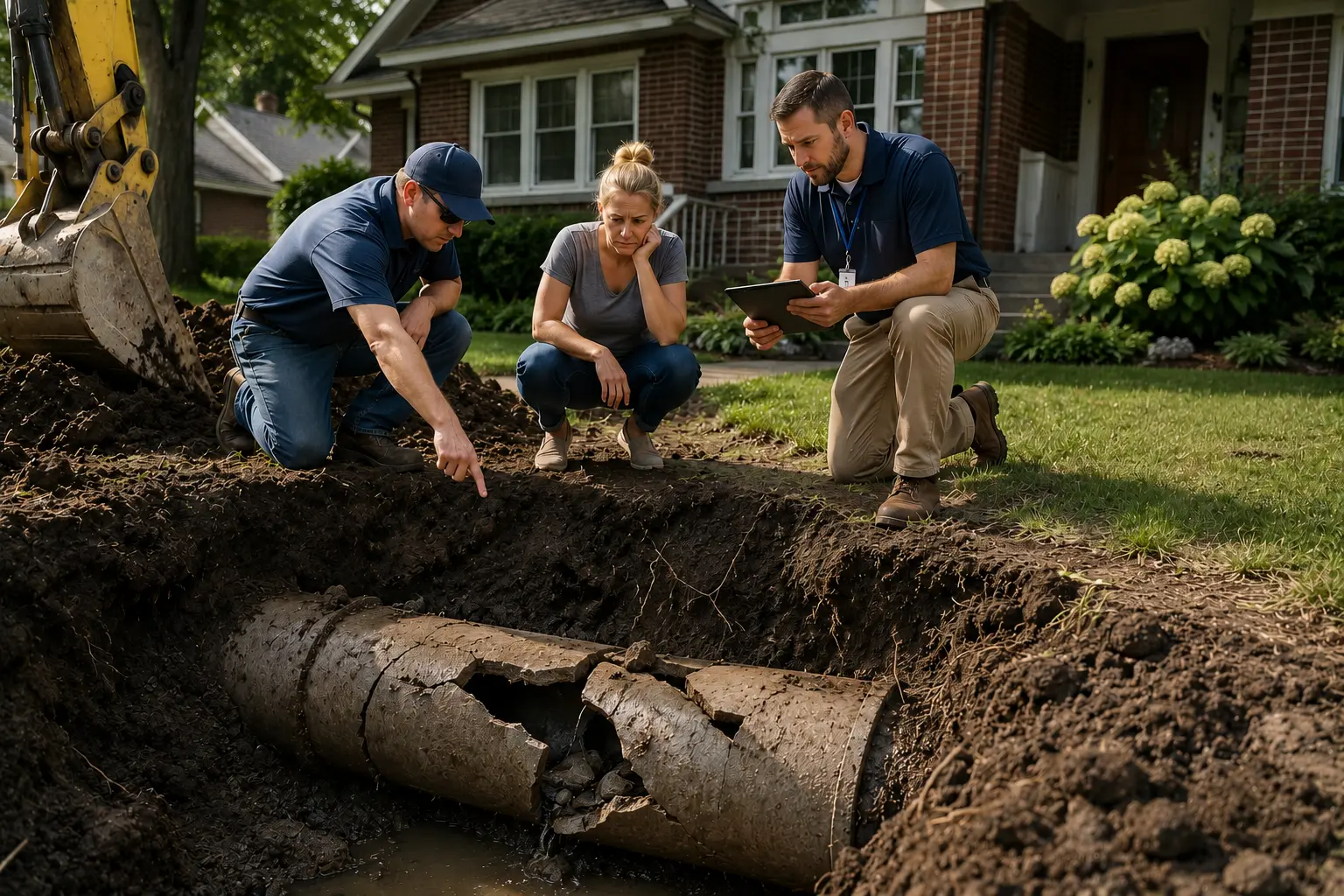
A collapsed sewer line can create serious problems for a homeowner, including repeated backups, unusable plumbing fixtures, sewage exposure, excavation costs, and major repair decisions. For Chicago homeowners, the situation can feel even more stressful because older sewer laterals, tight urban lots, mature trees, sidewalks, alleys, and basement drainage risks can make repairs complicated.
Insurance may cover a collapsed sewer line in some situations, but it often depends on why the collapse happened. If the collapse was caused by a sudden covered event, there may be coverage. If the pipe collapsed because of age, corrosion, deterioration, root intrusion, ground movement over time, or lack of maintenance, a standard homeowners policy will often deny the claim.
The most important issue is not simply whether the pipe collapsed. The insurer will usually focus on the cause of the collapse, the policy language, whether the homeowner has service line coverage, and whether the damage was sudden or gradual. For more sewer insurance and financial protection guidance, visit the Insurance & Financial Protection hub.
Key Takeaways
- Standard homeowners insurance often does not cover collapsed sewer lines caused by age, deterioration, corrosion, or normal wear and tear.
- Coverage may be possible if the collapse resulted from a sudden covered event under the policy.
- Service line coverage may help pay for certain underground sewer line collapses, depending on the endorsement terms.
- Sewer backup coverage may help with interior cleanup if sewage enters the home, but it may not cover the collapsed pipe itself.
- Tree root damage and older clay pipe collapse are common denial issues because they often develop gradually.
- A sewer camera inspection can be critical for documenting the location, cause, and severity of the collapse.
- Chicago homeowners should review policy exclusions, deductibles, coverage limits, and endorsements before assuming a collapse is covered.
When Does Insurance Cover a Collapsed Sewer Line?
Insurance may cover a collapsed sewer line if the collapse was caused by a sudden and accidental covered event, or if the homeowner has service line coverage that applies to the damaged underground sewer pipe. However, many collapsed sewer line claims are denied when the cause is gradual deterioration, aging pipe materials, corrosion, long-term root intrusion, or pre-existing damage.
Sewer backup coverage may help pay for cleanup and restoration inside the home if sewage backs up, but it usually does not automatically pay to replace the collapsed sewer line. The pipe repair and the interior damage are often treated as separate insurance issues.
Why the Cause of Collapse Matters
Insurance companies usually do not approve or deny a claim simply because the sewer line collapsed. They investigate why it collapsed.
A collapsed pipe can be caused by several different conditions, including:
- Old clay pipe breaking down over time
- Cast iron corrosion
- Tree root intrusion weakening the pipe
- Soil movement or settlement
- Improper installation
- Heavy surface loads above the pipe
- Construction damage
- A sudden accidental event
If the insurer determines that the collapse happened gradually, the claim may be denied under exclusions for wear and tear, deterioration, corrosion, or maintenance-related damage.
That is why documentation matters. A sewer camera inspection, written contractor report, and repair estimate can help clarify whether the collapse appears sudden, gradual, structural, root-related, or pre-existing.
Standard Homeowners Insurance and Collapsed Sewer Lines
A standard homeowners insurance policy is usually built to cover sudden accidental damage from specific covered events. It is generally not designed to pay for aging underground infrastructure.
For sewer lines, common exclusions may include:
- Wear and tear
- Deterioration
- Corrosion
- Rust
- Settling or earth movement
- Repeated seepage or leakage
- Pre-existing damage
- Lack of maintenance
If a sewer lateral collapses because the pipe has reached the end of its useful life, the homeowner may be responsible for the repair unless another coverage source applies.
For broader context, read Does Homeowners Insurance Cover Sewer Line Replacement?.
Service Line Coverage and Collapsed Sewer Pipes
Service line coverage is often the most relevant insurance add-on for a collapsed sewer line. It is an optional endorsement that may help pay for damage to underground utility lines serving the home, including sewer laterals.
Depending on the policy, service line coverage may help with:
- Excavation
- Pipe repair
- Pipe replacement
- Backfill
- Surface restoration
- Emergency access work
However, service line coverage is not unlimited. It may have exclusions, deductibles, waiting periods, coverage caps, and restrictions on what causes of loss are covered.
| Service Line Coverage Question | Why It Matters |
|---|---|
| Does it specifically include sewer lines? | Not every endorsement uses the same covered line definitions. |
| Are collapses covered? | Some endorsements may cover collapse, while others may limit coverage by cause. |
| Are roots covered? | Root intrusion is a common cause of sewer collapse in older neighborhoods. |
| Are old pipes excluded? | Older clay or cast iron pipe may create coverage disputes. |
| Are excavation and restoration included? | Digging and restoring paved or landscaped areas can be a major cost factor. |
| What is the coverage limit? | The endorsement may only pay up to a stated amount. |
Homeowners evaluating this endorsement should review Service Line Coverage for Sewer Lines: Is It Worth It?.
Sewer Backup Coverage Is Different
A collapsed sewer line can cause sewage to back up into the home. This creates a separate insurance question.
Sewer backup coverage may help pay for interior damage caused by sewage entering through drains, toilets, tubs, showers, or floor drains. It may cover cleanup, disinfection, damaged drywall, flooring, baseboards, furniture, or belongings, depending on the policy.
However, sewer backup coverage often does not pay to fix the collapsed pipe itself. A homeowner may have coverage for interior cleanup but still be responsible for excavation and pipe replacement.
Important distinction: Sewer backup coverage usually addresses damage inside the home. Service line coverage usually addresses the underground sewer pipe. A collapsed sewer line may involve both, but one endorsement does not automatically replace the other.
For more detail, see Sewer Backup Insurance Coverage Explained and Insurance Coverage for Sewer Backup Cleanup.
Tree Roots and Collapsed Sewer Lines
Tree roots are a common factor in sewer line collapse. Roots may enter through cracks, joints, or offsets, grow inside the pipe, catch debris, and place pressure on already weakened pipe sections.
Insurance coverage for root-related collapse can be difficult. If roots entered the pipe over many years, the insurer may treat the collapse as gradual damage or a maintenance issue. If the homeowner has service line coverage or a sewer line warranty plan, root damage may or may not be included depending on the terms.
Chicago homeowners with mature nearby trees should pay close attention to root exclusions, root coverage language, and inspection findings.
For more on this issue, read Insurance Coverage for Tree Root Sewer Damage.
Chicago-Specific Considerations
Collapsed sewer line claims in Chicago can be more complicated because local homes often have older sewer systems and more challenging repair conditions.
Older Sewer Materials
Many Chicago homes were built before modern sewer materials became common. Older clay, cast iron, and other legacy materials may be more prone to cracking, root intrusion, corrosion, and collapse.
Mature Trees
Tree-lined streets are common across many Chicago neighborhoods. Roots can enter weakened pipes and contribute to recurring clogs or structural damage.
Basement Plumbing
Many Chicago homes have basements with floor drains, laundry areas, utility rooms, or finished living space. A collapsed line can lead to sewage backups that damage both the structure and personal property.
Urban Excavation Challenges
Excavation may involve narrow gangways, fenced yards, patios, sidewalks, alleys, driveways, or nearby utilities. These conditions can increase repair complexity and make coverage limits more important.
Private vs. Public Sewer Responsibility
Coverage may depend on whether the collapsed section is part of the homeowner’s private sewer lateral or another portion of the system. A camera inspection and location report can help establish where the collapse occurred.
How a Sewer Camera Inspection Helps a Claim
A sewer camera inspection can be one of the most important pieces of evidence in a collapsed sewer line claim. It can show the condition of the pipe, where the collapse occurred, and what visible factors contributed to the failure.
Camera footage may show:
- A fully collapsed section
- Partial collapse or crushed pipe
- Tree root intrusion
- Cracks or fractures
- Offset joints
- Pipe corrosion
- Standing water or bellies
- Blockages caused by debris
Inspection evidence can support the claim process, but it can also reveal facts that support a denial, such as long-term deterioration or known pre-existing defects. The value is in having accurate documentation before decisions are made.
How the Claim Process Usually Works
If a homeowner believes a collapsed sewer line may be covered, the claim process should be handled carefully and documented from the beginning.
- Stop unnecessary water use if drains are backing up.
- Document visible damage with photos and videos.
- Schedule a sewer camera inspection when appropriate.
- Get a written report identifying the location and likely cause of collapse.
- Review homeowners insurance, sewer backup coverage, and service line endorsements.
- Report the claim promptly if coverage may apply.
- Keep all estimates, invoices, inspection files, and adjuster communications.
- Request written explanations for approvals, partial approvals, or denials.
For a full walkthrough, see The Sewer Repair Insurance Claim Process Step by Step.
Why Collapsed Sewer Line Claims Get Denied
Collapsed sewer line claims often get denied because the insurer determines that the collapse was not caused by a covered event.
Common denial reasons include:
- The pipe failed because it was old.
- The collapse developed gradually.
- Tree roots caused long-term damage.
- The pipe was corroded or deteriorated.
- The condition existed before coverage began.
- The homeowner did not have service line coverage.
- The damaged section was outside the covered area.
- The claim was not documented well enough.
If a claim is denied, homeowners should ask for the denial reason in writing and compare it with the policy language. For more guidance, read Why Sewer Line Insurance Claims Get Denied.
Repair Decisions After a Sewer Line Collapse
A collapsed sewer line usually requires more than simple drain cleaning. The homeowner may need to consider the severity of the collapse, location, depth, pipe material, access, and whether replacement is more practical than repair.
| Decision Factor | Why It Matters |
|---|---|
| Location of collapse | Affects excavation, responsibility, and possible coverage. |
| Depth of pipe | Deeper pipes can be more difficult and expensive to access. |
| Pipe material | Older materials may indicate broader deterioration beyond one section. |
| Length of damage | A short collapse may require different repair options than widespread failure. |
| Surface conditions | Driveways, patios, sidewalks, and landscaping affect restoration needs. |
| Backup damage | Interior damage may involve a separate coverage question. |
| Future risk | Repeated failures may make full replacement more practical than temporary repairs. |
Alternatives When Insurance Does Not Cover the Collapse
If insurance does not pay for the collapsed sewer line, homeowners may need to compare other financial options.
Possible alternatives include:
- Sewer line warranty plans, if purchased before the problem occurred
- Contractor payment plans
- Personal loans
- Home equity financing
- Emergency savings
- Assistance programs where available
Homeowners comparing warranty-style protection can read Sewer Line Warranty Plans: What Homeowners Should Know. If the repair is already needed and insurance does not apply, Sewer Repair Payment Plans Explained may help explain common payment options.
Common Mistakes and Warning Signs
Common mistakes homeowners make with collapsed sewer line claims include:
- Assuming collapse automatically means insurance coverage
- Confusing sewer backup coverage with sewer pipe replacement coverage
- Repairing the line before documenting the damage
- Failing to get camera footage or a written inspection report
- Ignoring repeated backups before the collapse
- Buying coverage after the pipe is already failing
- Not asking whether service line coverage includes collapse
- Discarding damaged belongings before documenting backup damage
Warning signs of a possible sewer collapse include recurring whole-house drain clogs, sewage odors, gurgling drains, frequent backups, standing water in the sewer line during inspection, or a camera that cannot pass beyond a certain point.
Frequently Asked Questions
Does homeowners insurance cover a collapsed sewer line?
Sometimes, but often not under a standard policy. Coverage depends on the cause of collapse, policy language, exclusions, and whether the homeowner has service line coverage.
Does service line coverage cover sewer collapse?
It may, depending on the endorsement. Homeowners should confirm whether sewer lines, collapse, excavation, replacement, roots, and restoration are included.
Will sewer backup insurance cover a collapsed pipe?
Sewer backup insurance may help cover interior damage if sewage backs up into the home, but it usually does not automatically pay to repair or replace the collapsed pipe itself.
Can tree roots cause a collapsed sewer line?
Yes. Roots can enter weakened pipes, worsen cracks or offsets, and contribute to structural failure over time. Coverage for root-related collapse depends on the policy or warranty terms.
What evidence helps with a collapsed sewer line claim?
Useful evidence includes sewer camera footage, a written inspection report, photos and videos of damage, contractor estimates, cleanup invoices, maintenance records, and adjuster communications.
Why would insurance deny a collapsed sewer line claim?
Common reasons include deterioration, corrosion, old pipe materials, gradual root damage, pre-existing conditions, missing endorsements, excluded causes, or insufficient documentation.
Are collapsed sewer lines common in older Chicago homes?
They can occur in older homes with aging sewer laterals, especially where clay or cast iron pipes have deteriorated, shifted, cracked, or been affected by roots.
Conclusion
Insurance may cover a collapsed sewer line in limited situations, but many claims are denied when the collapse is linked to age, deterioration, corrosion, tree roots, or long-term maintenance issues. The fact that a sewer line collapsed does not automatically make it a covered insurance loss.
For Chicago homeowners, the most important steps are understanding policy coverage before a problem occurs, considering service line coverage where appropriate, documenting sewer conditions with inspections, and separating pipe repair claims from sewer backup cleanup claims.
If a collapse has already occurred, homeowners should gather evidence, report the claim promptly if coverage may apply, request written explanations, and compare insurance options with practical repair and payment decisions.