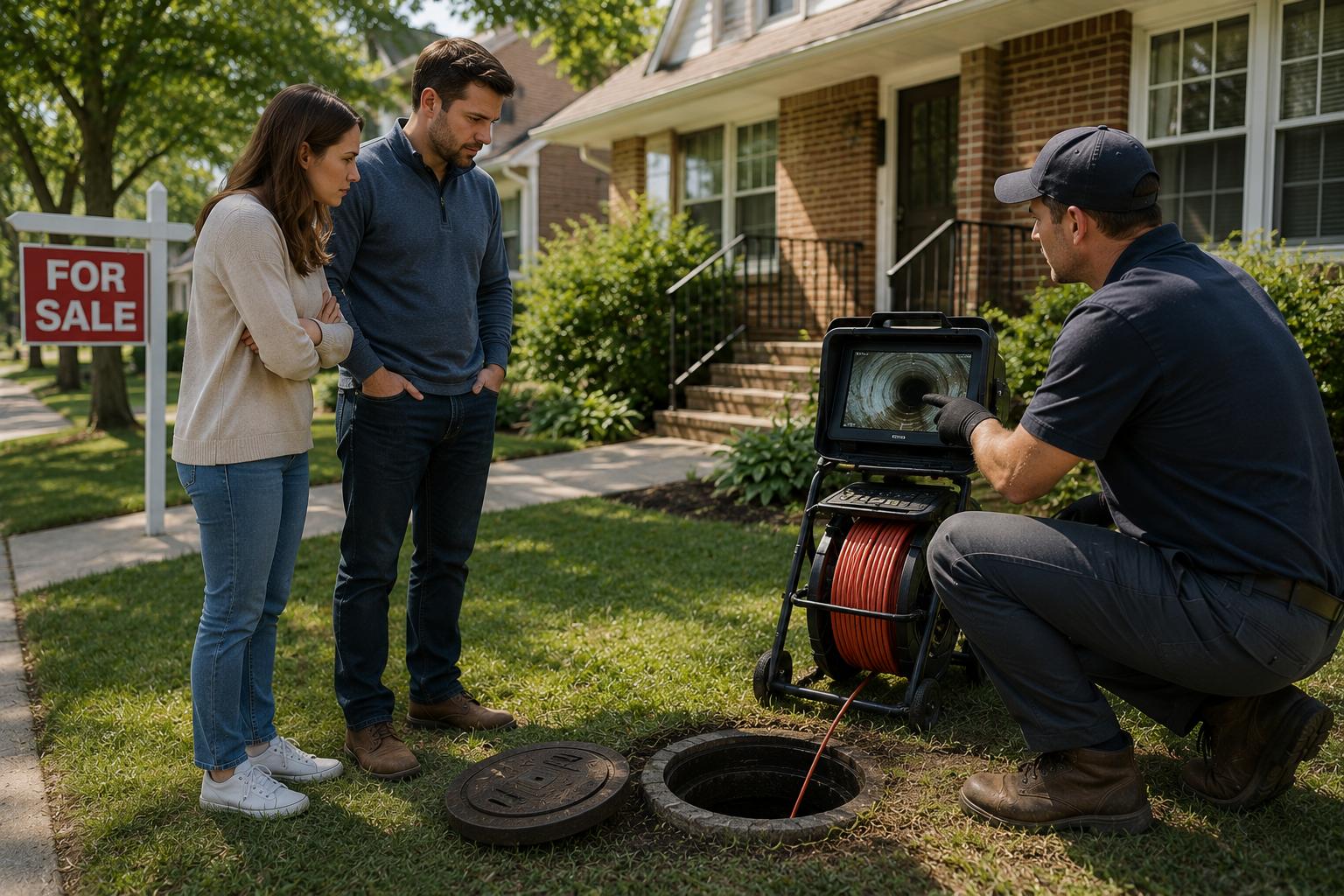
Buying a house in Chicago can move quickly, and most buyers focus on the visible parts of the property: roof condition, electrical panels, heating systems, windows, foundation cracks, and interior repairs. But one of the most expensive problems may be buried underground.
A sewer inspection before buying a house gives buyers a direct look inside the main sewer line before they commit to the property. This is especially important in Chicago, where many homes are older, sewer lines may be clay or cast iron, and tree roots or past repairs can create hidden problems that a standard home inspection may not reveal.
In many cases, a sewer scope inspection is a practical due diligence step. It may not prevent every future sewer issue, but it can help buyers understand the risk before closing, negotiate repairs or credits when appropriate, and avoid being surprised by a major underground problem shortly after moving in.
For more homeowner guidance on inspections, testing, and sewer diagnostics, visit the Sewer Inspections & Diagnosis hub.
Key Takeaways
- A sewer inspection before buying a house uses a camera to evaluate the underground sewer line.
- Standard home inspections usually do not provide a detailed view inside the sewer pipe.
- Older Chicago homes, tree-lined lots, and properties with past drainage issues are stronger candidates for sewer inspections.
- A sewer scope can reveal root intrusion, pipe cracks, offsets, bellies, blockages, corrosion, and collapse risks.
- The inspection may help buyers negotiate repairs, request credits, ask for further evaluation, or walk away if the risk is too high.
- The value of the inspection depends on the quality of the footage, the inspector’s documentation, and whether the findings are clearly explained.
Should You Get a Sewer Inspection Before Buying?
Yes, many Chicago homebuyers should strongly consider a sewer inspection before buying, especially if the home is older, located on a tree-lined street, has a finished basement, shows signs of past water or drain problems, or has no clear record of sewer line replacement. The inspection can reveal expensive underground defects before closing.
A sewer inspection is not only for homes with obvious plumbing problems. It is also useful when the home appears well maintained but the sewer line is original, undocumented, or located beneath areas that would be costly to excavate later.
What Is a Sewer Inspection During a Home Purchase?
A sewer inspection, often called a sewer scope, uses a waterproof camera attached to a flexible cable. The camera is inserted into the sewer line through a cleanout or another access point, then pushed through the pipe while video is transmitted to a monitor.
The goal is to evaluate the condition of the pipe between the house and the public sewer connection or other relevant discharge point. The inspection may show whether the sewer line is clear, partially obstructed, damaged, sagging, invaded by roots, or at risk of failure.
For a broader explanation of the process, see Sewer Camera Inspection in Chicago: What Homeowners Should Know.
Why a Standard Home Inspection May Not Be Enough
A general home inspection is valuable, but it is not the same as a sewer camera inspection. A home inspector may test fixtures, observe drainage behavior, look for visible leaks, and note plumbing concerns. However, they usually cannot see the buried sewer line from the inside.
That matters because a sewer line can appear functional during a short inspection while still having serious defects. Water may drain during the showing, but a camera may reveal roots, cracked clay pipe, severe buildup, or a section that is close to collapse.
Important buyer note: A sink or toilet draining normally during a showing does not prove the underground sewer line is in good condition. Some sewer problems only appear under heavier use, after rainfall, or when roots and debris gradually restrict flow.
What a Sewer Scope Can Reveal
A sewer inspection can uncover issues that are difficult or impossible to confirm from inside the home. Some findings may be minor maintenance concerns, while others may affect the purchase decision.
| Inspection Finding | Why It Matters for Buyers |
|---|---|
| Tree root intrusion | Roots can cause recurring clogs and may indicate openings at joints or cracks. |
| Cracked clay pipe | Cracks can worsen over time and may allow roots, soil, or groundwater into the line. |
| Offset joints | Misaligned pipe sections can catch debris and restrict flow. |
| Pipe belly | A sagging section can hold water and waste, increasing the risk of recurring backups. |
| Corroded cast iron | Older metal pipe may deteriorate internally even if it appears stable from the surface. |
| Partial blockage | Heavy buildup may suggest maintenance needs or a deeper structural issue. |
| Collapsed pipe | A collapse can require significant repair or replacement work. |
| Improper previous repair | Poor workmanship or mismatched materials may create future failure points. |
For a more detailed breakdown of possible findings, read What Does a Sewer Camera Inspection Show?.
Chicago-Specific Reasons Buyers Should Consider a Sewer Inspection
Sewer inspections are useful in many cities, but Chicago has several conditions that make them especially relevant for homebuyers.
Older Housing Stock
Many Chicago homes were built long before modern sewer materials and installation practices became common. Older properties may still have clay tile, cast iron, or a mix of older and newer repairs.
Mature Trees and Root Intrusion
Tree-lined streets are part of the character of many Chicago neighborhoods, but mature trees can also create sewer line problems. Roots naturally seek moisture and can enter through joints, cracks, or weakened pipe sections.
Finished Basements
Many Chicago homeowners use basements for storage, laundry, recreation, or finished living space. A sewer backup in a finished basement can create cleanup costs, property damage, and disruption beyond the pipe repair itself.
Past Repairs May Not Be Obvious
A property may have had partial sewer repairs over the years without clear documentation. A camera inspection can sometimes reveal transitions between pipe materials, prior spot repairs, or sections that were not replaced.
Urban Lot Constraints
In dense areas, sewer repairs may be complicated by sidewalks, alleys, garages, landscaping, fences, driveways, or limited access. Knowing the pipe condition before buying helps buyers understand potential future disruption.
Buyers evaluating older properties should also review Sewer Inspections for Older Chicago Homes.
When a Sewer Inspection Is Especially Important
Not every property has the same level of risk. The case for a sewer inspection becomes stronger when one or more warning signs are present.
- The home is older and the sewer line has not been replaced.
- The property has large trees near the sewer path.
- The basement shows signs of prior water or sewage cleanup.
- The seller discloses past sewer backups or drain issues.
- Multiple plumbing fixtures drain slowly during the inspection period.
- The property has a finished basement or expensive lower-level improvements.
- The sewer line route passes under a driveway, patio, garage, or major landscaping.
- The home has been vacant, lightly used, or recently flipped.
- There is no documentation of past sewer repairs.
If you are unsure whether the timing makes sense, see When Should You Get a Sewer Scope Inspection?.
How Sewer Inspection Findings Can Affect a Home Purchase
A sewer inspection does not automatically mean a buyer should cancel a deal. The findings need to be interpreted based on severity, repair options, cost exposure, timing, and the buyer’s tolerance for risk.
Minor Findings
Some findings may simply indicate normal aging or maintenance needs. Light buildup, small areas of root growth, or older pipe that remains functional may not justify major negotiation by themselves.
Moderate Findings
Moderate defects may require cleaning, monitoring, further evaluation, or a planned repair. These findings may become negotiation points depending on the market, contract terms, and overall condition of the home.
Major Findings
Severe root intrusion, collapsed sections, significant pipe bellies, or major structural failure may require immediate attention. In these cases, buyers may request repair before closing, ask for a credit, obtain specialist estimates, or reconsider the purchase.
Buyer decision point: The inspection result is not just about whether the sewer line works today. It is about whether the buyer is comfortable accepting the future repair risk after closing.
Cost Factors Buyers Should Understand
The cost of a sewer inspection and any follow-up repair can vary widely. Homebuyers should avoid relying on unsupported exact pricing because conditions differ from property to property.
Inspection cost can be affected by:
- Whether there is an accessible cleanout
- How much of the line can be inspected
- Whether locating equipment is included
- Whether a written report and video recording are provided
- Whether the inspection is part of a larger home inspection package
- Whether additional testing is required
Repair cost can be affected by:
- Pipe depth
- Pipe material
- Length of damaged section
- Location of the defect
- Excavation difficulty
- Access through yards, sidewalks, alleys, or driveways
- Permit and restoration requirements
- Whether the issue is isolated or widespread
What Buyers Should Ask Before Ordering a Sewer Inspection
Before scheduling a sewer scope, buyers should understand exactly what they are getting. A low-cost inspection may not be useful if it does not provide clear documentation.
- Will the inspection include video footage?
- Will the inspector provide a written summary?
- Can the inspector identify the location of major defects?
- Will distance measurements be noted?
- Can the inspector explain the pipe material and condition?
- What happens if the camera cannot pass a blockage?
- Will the full line be inspected if accessible?
- Is sewer line locating included or separate?
If locating becomes necessary, read Sewer Line Locating Services: What to Expect.
How to Review a Sewer Scope Report
A sewer inspection is only as useful as the documentation it produces. Buyers should not rely only on a verbal statement that the sewer line “looks okay” or “has issues.”
A helpful report should identify:
- Where the inspection started
- How far the camera traveled
- Pipe material if visible
- Major defects and approximate locations
- Whether the line was fully inspected
- Whether standing water limited visibility
- Whether further evaluation is recommended
- Photos or video supporting the findings
For help interpreting inspection documents, see How to Read a Sewer Scope Report.
Related Risks, Alternatives, and Follow-Up Steps
Depending on the findings, buyers may need to decide what to do before the inspection contingency or attorney review period expires.
Request Seller Documentation
Ask whether the seller has receipts, permits, warranty information, past sewer videos, or records of prior sewer repairs. Documentation can help clarify whether a problem is new, recurring, or previously addressed.
Get a Repair Estimate
If the inspection shows a significant defect, buyers may want an estimate before negotiating. The estimate should be based on the actual footage, pipe location, and likely repair method.
Ask for Further Testing
If the issue involves unclear routing, suspected leaks, or limited visibility, additional diagnostic work may be needed. In some situations, smoke testing or dye testing may be used for different types of sewer or drainage questions. See Sewer Line Smoke Testing Explained for more context.
Negotiate Based on Evidence
Video footage, report findings, and contractor estimates are stronger than vague concerns. Buyers should keep negotiations tied to documented conditions.
Decide Whether the Risk Fits the Purchase
Some buyers are comfortable accepting an older sewer line if the home price and overall condition make sense. Others may not want to take on the uncertainty. The inspection helps make that decision more informed.
Common Mistakes Buyers Make
Skipping the Sewer Scope on an Older Home
Older homes can be excellent purchases, but buried sewer problems are not always visible. Skipping the inspection may leave buyers with avoidable uncertainty.
Assuming a Renovated Home Has a New Sewer Line
Cosmetic renovations do not mean the underground sewer line was replaced. Buyers should verify sewer work separately.
Waiting Until After Closing
After closing, the buyer generally owns the problem. An inspection before closing provides more options.
Accepting Vague Verbal Findings
Buyers should request footage, photos, or written documentation whenever possible.
Ignoring Incomplete Inspections
If the camera cannot pass a blockage or the line is not fully inspected, that limitation matters. A partial inspection should not be treated as full clearance.
Not Recognizing Poor Inspection Quality
A rushed or poorly documented scope can create false confidence. Learn more in Signs a Sewer Inspection Was Done Poorly.
Frequently Asked Questions
Is a sewer inspection required when buying a house in Chicago?
A sewer inspection is not always required, but many buyers choose to order one as part of their due diligence. It is especially worth considering for older homes, properties with mature trees, and homes with basements or prior drainage concerns.
Can a standard home inspection find sewer line problems?
A standard home inspection may identify visible plumbing concerns, but it usually does not provide a camera view inside the buried sewer line. A sewer scope is designed specifically to inspect the pipe interior.
Who pays for the sewer inspection when buying a house?
In many transactions, the buyer pays for the inspection as part of due diligence. However, responsibilities can vary based on contract terms, negotiations, and local practice.
What happens if the sewer inspection finds a major problem?
The buyer may request repairs, ask for a credit, seek a price adjustment, obtain additional estimates, or decide not to proceed depending on the contract and inspection timeline.
Should I get a sewer inspection on a newer house?
Newer homes may carry lower risk, but issues can still occur due to installation defects, settlement, improper connections, or construction debris. The decision depends on the property, age, symptoms, and buyer risk tolerance.
Does homeowners insurance cover sewer line problems found before closing?
A buyer’s future homeowners insurance generally does not cover known pre-existing problems discovered before purchase. Coverage varies by policy, and sewer or service line endorsements may have specific limits and exclusions.
Can a sewer scope show exactly where the problem is?
Many inspections can estimate distance from the access point, and some include electronic locating to identify where the camera is underground. Location accuracy depends on equipment, access, and site conditions.
What if the camera cannot get through the sewer line?
If the camera cannot pass, that may indicate a blockage, collapse, severe roots, or another obstruction. Buyers should treat this as an important limitation and consider further evaluation before closing.
Conclusion
A sewer inspection before buying a house can be a practical way to reduce uncertainty during a major purchase. For Chicago buyers, the value is often higher because many homes have older sewer lines, mature nearby trees, basements, and decades of possible repairs or deterioration hidden underground.
The inspection does not guarantee that a sewer line will never need repair, but it can reveal existing problems before closing. That information gives buyers a stronger basis for negotiation, budgeting, and deciding whether the property’s sewer risk is acceptable.
When the inspection is properly performed and clearly documented, it can turn an invisible underground concern into a manageable part of the homebuying decision.