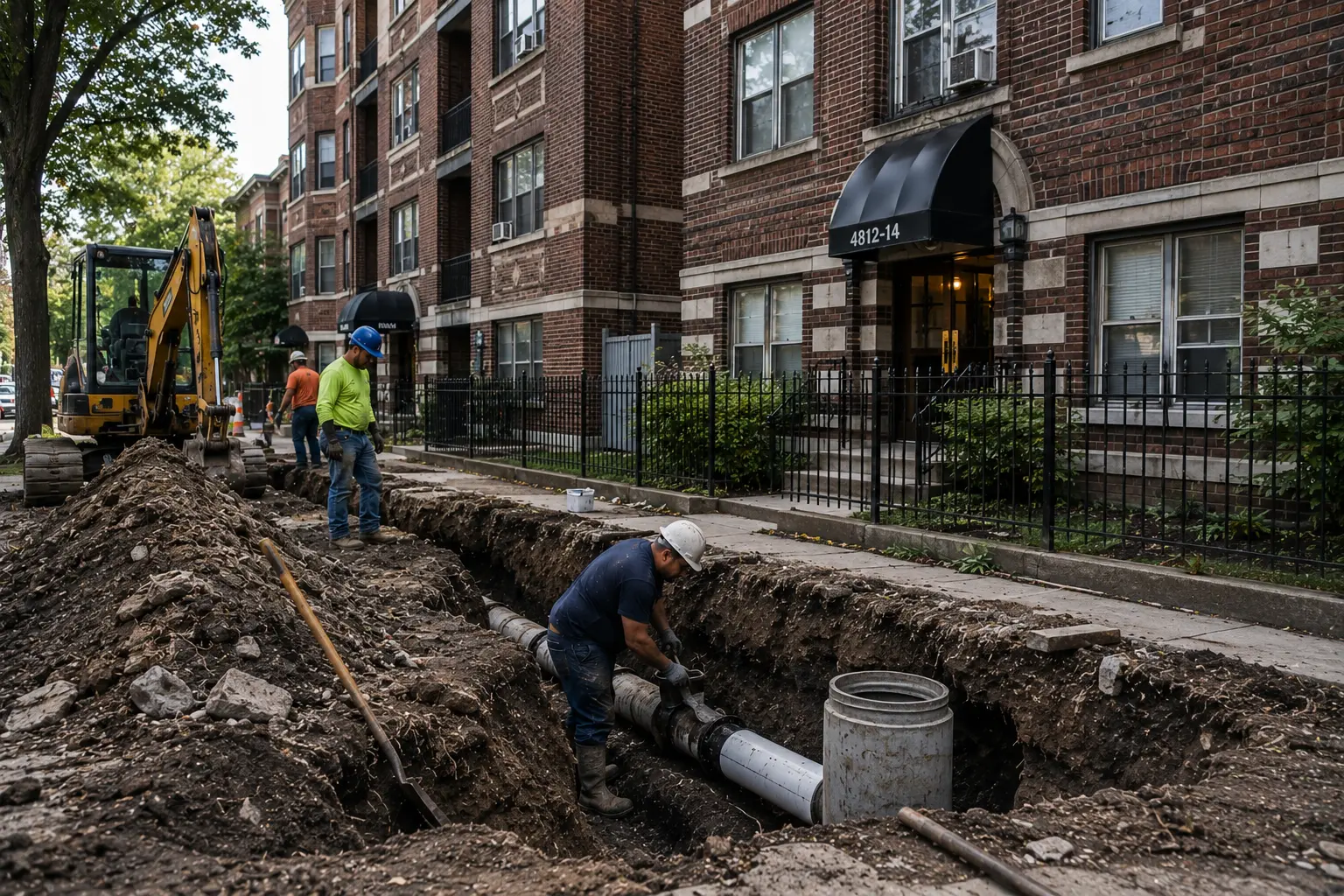
Multi-family buildings are a major part of Chicago’s housing stock, from three-flats and courtyard buildings to small apartment properties and converted older homes. These buildings often depend on shared sewer lines that serve multiple units, bathrooms, kitchens, laundry areas, basement drains, and common spaces. When a sewer problem develops, the impact can spread quickly across the property.
Sewer repair for multi-family buildings requires more planning than a typical single-family repair. The issue may involve older clay pipe, tree root intrusion, grease buildup, heavy fixture use, basement backups, tenant coordination, or aging underground infrastructure. A minor blockage can become a habitability problem if tenants lose access to working plumbing or wastewater enters a lower level.
This guide explains how sewer problems develop in Chicago multi-family buildings, what owners should look for, how repair decisions are made, and what risks matter most before approving work. For more guidance on older Chicago property types, visit the Older Chicago Homes & Property Types resource hub.
Key Takeaways
- Multi-family sewer problems can affect multiple units, tenants, and shared building systems.
- Older Chicago buildings may still have clay sewer pipe, cast iron sections, or patched underground lines.
- Common issues include root intrusion, grease buildup, cracked pipe, offset joints, sewer bellies, and recurring backups.
- A sewer camera inspection is usually essential before deciding between cleaning, repair, partial replacement, or full replacement.
- Tenant disruption, access, permits, basement exposure, and emergency timing can all influence project complexity.
- Owners should document sewer conditions carefully, especially for rental properties, insurance claims, and future sales.
What Should Owners Know About Multi-Family Sewer Repair?
Owners of Chicago multi-family buildings should know that sewer problems often involve more than one clogged drain. Because several units may share the same main sewer line, recurring backups or slow drainage can point to a building-wide problem such as roots, pipe deterioration, a belly, or a partial collapse.
The most practical first step is usually diagnosis. A sewer camera inspection can show where the problem is, what material the pipe is made from, and whether the damage is isolated or widespread. Cleaning may be enough for a simple blockage, but structural problems often require targeted repair, partial replacement, or full replacement depending on severity.
Why Multi-Family Sewer Problems Are Different
A single-family home usually has one household using the plumbing system. A multi-family building may have several households using kitchens, bathrooms, laundry, showers, dishwashers, and floor drains throughout the day. That higher usage can make small sewer restrictions more noticeable and more disruptive.
In older Chicago buildings, the sewer line may also be dealing with decades of wear. Some buildings have been renovated, converted, or expanded over time, while older underground pipe sections were left in place. These issues overlap with the broader risks described in Common Sewer Problems in Older Chicago Homes.
Shared Drainage Systems
Many multi-family buildings have shared stacks, branch lines, basement drains, and a main sewer lateral. A blockage in one area may affect only one unit, but a main line restriction can affect the entire building.
Higher Fixture Load
More units usually mean more fixtures and more water use. Even when the sewer line was originally adequate, age-related deterioration can reduce its reliability over time.
Tenant Use Variables
In rental buildings, owners cannot fully control what goes down every drain. Grease, wipes, hygiene products, paper towels, food waste, and debris can all contribute to blockages. These materials are especially problematic when the pipe already has roots, offsets, or low spots.
Common Sewer Problems in Chicago Multi-Family Buildings
Recurring Main Sewer Backups
Recurring backups are one of the most serious warning signs. If wastewater backs up into basement drains, lower-level fixtures, laundry areas, or multiple units, the issue may be in the shared main line.
Backups are especially concerning when the building has occupied garden units, storage areas, mechanical rooms, or finished basement spaces. Related risks are covered in Sewer Backup Problems in Chicago Basements.
Tree Root Intrusion
Many Chicago multi-family properties are located on older blocks with mature parkway or yard trees. Roots can enter sewer lines through small cracks, separated joints, or older clay pipe connections. Once inside, they catch debris and restrict flow.
For more on this issue, see Sewer Issues in Homes Near Large Trees.
Cracked Clay Pipe
Clay sewer pipe is common in many older Chicago properties. It can remain functional for decades, but cracks and joint separation can eventually allow root intrusion, soil infiltration, and recurring blockages.
Homeowners and building owners can learn more in Clay Sewer Pipes in Chicago Homes: Risks and Replacement Options.
Grease and Debris Buildup
Multi-family buildings often have repeated kitchen use across multiple units. Grease may cool and harden inside the line, especially where flow is already restricted by pipe defects or low slope.
Offset Joints
Older segmented pipe systems can shift over time. When pipe sections become misaligned, waste and paper can catch at the joint, creating repeated clogs.
Sewer Line Bellies
A belly is a sagging pipe section that holds water and solids. In a multi-family building, higher usage can make this problem show up more often because debris collects in the low spot.
Pipe Collapse
A collapsed sewer line is a structural failure. Cleaning cannot restore a collapsed pipe. Repair or replacement is usually required once collapse is confirmed.
How to Tell Whether the Problem Is Local or Building-Wide
One of the first questions is whether the sewer problem affects one fixture, one unit, one stack, or the shared building sewer line.
| Symptom | Possible Meaning | Recommended Focus |
|---|---|---|
| One sink or tub drains slowly | Local fixture or branch drain issue | Inspect the individual drain first |
| One unit has multiple slow drains | Possible branch line or stack issue | Check whether nearby units are affected |
| Several units report drainage issues | Possible shared line restriction | Evaluate common drainage lines |
| Basement floor drain backs up | Possible main sewer line issue | Investigate quickly and reduce water use |
| Problems return after cleaning | Possible structural pipe defect | Camera inspection is usually needed |
Practical note: In a multi-family building, early tenant reports can be valuable. A slow drain complaint may seem minor, but repeated complaints from different units can reveal a larger shared sewer problem.
Why Sewer Camera Inspections Matter
A sewer camera inspection is one of the most useful tools for evaluating a multi-family sewer problem. Without inspection footage, it can be difficult to know whether the issue is grease, roots, a broken pipe, a belly, an offset joint, or a collapse.
A camera inspection can help determine:
- The material of the sewer line
- The location of the defect
- Whether roots are present
- Whether the issue is isolated or widespread
- Whether there is standing water in the line
- Whether the pipe is cracked, offset, or collapsed
- Whether cleaning is likely to provide only temporary relief
Inspection documentation can also be useful before buying an older building. Buyers should review Sewer Inspection Before Buying a Chicago Home when evaluating older Chicago property.
Repair Options for Multi-Family Sewer Lines
The right repair option depends on the inspection findings, the building layout, and the level of disruption the owner can reasonably manage.
Sewer Cleaning
Cleaning may be appropriate when the problem is a blockage and the pipe is still structurally sound. However, cleaning does not repair cracks, offsets, bellies, or collapsed pipe.
Spot Repair
A spot repair targets one damaged section of sewer line. This may make sense when the defect is isolated and the rest of the line appears serviceable.
Partial Replacement
Partial replacement may be used when a longer section has defects but full replacement is not necessary. Owners should understand what old pipe will remain and what future risks may still exist.
Full Replacement
Full replacement may be considered when the line has widespread deterioration, multiple defects, repeated root intrusion, or collapse. This is a larger project, but it may reduce repeated disruption and emergency repairs.
Trenchless Methods
Some buildings may qualify for trenchless repair or replacement methods. These can reduce digging, but eligibility depends on pipe condition, access, alignment, depth, and slope. A severely collapsed or badly misaligned pipe may still require excavation.
Chicago-Specific Considerations for Multi-Family Buildings
Older Building Layouts
Chicago multi-family buildings may include vintage plumbing layouts, shared stacks, basement plumbing, garden units, rear additions, and past renovations. These features can make diagnosis more complex.
Narrow Lots and Limited Access
Many properties have narrow gangways, rear garages, alleys, concrete walkways, fences, and limited equipment access. These conditions can affect excavation, staging, and restoration.
Basement and Garden-Level Units
Buildings with garden apartments or finished lower levels face greater consequences from sewer backups. A backup may affect tenant housing, flooring, drywall, belongings, and mechanical equipment.
For more on finished lower-level risk, see Sewer Repair for Homes With Finished Basements.
Renovations and Conversions
Some Chicago multi-family buildings have been converted, deconverted, or remodeled over time. Added bathrooms, laundry areas, kitchens, or basement living spaces can change plumbing demand. Problems that appear after renovation may require a closer look at how new fixtures were connected.
Additional guidance is available in Sewer Problems After a Home Renovation.
Rental Property Responsibilities
For rental buildings, sewer problems can affect habitability, tenant communication, scheduling, cleanup, and documentation. Owners may need to act quickly when plumbing service is interrupted.
Property owners may also want to review Sewer Replacement for Rental Properties.
Cost Factors for Multi-Family Sewer Repair
Sewer repair costs vary widely because the work depends on underground conditions and property access. Multi-family buildings often involve added coordination because more people depend on the system.
Common cost factors include:
- Number of units affected
- Depth of the sewer line
- Length of pipe being repaired or replaced
- Pipe material and condition
- Location of the defect
- Whether work is inside, under the building, in the yard, or near the public way
- Excavation requirements
- Whether trenchless methods are possible
- Permit and inspection requirements
- Concrete, basement floor, sidewalk, or landscaping restoration
- Emergency timing versus planned repair
- Tenant access and scheduling needs
- Cleanup and restoration after backups
| Decision Factor | Why It Matters |
|---|---|
| Is the issue isolated? | May support cleaning or targeted repair |
| Are multiple units affected? | May indicate a shared sewer line problem |
| Is the pipe structurally damaged? | Cleaning alone may not be enough |
| Is there a basement or garden unit? | Backup damage risk may be higher |
| Are tenants currently occupying the building? | Timing, notices, and access coordination matter |
| Is the building being sold or refinanced? | Sewer defects may affect negotiations or due diligence |
Insurance and Documentation Considerations
Insurance coverage for sewer issues depends on the policy, endorsements, and cause of loss. Building owners should not assume that repair, replacement, cleanup, or tenant-related losses are automatically covered.
Owners should review:
- Sewer backup coverage
- Service line coverage
- Commercial or landlord policy terms
- Coverage for tenant-occupied units
- Exclusions for wear, age, roots, or deterioration
- Cleanup and restoration limits
- Deductibles and documentation requirements
Important: In a multi-family building, documentation matters. Inspection footage, invoices, photos, tenant reports, cleanup records, and repair recommendations may all become important for insurance, accounting, tenant communication, or future sale disclosures.
Contractor Considerations for Building Owners
Multi-family sewer repairs require clear communication and careful scope definition. Owners should ask questions before approving major work, especially if tenants are affected.
Useful questions include:
- What exactly did the camera inspection show?
- Where is the defect located?
- Is the problem isolated or widespread?
- Which units or fixtures are affected?
- Is cleaning likely to be temporary or long-lasting?
- What repair options are realistic for this building?
- Will work require tenant access?
- Will plumbing service be interrupted?
- What permits or inspections may be required?
- What restoration work is included?
- What older sewer sections will remain after the repair?
Common Mistakes Multi-Family Owners Make
Waiting Until Multiple Units Lose Drainage
Small warning signs can precede a larger building-wide failure. Repeated tenant reports should be tracked and investigated.
Assuming Every Backup Is Tenant Misuse
Improper drain use can contribute to blockages, but recurring problems may also indicate roots, cracked pipe, or another structural defect.
Approving Major Work Without Inspection Footage
Camera documentation helps owners understand the defect and compare repair recommendations.
Ignoring Remaining Old Pipe After a Partial Repair
Partial repair may solve the immediate problem, but older sections can still fail later.
Failing to Plan Tenant Communication
When plumbing service may be interrupted, tenants need clear information about timing, access, and expected disruption.
Overlooking Sale Implications
Sewer issues can become part of buyer due diligence. Owners preparing to sell should also review Sewer Line Problems Before Selling a House.
Frequently Asked Questions
Are sewer repairs more complicated in multi-family buildings?
They often are. Multiple units may share the same sewer line, and a single defect can affect tenants, common areas, basement drains, and building operations.
How do I know if a sewer problem affects one unit or the whole building?
If only one fixture is affected, the issue may be local. If several fixtures, multiple units, or basement drains are affected, the shared sewer line may be involved.
Should I get a sewer camera inspection before repairing a multi-family sewer line?
Yes. Camera footage helps identify the defect, location, pipe material, and severity before choosing between cleaning, spot repair, partial replacement, or full replacement.
Can tenant behavior cause sewer problems?
Yes. Grease, wipes, paper towels, and improper disposal can contribute to blockages. However, recurring issues may also be caused by roots, cracked pipe, bellies, or other structural problems.
Will insurance cover sewer repair in a rental building?
Coverage depends on the policy, property use, endorsements, and cause of damage. Owners should review sewer backup coverage, service line coverage, landlord policy terms, exclusions, deductibles, and documentation requirements.
Can trenchless sewer repair be used for multi-family buildings?
Sometimes. Trenchless methods may be possible if the existing line has suitable access, alignment, slope, and structural condition. Severe collapse or major offsets may require excavation.
When should a building owner consider full sewer replacement?
Full replacement may be considered when the sewer line has widespread deterioration, multiple defects, recurring root intrusion, collapse, or repeated building-wide backups.
Conclusion
Sewer repair for multi-family buildings in Chicago requires careful diagnosis because the consequences can affect tenants, multiple units, basement areas, and property operations. Older pipe materials, shared drainage systems, heavy use, mature tree roots, and prior renovations can all contribute to recurring problems.
The best approach is to document symptoms, determine whether the issue is local or building-wide, obtain clear inspection findings, and compare repair options based on long-term reliability rather than immediate cost alone. For Chicago multi-family owners, proactive sewer decisions can reduce disruption, protect property value, and help avoid avoidable emergencies.