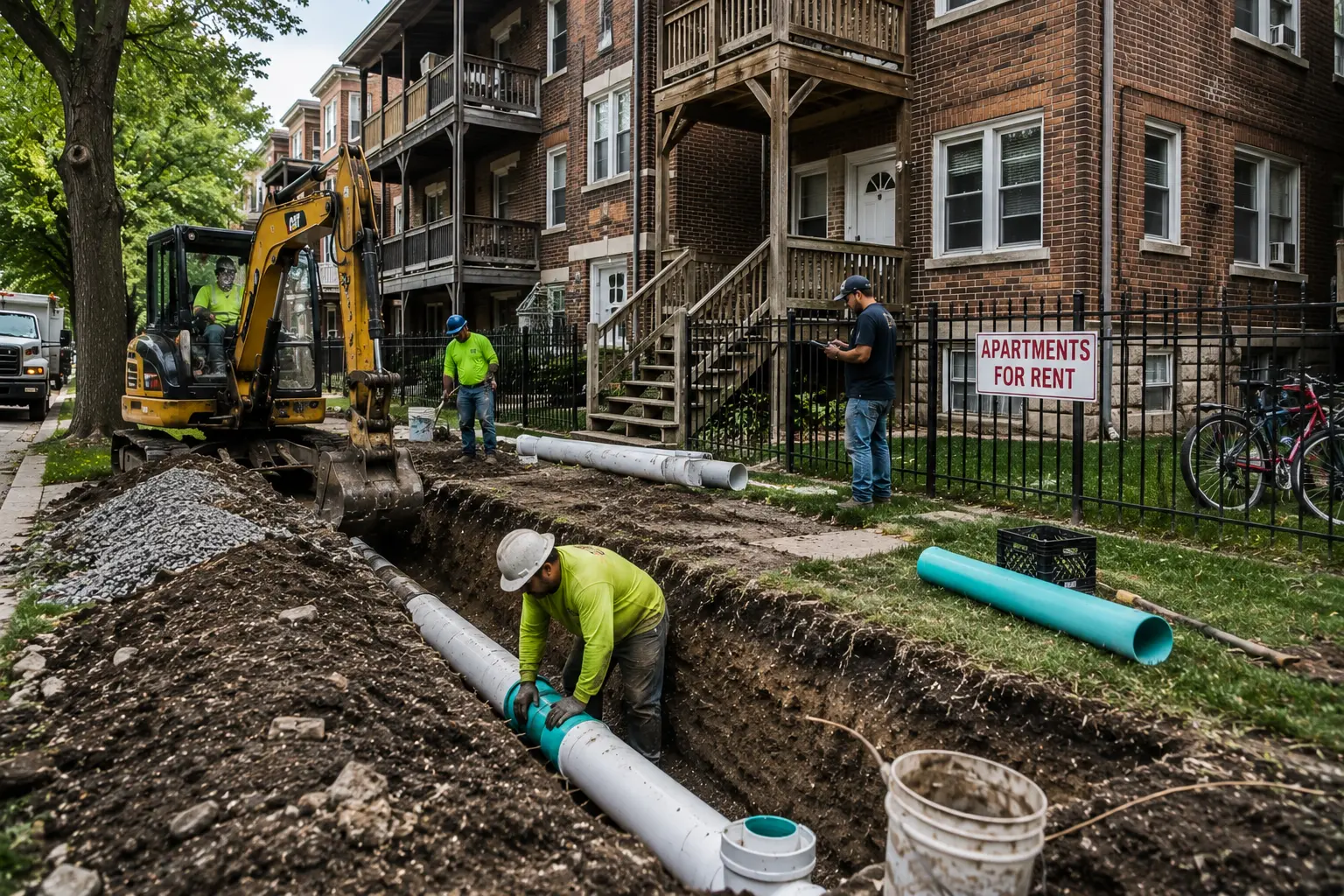
Sewer replacement for rental properties in Chicago is not just a plumbing decision. For landlords and small property owners, a failing sewer line can affect tenants, rent collection, habitability, insurance documentation, repair scheduling, and long-term property value.
Many Chicago rental properties are older buildings, including two-flats, three-flats, greystones, converted single-family homes, small apartment buildings, and properties with finished basements or garden units. These buildings may still have clay sewer pipes, older cast iron sections, patched underground lines, or sewer systems that have been repaired in pieces over many decades.
The most important question is whether the sewer line is reliable enough to support the property without repeated backups, emergency service calls, tenant complaints, or damage to lower-level spaces. For more guidance on older Chicago property types, visit the Older Chicago Homes & Property Types resource hub.
Key Takeaways
- Rental property sewer problems can affect tenants, habitability, building operations, and owner liability concerns.
- Older Chicago rental buildings often have clay pipe, mature tree roots, shared sewer lines, and basement backup risks.
- Sewer replacement may be considered when the line has recurring roots, cracks, offsets, collapse, severe bellies, or repeated backups.
- A sewer camera inspection is usually necessary before deciding between cleaning, repair, partial replacement, or full replacement.
- Rental owners should consider tenant coordination, documentation, insurance coverage, access, permits, and restoration costs.
- The cheapest immediate fix may not be the best long-term choice if the sewer line is structurally failing.
When Does a Rental Property Need Sewer Replacement?
A Chicago rental property may need sewer replacement when the existing sewer line is structurally damaged or repeatedly failing. Common reasons include collapsed pipe, extensive root intrusion, cracked clay pipe, offset joints, severe sewer line bellies, recurring basement backups, or repeated blockages that return after cleaning.
Not every sewer issue requires replacement. A one-time clog may only need cleaning, and an isolated damaged section may be repairable. Replacement becomes more practical when the sewer line has widespread deterioration or when repeated repairs are creating tenant disruption, emergency costs, and ongoing risk to the building.
Why Sewer Replacement Is Different for Rental Properties
In an owner-occupied home, a sewer backup is stressful and disruptive. In a rental property, the same problem can affect multiple households, tenant communication, building access, lease obligations, cleanup responsibilities, and income stability.
A rental owner may also need to make decisions quickly because tenants depend on working toilets, drains, showers, and laundry. If the sewer problem affects essential plumbing, waiting too long can create larger property management problems.
Multiple Residents May Depend on One Sewer Line
Many Chicago rental properties have shared drainage systems. A two-flat, three-flat, or small multi-family building may rely on one main sewer lateral. If that line fails, multiple units can be affected at once.
Owners of smaller rental buildings may also want to read Sewer Repair for Two-Flats in Chicago and Sewer Repair for Multi-Family Buildings.
Tenant Use Adds Uncertainty
Landlords cannot fully control what goes down every drain. Grease, wipes, paper towels, hygiene products, food waste, and foreign objects can all contribute to clogs. However, repeated backups should not automatically be blamed on tenants.
If the pipe has roots, cracks, offsets, or low spots, ordinary use can trigger recurring symptoms because the sewer line is already compromised.
Emergency Work Is Harder to Coordinate
Emergency sewer replacement may involve short-notice unit access, basement access, excavation, parking disruption, temporary water-use limits, cleanup, and tenant communication. Planned replacement usually gives owners more control over scheduling and documentation.
Common Sewer Problems in Chicago Rental Properties
Tree Root Intrusion
Many Chicago rental properties are located in older neighborhoods with mature parkway trees, backyard trees, and established landscaping. Roots naturally seek moisture and can enter sewer lines through cracks, loose joints, or deteriorated pipe sections.
Once roots enter the line, they can trap waste, paper, grease, and debris. If roots return after repeated cleaning, the pipe likely has an opening that needs further evaluation. More detail is available in Sewer Issues in Homes Near Large Trees.
Cracked Clay Sewer Pipe
Clay sewer pipe is common in many older Chicago buildings. Clay can last a long time, but pipe sections and joints may crack, separate, or shift as the system ages.
Rental owners with older buildings should understand the risks explained in Clay Sewer Pipes in Chicago Homes: Risks and Replacement Options.
Basement Backups
Basement backups can create serious problems in rental properties. A basement may contain tenant storage, shared laundry, mechanical systems, finished space, or a garden apartment. When wastewater enters that area, the owner may need to address cleanup, repairs, tenant communication, and possible loss of use.
For deeper guidance, see Sewer Backup Problems in Chicago Basements.
Sewer Line Bellies
A sewer belly is a low spot in the pipe where water and waste collect. Cleaning may temporarily improve flow, but if the pipe slope is poor, the same problem may continue returning.
Offset Joints
Offset joints occur when pipe sections no longer align correctly. Waste catches at the offset, roots may enter through the gap, and backups may become more frequent over time.
Pipe Collapse
A collapsed sewer line is a structural failure. Cleaning cannot reopen a collapsed pipe in a lasting way. Replacement or excavation is often required once collapse is confirmed.
Cleaning, Repair, or Replacement: How Owners Should Decide
The right decision depends on the condition of the sewer line, not just the latest symptom. A single backup may be caused by a clog. Repeated backups after cleaning usually require a closer look.
| Inspection Finding | Possible Approach | Rental Property Concern |
|---|---|---|
| Simple blockage with no visible damage | Cleaning may be enough | Monitor tenant reports for repeat symptoms |
| Roots at one joint | Cleaning, spot repair, or monitoring | Track how quickly roots return |
| Multiple root entry points | Partial or full replacement may be considered | Repeated service calls may become inefficient |
| Small isolated crack | Spot repair may be possible | Confirm the rest of the line is stable |
| Widespread cracking | Replacement may be more practical | Future tenant disruption risk increases |
| Severe belly with standing water | Repair or replacement to correct slope | Cleaning alone may not solve recurring backups |
| Collapsed sewer line | Replacement or excavation usually required | May require urgent coordination |
Practical note: For rental properties, the lowest upfront repair cost is not always the lowest long-term cost. Repeated emergency calls, tenant disruption, cleanup, and property damage can make a failing sewer line more expensive over time.
Why Sewer Camera Inspections Matter
A sewer camera inspection gives the owner visual documentation of the pipe condition. This is especially important for rental properties because decisions may involve tenants, insurance, bookkeeping, future buyers, or property managers.
Inspection footage can help identify:
- Pipe material
- Root intrusion
- Cracks or missing pipe sections
- Offset joints
- Sewer bellies
- Standing water
- Collapsed sections
- Improper connections
- Whether damage is isolated or widespread
Inspection is also useful when buying an older rental property. Sewer defects are not usually visible during a standard walkthrough or home inspection. Buyers should review Sewer Inspection Before Buying a Chicago Home before purchasing an older Chicago property.
Replacement Options for Rental Properties
Traditional Excavation
Traditional excavation involves digging to expose and replace the damaged sewer line. It may be necessary when the pipe has collapsed, shifted badly, lost proper slope, or cannot support trenchless methods.
For rental properties, excavation planning should include tenant notices, access needs, water-use limits, noise, parking, staging, and restoration timing.
Trenchless Replacement or Rehabilitation
Some sewer lines may qualify for trenchless methods. These approaches can reduce digging and surface disruption, which can be helpful for occupied rental buildings.
However, trenchless methods are not suitable for every condition. Severe collapse, major offsets, poor slope, or limited access may require excavation.
Partial Replacement
Partial replacement may make sense when the damaged section is limited. The owner should ask which older sections will remain and whether those sections show signs of future risk.
Full Sewer Line Replacement
Full replacement may be considered when the line has widespread deterioration, repeated root intrusion, multiple defects, or a history of recurring backups. This is a larger project, but it may reduce future emergency work.
Chicago-Specific Considerations
Older Rental Building Stock
Chicago has many rental buildings that were built before modern sewer materials became common. Two-flats, greystones, bungalows converted to rentals, and small apartment buildings may still have original or partially original sewer lines.
For a broader overview of older building risks, see Common Sewer Problems in Older Chicago Homes.
Garden Units and Finished Basements
Finished basements and garden units increase the consequences of sewer backups. Wastewater damage may affect flooring, drywall, tenant belongings, appliances, laundry areas, and mechanical equipment.
Owners with lower-level living or finished space should also review Sewer Repair for Homes With Finished Basements.
Narrow Lots and Urban Access
Chicago rental properties often have narrow gangways, rear garages, alleys, concrete walkways, fences, patios, and limited staging areas. These conditions can affect repair method, equipment access, excavation, and restoration.
Renovated or Converted Buildings
Some rental properties have been remodeled, converted, or expanded. Added bathrooms, kitchens, laundry areas, or basement units can place more demand on an older sewer line.
If sewer problems appeared after building work, see Sewer Problems After a Home Renovation.
Cost Factors Rental Owners Should Consider
Sewer replacement costs vary because every property has different underground conditions, access limitations, pipe depth, and restoration needs. Rental properties also have operational costs that may not appear directly on a contractor estimate.
Important cost factors include:
- Length of pipe being replaced
- Depth of the sewer line
- Pipe material and condition
- Location of the damaged section
- Whether work is inside, outside, under concrete, or near the public way
- Excavation requirements
- Whether trenchless methods are possible
- Permit and inspection requirements
- Concrete, sidewalk, basement floor, yard, or landscaping restoration
- Tenant access and scheduling needs
- Emergency timing versus planned replacement
- Cleanup and restoration after backups
- Potential rent disruption or temporary loss of use
| Ownership Factor | Why It Matters |
|---|---|
| Owner-occupied rental | The owner may manage disruption directly while coordinating with tenants |
| Fully tenant-occupied building | Access, notice, and habitability concerns become more important |
| Garden unit or finished basement | Backup damage risk may be higher |
| Recent renovation | Added fixtures may increase demand on old sewer lines |
| Upcoming sale or refinance | Sewer defects may affect inspections, negotiations, or due diligence |
Insurance and Documentation Considerations
Insurance coverage for sewer problems depends on the policy, property use, endorsements, and cause of loss. Rental owners should not assume sewer replacement is covered automatically.
Many policies exclude normal wear and tear, age-related deterioration, root damage, or gradual pipe failure. Sewer backup endorsements may help with certain cleanup or damage costs, but they do not always cover replacement of the failed pipe. Service line coverage, if included, may have separate limits, deductibles, and exclusions.
Owners should review:
- Whether the policy accurately reflects rental use
- Sewer backup coverage
- Service line coverage
- Coverage limits and deductibles
- Exclusions for age, roots, wear, or deterioration
- Tenant property exclusions
- Cleanup and restoration coverage
- Documentation requirements for claims
Important: Rental owners should keep sewer inspection footage, invoices, photos, cleanup records, tenant communications, and repair recommendations. Documentation can matter for insurance, accounting, tenant disputes, and future sale disclosures.
Contractor Considerations for Rental Sewer Replacement
Rental property owners should evaluate sewer contractors based on diagnosis, documentation, communication, and scope clarity. Occupied buildings require more coordination than vacant properties.
Useful questions include:
- What did the camera inspection show?
- Is the damage isolated or widespread?
- Where exactly is the damaged section located?
- Is cleaning likely to be temporary?
- What repair or replacement options are realistic?
- Will tenants lose plumbing access during the work?
- How much notice should tenants receive?
- Will excavation affect sidewalks, basement floors, yards, or common areas?
- What permits or inspections may be required?
- What restoration work is included?
- What old pipe will remain after the project?
Common Mistakes Rental Property Owners Make
Blaming Tenants Before Inspecting the Line
Tenant misuse can cause clogs, but recurring sewer problems may also indicate roots, cracked pipe, bellies, offsets, or collapse. Inspection helps separate usage issues from structural defects.
Relying on Repeated Cleaning Without a Long-Term Plan
Cleaning may restore flow temporarily, but repeated service calls can become expensive if the line is structurally failing.
Ignoring Basement Backup Risk
Basement backups can affect tenant storage, mechanical systems, laundry access, finished spaces, or garden units. Waiting for a major backup may increase cleanup and restoration costs.
Failing to Coordinate Tenant Access
Sewer replacement may require access to basements, units, yards, laundry areas, or common spaces. Poor coordination can delay work and increase frustration.
Skipping Documentation
Rental owners should document inspection findings, repair recommendations, photos, invoices, and tenant communications.
Waiting Until Sale Negotiations
Sewer issues often surface during buyer due diligence. Owners preparing to sell should review Sewer Line Problems Before Selling a House.
Frequently Asked Questions
When should a rental property owner replace a sewer line instead of repairing it?
Replacement may be considered when the sewer line has widespread deterioration, repeated root intrusion, collapsed sections, severe offsets, major bellies, or recurring backups that continue after cleaning.
Can tenants cause sewer line problems?
Tenants can contribute to clogs by flushing wipes, paper towels, grease, hygiene products, or other materials. However, recurring problems may also be caused by structural pipe defects that require inspection.
Is sewer replacement more urgent in a rental property?
It can be. Sewer problems may affect habitability, tenant satisfaction, plumbing access, cleanup responsibilities, and rental income. Building-wide backups or loss of usable plumbing should be addressed quickly.
Will landlord insurance cover sewer replacement?
Coverage depends on the policy, endorsements, and cause of damage. Wear and tear, roots, age, and deterioration are often excluded. Owners should review sewer backup and service line coverage carefully.
Should I get a sewer inspection before buying a rental property in Chicago?
Yes, especially for older properties. Sewer defects are usually not visible during a standard inspection and can significantly affect repair budgets after purchase.
Can sewer replacement be done while tenants are living in the building?
Often, yes, but it requires coordination. Tenants may need notice about access, water-use limits, noise, excavation, parking, or temporary plumbing interruptions.
Is trenchless sewer replacement a good option for rental properties?
It may be, if the pipe condition and access allow it. Trenchless methods can reduce surface disruption, but they may not work for collapsed, severely offset, or poorly sloped lines.
Conclusion
Sewer replacement for rental properties in Chicago requires both technical and ownership-level decision-making. The condition of the pipe matters, but so do tenant disruption, documentation, insurance, habitability, cleanup risk, access, and long-term operating costs.
For rental owners, the most practical approach is to investigate recurring sewer symptoms early, document the line condition with inspection footage, compare repair and replacement options carefully, and plan work before an emergency creates additional pressure. A reliable sewer system is not just a plumbing concern; it is part of protecting the property, tenants, and long-term investment value.