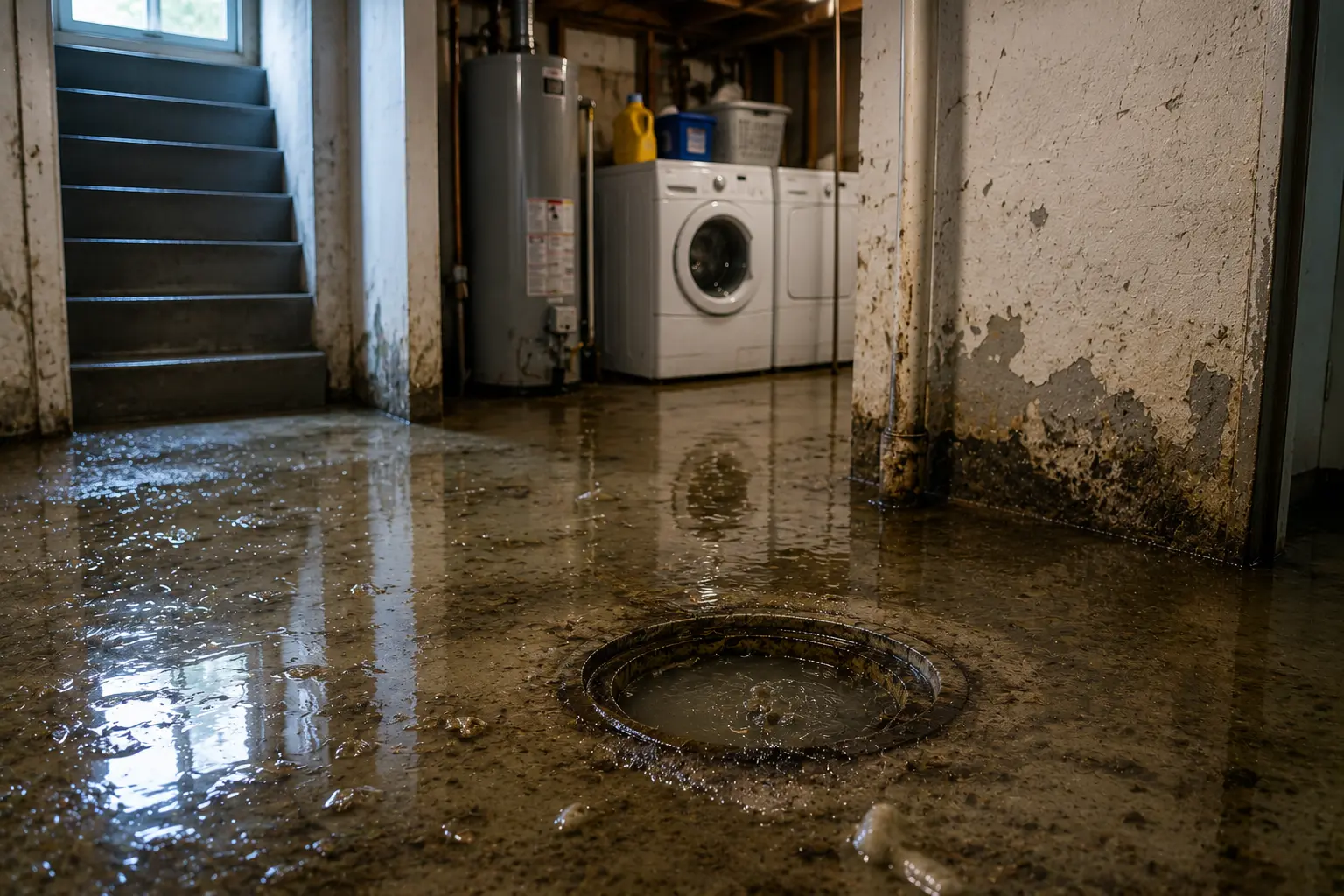
A sewer backup in the basement usually means wastewater is not moving away from the home properly. The cause may be a main sewer line clog, tree roots, a collapsed or damaged pipe, a sewer line belly, heavy rainfall overwhelming the system, a blocked floor drain, or a problem with a backwater valve or sump-related setup.
For Chicago homeowners, basement backups are especially concerning because many homes have lower-level floor drains, laundry areas, utility rooms, finished basements, and older sewer laterals. When the main line slows or blocks, wastewater often appears at the lowest drain opening first. That is why a basement backup can be an early warning sign of a larger sewer problem.
Not every basement backup means the sewer line must be replaced. Some backups are caused by temporary clogs or maintenance issues. Others point to structural damage that needs repair or replacement. The key is to understand the pattern, identify the source, and avoid treating repeated backups as normal.
Key Takeaways
- A basement sewer backup is often a sign that wastewater is blocked, restricted, or being forced back into the home.
- Common causes include main line clogs, tree roots, cracked pipes, collapsed sewer lines, sewer line bellies, offset joints, and heavy rainfall.
- Chicago basements are vulnerable because floor drains and laundry drains are often the lowest plumbing points in the home.
- One backup may be a temporary clog, but repeated backups usually deserve a sewer camera inspection.
- Strong sewage odors, gurgling drains, multiple slow drains, and recurring clogs can warn that a backup is likely.
- Cleanup, mold prevention, insurance documentation, and repair decisions should be handled carefully after any sewage backup.
- Homeowners should compare cleaning, repair, and replacement options based on the actual pipe condition, not just the visible mess.
What a Basement Sewer Backup Usually Means
A sewer backup in the basement usually means the main drain or sewer line cannot move wastewater away from the home fast enough. Wastewater may come up through a floor drain, shower, toilet, laundry drain, or utility sink because the basement is often the lowest point in the plumbing system.
The most important warning signs are wastewater coming from a floor drain, several drains slowing at once, toilets gurgling, sewage smells, repeated clogs, or backups that happen during heavy rain. If the backup happens more than once, a sewer camera inspection is often the best way to determine whether the cause is a clog, roots, a belly, an offset joint, a cracked pipe, or a collapsed sewer line.
Why Sewer Backups Happen in Basements
The Basement Is Often the Lowest Drainage Point
Wastewater follows the path of least resistance. When the main sewer line is blocked or overwhelmed, the backup often appears at the lowest drain opening in the home. In many Chicago houses, that means a basement floor drain, laundry drain, lower-level shower, or basement toilet.
This is why upper-level sinks and toilets may seem normal at first while the basement is already showing trouble. The problem may not be the basement fixture itself. It may be the main sewer line serving the entire home.
The Main Sewer Line May Be Restricted
A basement backup often starts with a restriction in the main sewer line. Wastewater leaves the home through the main drain and sewer lateral. If that line is blocked, broken, root-filled, or improperly sloped, water and waste can reverse direction.
When a sewer backup is paired with slow drains throughout the house, the issue may be larger than a floor drain clog. The guide What Slow Drains Throughout the House Can Mean explains how whole-house drainage symptoms can point to a main line problem.
Heavy Rain Can Add Pressure
During heavy rainfall, sewer systems may experience more flow than usual. If the home has a vulnerable sewer line, poor drainage setup, or a backflow issue, that added pressure can contribute to basement backups.
Rain-related backups can be confusing because the home’s plumbing may appear fine during dry weather. However, if backups happen repeatedly during storms, homeowners should investigate whether the issue involves the private sewer lateral, backwater protection, foundation drainage, or the surrounding sewer system.
Common Causes of Basement Sewer Backups
Main Sewer Line Clogs
A clog in the main sewer line can cause wastewater to back up into the basement. Common clog materials include grease, wipes, paper products, debris, sludge, and objects that should not have entered the drain system.
If the clog is isolated and the pipe is otherwise intact, cleaning may solve the problem. If the clog keeps returning, the line may have an underlying defect that catches waste. Recurring clogs are often a sign that the problem is not just what went down the drain, but what is happening inside the pipe.
Homeowners dealing with repeat blockages may find Why Do Sewer Lines Keep Clogging? helpful for understanding why the same line keeps failing.
Tree Roots in the Sewer Line
Tree roots can enter sewer pipes through cracks, loose joints, offsets, and weakened sections. Once inside, they can grow into a dense mass that traps waste and slows the flow of water.
Root cutting may restore flow for a while, but it does not repair the opening where roots entered. If roots keep returning, the pipe may need a targeted repair or larger sewer work. This is especially relevant in older Chicago neighborhoods with mature parkway trees and older clay sewer pipes.
For more detail on this issue, see Tree Roots in Sewer Lines: Signs and Solutions.
Sewer Line Belly
A sewer line belly is a low spot in the pipe where water and waste collect instead of draining fully. Over time, the standing waste can create recurring clogs, odors, and backups.
A belly may not always cause a sudden failure. Instead, it can create a pattern of slow drains and repeated backups. Cleaning may remove the blockage temporarily, but the low spot remains. A camera inspection can help confirm whether water is sitting in the line.
Offset Sewer Pipe Joints
An offset joint happens when two pipe sections shift out of alignment. Waste can catch on the edge of the offset, and roots may enter through the gap. This can lead to repeated clogs and backups.
Offset joints are common enough in older sewer systems that homeowners should ask whether the inspection showed a smooth pipe run or visible separation between sections.
Cracked or Broken Sewer Pipe
A cracked pipe can allow soil, roots, and water to enter the sewer line. It can also allow wastewater to leak into the surrounding ground. If the crack worsens, the line may clog more often or lose its ability to carry waste properly.
Chicago homes with older clay pipe sections may be more vulnerable to cracking and separation over time. If a backup is connected to visible pipe damage, it may be more serious than an ordinary clog.
Collapsed Sewer Line
A collapsed sewer line is one of the more serious causes of a basement backup. If a pipe section has caved in, wastewater may have little or no path out of the home.
Signs may include severe backups, drains that barely move, repeated failed cleaning attempts, or a camera inspection that cannot pass through the damaged area. Homeowners who suspect this type of failure should review Warning Signs of a Collapsed Sewer Line for more context.
Backwater Valve or Drainage Setup Problems
Some homes have backwater valves designed to reduce the risk of sewage flowing back into the home. If a valve is stuck, blocked, damaged, or not maintained, it may not function properly. In some cases, a home may not have adequate backflow protection for its risk level.
Backwater valve issues should be evaluated carefully because the valve is only one part of the overall drainage system. A valve does not fix a broken private sewer lateral, and a clear sewer line does not guarantee a valve is working correctly.
Warning Signs Before a Basement Backup Happens
Many sewer backups seem sudden, but there are often warning signs first. Homeowners who recognize these signs may be able to investigate before wastewater enters the basement.
| Warning Sign | What It May Suggest | Why It Matters |
|---|---|---|
| Basement floor drain gurgles | Air is trapped or displaced in the drain system. | May indicate main line restriction. |
| Several drains slow at once | Wastewater is struggling after it leaves the home. | More concerning than one slow fixture. |
| Sewage smell near basement drains | Sewer gas or wastewater may be escaping. | Can signal blockage, venting issues, or line damage. |
| Water rises in a basement drain during laundry | High-volume discharge is meeting resistance. | May point to a partially blocked main line. |
| Clogs return after cleaning | The pipe may have roots, a belly, offset, or damage. | Temporary cleaning may not solve the cause. |
| Backups happen during storms | Rainfall may be adding pressure to the system. | Backflow protection and sewer condition should be reviewed. |
If gurgling is one of the first symptoms, What Causes Gurgling Toilets and Drains? can help explain why drain noises may be connected to a larger sewer issue.
What to Do After a Sewer Backup in the Basement
Limit Contact With Contaminated Water
Sewage backup water can contain waste and contaminants. Homeowners should avoid walking through it without protection, keep children and pets away, and avoid using affected areas until they are cleaned safely.
Items that absorb contaminated water may need special handling or disposal. Finished basements can be especially vulnerable because water can reach drywall, trim, flooring, insulation, furniture, and stored belongings.
Stop Using Water if It Makes the Backup Worse
If using toilets, sinks, showers, or laundry causes more water to rise from the basement drain, stop using plumbing fixtures until the problem is evaluated. Continuing to send water into a blocked system can increase the amount of wastewater in the basement.
Document the Damage
Photos, videos, dates, and notes can be useful for insurance discussions and repair decisions. Documentation should include where the water came from, what areas were affected, and whether the backup happened during rainfall or normal household use.
Arrange Diagnosis Before Repeated Cleaning
Cleaning the line may be necessary to restore drainage, but repeated cleaning without diagnosis can leave homeowners stuck in the same cycle. If the backup has happened before, a camera inspection can help identify whether the line has roots, cracks, offset joints, a belly, or collapse.
Practical Safety Note
A basement sewer backup is not just a plumbing inconvenience. It can involve contaminated water, property damage, mold risk, and electrical hazards if water reaches appliances, outlets, or mechanical equipment. When in doubt, prioritize safety and documentation before cleanup decisions.
Chicago-Specific Considerations
Older Sewer Laterals
Many Chicago homes have older sewer laterals that may include clay pipe, cast iron, or older repairs. Over time, these materials can crack, shift, corrode, or allow root entry. A basement backup may be the first visible sign that the private sewer lateral is no longer draining reliably.
Basement Living Space and Finished Areas
Chicago basements are often used for laundry, storage, utilities, recreation rooms, bedrooms, or additional living space. That makes sewer backups more damaging. A small amount of sewage can affect finished flooring, drywall, baseboards, cabinets, and personal belongings.
After a backup, homeowners should also consider the risk of hidden moisture. The related article Mold After a Sewer Backup: What Homeowners Should Know explains why cleanup and drying decisions matter.
Storm Events and Backflow Risk
Some basement backups happen during or after heavy rain. While rainfall may be part of the timing, homeowners still need to determine where the backup entered and whether the private sewer line, floor drain, backwater valve, or plumbing configuration contributed to the problem.
If backups happen only during storms, that pattern is important. It may affect the type of inspection, prevention strategy, and insurance conversation.
Permits, Access, and Restoration
If a sewer repair or replacement is needed, Chicago properties can present access challenges. Sewer lines may run under concrete, yards, gangways, sidewalks, parkways, or finished basement floors. Restoration can become a major part of the project.
Homeowners should ask whether a quote includes permits, inspections, excavation, backfill, concrete restoration, basement floor repair, and cleanup. Two estimates can look similar while covering very different scopes.
Repair, Replacement, or Prevention: How to Think About the Decision
The right response depends on why the backup happened. A one-time clog may not justify major work. Repeated backups, structural defects, or storm-related backflow issues may require a more complete plan.
Cleaning May Be Enough When
- The backup happened once.
- The blockage was clearly identified and removed.
- The sewer line appears intact on camera.
- There are no repeated slow drains, odors, or gurgling symptoms.
- The backup was caused by a known misuse issue, such as wipes or grease.
Repair May Be Needed When
- A camera inspection shows one damaged section.
- Roots are entering through a specific joint or crack.
- An offset joint is catching waste.
- A localized belly is causing repeated blockages.
- The rest of the sewer line remains in usable condition.
Replacement May Be Considered When
- The sewer line has collapsed.
- Multiple sections are cracked, separated, or root-filled.
- Backups continue after cleaning.
- The pipe is deteriorated across a long run.
- Several spot repairs would be needed to solve the problem.
- The risk of another basement backup is high.
If the symptoms suggest a larger sewer failure, homeowners may want to compare this issue with Signs Your Sewer Line May Need Replacement.
Cost Factors After a Basement Sewer Backup
The cost of dealing with a basement sewer backup can involve more than clearing the drain. Depending on severity, homeowners may face drain cleaning, camera inspection, cleanup, drying, damaged materials, mold prevention, pipe repair, replacement, or backflow prevention upgrades.
Important cost factors include:
- Cause of the backup: A simple clog is different from a collapsed sewer line or repeated root intrusion.
- Extent of contamination: Water that affects finished areas usually increases cleanup and restoration needs.
- Pipe location: Damage under a yard is different from damage beneath a basement floor, sidewalk, or street area.
- Access: Narrow gangways, concrete, finished rooms, and utility areas can complicate work.
- Inspection needs: Camera inspection may be needed to identify the actual cause.
- Restoration: Flooring, drywall, baseboards, concrete, and stored items may need repair or replacement.
- Urgency: Emergency service can limit time to compare options.
- Insurance coverage: Coverage depends on the policy, endorsements, cause, and type of damage.
Homeowners should separate plumbing costs from cleanup and restoration costs. A sewer line may be cleared quickly, but basement recovery can still require careful drying, documentation, and repair.
Common Mistakes Homeowners Make After a Basement Backup
Assuming the Floor Drain Is the Only Problem
Because water appears at the floor drain, it is easy to blame that drain. In many cases, the floor drain is simply where the backup becomes visible. The actual problem may be farther downstream in the main sewer line.
Cleaning the Line Repeatedly Without Inspection
If the backup happens more than once, repeated cleaning may only provide temporary relief. A camera inspection can help identify roots, cracks, offsets, bellies, or collapse.
Ignoring Sewage Odors After Cleanup
Lingering sewage smells may indicate contamination, moisture, drain issues, or an unresolved sewer problem. If odor remains after cleaning, homeowners should not assume the issue is fully resolved. The guide Why Your House Smells Like Sewage covers odor-related causes in more detail.
Waiting Too Long to Dry Finished Materials
Basement materials can hold moisture. Carpeting, drywall, insulation, trim, and stored items may create mold risk if not handled properly after a sewage backup.
Comparing Sewer Quotes Without Comparing Scope
A quote to clear a line is not the same as a quote to repair a pipe. A quote to repair a pipe may not include basement cleanup. Homeowners should clarify what each proposal includes and excludes.
Assuming Insurance Will Automatically Cover Everything
Insurance coverage can depend on sewer backup endorsements, service line coverage, exclusions, wear and tear, and the cause of loss. Homeowners should document the damage and review policy language before assuming cleanup, repair, or replacement will be covered.
FAQ
Why is sewage backing up through my basement floor drain?
Sewage usually backs up through a basement floor drain because the drain is one of the lowest openings in the home. If the main sewer line is blocked, restricted, or overwhelmed, wastewater may come up through the basement before it appears elsewhere.
Does a basement sewer backup mean my sewer line is broken?
Not always. A basement backup can be caused by a temporary clog, grease, wipes, roots, rainfall-related backflow, or a blocked drain. A broken sewer line becomes more likely when backups repeat, the line clogs again after cleaning, or inspection shows cracks, offsets, a belly, or collapse.
Should I get a sewer camera inspection after a basement backup?
A camera inspection is especially useful if the backup has happened more than once, affects multiple fixtures, or returns after cleaning. The inspection can show whether the issue is a clog, root intrusion, cracked pipe, offset joint, sewer line belly, or collapsed section.
What should I do first after sewage enters my basement?
Limit contact with contaminated water, keep children and pets away, stop using plumbing if it makes the backup worse, document the damage, and arrange safe cleanup and diagnosis. If water is near electrical equipment or outlets, avoid the area until it is safe.
Can heavy rain cause a sewer backup in a Chicago basement?
Yes, heavy rain can contribute to basement backups, especially when the sewer system is under pressure or the home has backflow vulnerabilities. However, rain timing does not rule out a private sewer line problem. Repeated storm-related backups should be evaluated.
Can a basement sewer backup cause mold?
Yes. Sewage water can soak into flooring, drywall, trim, insulation, and stored belongings. If affected materials are not cleaned and dried properly, mold may become a secondary problem after the backup.
Will homeowners insurance cover a basement sewer backup?
Coverage depends on the policy and endorsements. Some homeowners may have sewer backup coverage, service line coverage, or limits that apply to cleanup and damage. Many policies exclude certain causes, including gradual deterioration or wear and tear. Homeowners should document the event and review their policy carefully.
When is a basement sewer backup an emergency?
It should be treated as urgent when sewage is actively entering the basement, drains are unusable, wastewater is affecting finished areas, strong odors are present, or the backup may reach electrical, heating, or mechanical equipment. The article When Does a Sewer Problem Become an Emergency? can help homeowners think through urgency.
Conclusion
A sewer backup in the basement is a serious warning sign, but the cause can range from a temporary clog to a damaged or collapsed sewer line. The most important clues are whether the backup repeats, whether multiple drains are affected, whether sewage odors or gurgling appear, and whether the problem happens during normal use or heavy rain.
For Chicago homeowners, basement backups deserve careful attention because older sewer laterals, clay pipe, tree roots, finished basements, and local access challenges can raise the risk and cost of waiting. A clear diagnosis can help determine whether the right next step is cleaning, inspection, targeted repair, replacement, cleanup, prevention, or insurance documentation.
The safest approach is to treat a basement sewer backup as both a plumbing issue and a property-damage issue. Restore drainage, identify the cause, document the damage, and make repair decisions based on the condition of the sewer line rather than the assumption that the problem was only a one-time clog.