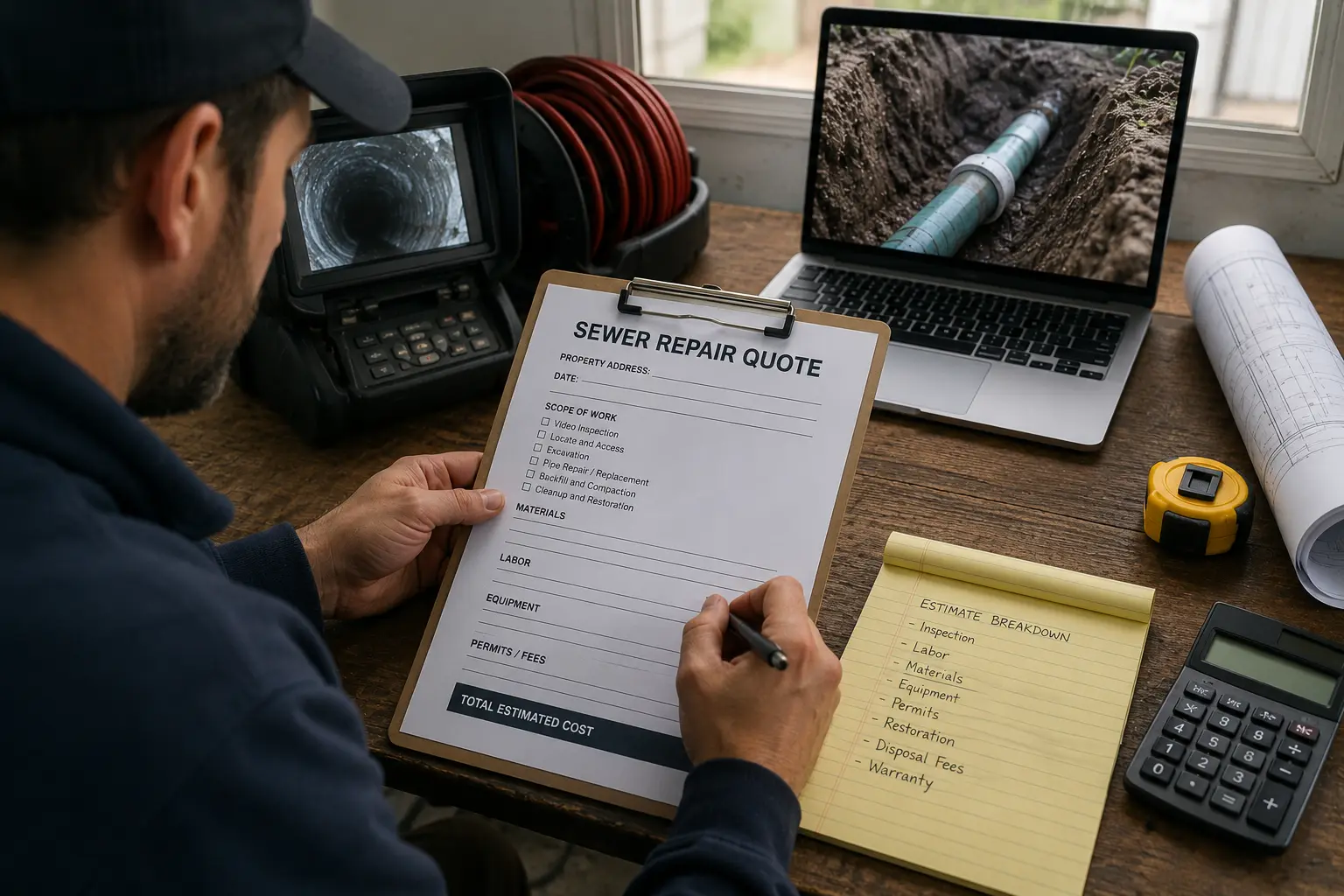
A sewer repair quote should give homeowners enough information to understand the problem, compare repair options, and avoid surprise costs after work begins. Unfortunately, many sewer quotes are written too vaguely. A proposal that says “repair sewer line” or “replace broken pipe” may leave out major details about excavation, permits, materials, restoration, inspections, and warranty coverage.
For Chicago homeowners, a clear quote is especially important because sewer work may involve older pipe materials, basement connections, narrow lots, alleys, sidewalks, parkways, tree roots, and local permitting requirements. The total price matters, but the scope of work matters just as much.
This guide explains what should be included in a sewer repair quote, how to evaluate missing details, what questions to ask before signing, and how to compare quotes more confidently. For additional hiring and estimate guidance, visit the Contractor Selection & Quotes hub.
Key Takeaways
- A sewer repair quote should clearly identify the diagnosis, repair method, scope of work, materials, permits, inspections, cleanup, restoration, warranty, and payment terms.
- Homeowners should avoid relying on verbal quotes for major sewer repairs or replacement work.
- The lowest quote may not be the best value if it excludes permits, concrete repair, debris removal, or warranty coverage.
- Camera inspection findings can help confirm whether the proposed work matches the actual sewer problem.
- Chicago sewer projects may involve added complexity from older infrastructure, dense lots, alleys, sidewalks, and public property concerns.
- Any exclusions, possible change orders, and homeowner responsibilities should be stated in writing before work begins.
What Should a Sewer Repair Quote Include?
A sewer repair quote should include the diagnosis, inspection findings, proposed repair method, exact project scope, pipe materials, excavation details, permit responsibilities, inspection requirements, cleanup, restoration, warranty terms, payment schedule, exclusions, and change order process. A strong quote should make it clear what the contractor will do, what the homeowner is responsible for, and what could cause the final cost to change.
Why a Detailed Quote Matters
Sewer repair is often expensive because the work can involve underground pipes, excavation, specialized equipment, permits, inspections, and property restoration. A vague quote makes it difficult to know whether the contractor is proposing a minor repair, a partial replacement, or a larger project with several hidden exclusions.
A detailed quote helps homeowners compare contractors fairly. It also creates a written record of what was promised before work began.
A quote should answer practical questions such as:
- What problem was found?
- Where is the problem located?
- How will it be repaired?
- What materials will be used?
- What areas will be disturbed?
- Who handles permits?
- What restoration is included?
- What warranty applies?
- What is excluded?
If you are still deciding which contractor to hire, review How to Choose a Sewer Repair Contractor in Chicago before comparing proposals.
1. Clear Diagnosis of the Sewer Problem
The quote should explain what the contractor found. A total price without a diagnosis is not enough.
Common sewer problems include:
- Tree root intrusion
- Cracked pipe
- Collapsed pipe
- Offset joints
- Pipe belly or sagging section
- Severe corrosion or deterioration
- Repeated clogging from structural defects
- Improper slope or poor drainage
The quote should make clear whether the repair is addressing a blockage, a damaged section of pipe, a structural failure, or a broader sewer line issue. If replacement is being recommended, the contractor should explain why a smaller repair is not enough.
2. Inspection Findings or Camera Evidence
For major sewer work, the quote should ideally reference the findings that support the recommendation. A sewer camera inspection can help identify visible defects inside the line and reduce guesswork.
Ask whether the quote is based on:
- Camera inspection footage
- Still images from the inspection
- Pipe locating information
- Visible backup symptoms
- Prior maintenance history
- Excavation findings, if work has already started
Camera footage does not answer every question, but it can help show whether the proposed repair matches the condition of the pipe. If you are unsure whether an inspection should happen before hiring, see Should You Get a Sewer Camera Inspection Before Hiring a Contractor?.
3. Proposed Repair Method
The quote should state what method the contractor plans to use. Different repair methods can have very different costs, timelines, risks, and long-term outcomes.
| Repair Method | What the Quote Should Clarify | Why It Matters |
|---|---|---|
| Drain Cleaning | Whether this is only clearing a blockage or part of a larger diagnosis | Drain cleaning may not fix structural pipe damage |
| Spot Repair | Exact damaged section being repaired | Useful when the rest of the line is in serviceable condition |
| Traditional Excavation | Where digging will occur and what will be replaced | Excavation affects cost, disruption, and restoration |
| Pipe Lining | Whether the existing pipe is suitable for lining | Lining may reduce digging but is not appropriate for every pipe |
| Pipe Bursting | Access points, replacement path, and limitations | Can replace pipe with less open trenching in some situations |
| Full Replacement | Start and end points of the replacement | Scope must be clear to compare pricing accurately |
If the contractor recommends one method but does not explain why, ask for clarification before signing.
4. Exact Scope of Work
The scope of work is one of the most important parts of a sewer repair quote. It defines what the contractor is agreeing to do.
A good quote should include:
- The section of pipe being repaired or replaced
- Approximate pipe length
- Approximate pipe depth, if known
- Access points
- Excavation areas
- Whether cleanouts are included
- Where the repair begins and ends
- Whether interior or exterior work is involved
This matters because two quotes may use similar wording while covering very different amounts of work. One contractor may quote a spot repair, while another may quote a full replacement. Comparing those prices without comparing scope can lead to the wrong conclusion.
For a broader comparison process, read How to Compare Sewer Replacement Quotes.
5. Pipe Materials and Components
A sewer repair quote should identify the materials being used. This is especially important for replacement work because material selection affects durability, inspection approval, and long-term performance.
Ask the contractor to specify:
- Pipe material
- Pipe diameter
- Fittings and connectors
- Cleanouts
- Backfill materials
- Any sleeves, liners, or trenchless repair materials
- Whether materials meet applicable code requirements
If a quote does not list materials, ask for the information in writing. “Replace sewer pipe” is not detailed enough for a major repair.
6. Excavation and Access Details
If excavation is required, the quote should explain where digging will happen and what areas may be affected. Excavation is often one of the biggest factors in the final cost and disruption of sewer repair.
The quote should clarify whether work may affect:
- Basement floors
- Front yards
- Backyards
- Driveways
- Sidewalks
- Parkways
- Alleys
- Patios
- Landscaping
- Fences
In Chicago, tight lots, older homes, garages, mature trees, and alley access can make excavation more complicated. A quote that does not address access conditions may be incomplete.
7. Permits and Inspections
Many sewer repair and replacement projects require permits or inspections. The quote should clearly state whether permits are required and who is responsible for handling them.
Ask whether the quote includes:
- Permit application responsibilities
- Permit fees
- Inspection scheduling
- Required inspection pauses
- Public property requirements, if applicable
- Any possible added costs if requirements change
Important: A quote that avoids discussing permits may not reflect the full project. Homeowners should clarify permit and inspection responsibilities before work begins.
8. Cleanup, Backfill, and Debris Removal
After a sewer repair, the property may need backfilling, compaction, debris removal, and general cleanup. These items should not be assumed unless they are included in writing.
Ask whether the quote includes:
- Backfilling excavated areas
- Soil compaction
- Removal of old pipe
- Removal of excavated debris
- Temporary site protection
- Interior cleanup, if basement work is involved
- Final jobsite cleanup
Cleanup may seem basic, but it can become a source of disagreement if it is not defined upfront.
9. Restoration Responsibilities
Restoration is one of the most commonly misunderstood parts of sewer repair quotes. Some contractors include restoration. Others complete the sewer work and leave concrete, pavement, landscaping, or interior repairs for the homeowner to arrange separately.
The quote should state whether it includes restoration of:
- Concrete sidewalks
- Driveways
- Asphalt
- Pavers
- Grass or sod
- Landscaping
- Fences
- Basement slab areas
- Interior finishes
If restoration is excluded, ask what condition the property will be left in and what additional work may be needed afterward.
10. Warranty Terms
Warranty promises should be written clearly in the quote or contract. Verbal assurances are not enough.
A warranty section should explain:
- What is covered
- How long coverage lasts
- Whether labor is included
- Whether materials are included
- What is excluded
- Whether the warranty transfers if the home is sold
- How a claim is submitted
For sewer replacement, warranty language can vary widely. Homeowners should review Warranty Questions to Ask Before Sewer Line Replacement before relying on warranty claims.
11. Payment Schedule
The quote should explain when payment is due. Payment terms should be reasonable, clear, and tied to the project.
Ask whether payment is required:
- At signing
- Before materials are ordered
- When excavation begins
- At project milestones
- After inspection approval
- After final completion
Be cautious if a contractor demands full payment before work begins. A deposit may be normal for some projects, but large upfront demands should be reviewed carefully.
12. Exclusions and Possible Change Orders
A quote should clearly state what is not included. Exclusions are not always bad, but they should be transparent.
Common exclusions may include:
- Concrete replacement
- Landscaping repair
- Unexpected utility conflicts
- Additional pipe damage beyond the quoted section
- Permit changes
- Groundwater or soil complications
- Interior finish repairs
- Work outside the stated pipe section
The quote should also explain how change orders are handled. Homeowners should ask whether additional work requires written approval before extra charges are added.
Chicago-Specific Considerations
Chicago sewer repair quotes should account for local conditions. A generic sewer quote may miss important details that affect the actual project.
Older Sewer Infrastructure
Many Chicago homes have older clay, cast iron, or other aging sewer materials. The quote should address whether the issue is isolated or part of broader pipe deterioration.
Basement Connections
Because many Chicago homes have basements, sewer problems may affect interior drains, basement slabs, ejector systems, or backup risk. Quotes should clarify whether work is interior, exterior, or both.
Alleys, Sidewalks, and Parkways
Excavation may involve tight access, public areas, or surfaces that require separate restoration. A quote should clearly address those conditions when relevant.
Tree Roots
Tree-lined neighborhoods often experience root intrusion. A quote should clarify whether roots are the main issue or whether roots entered because the pipe is cracked, separated, or deteriorated.
Seasonal Timing
Weather can affect excavation, backfill, concrete work, and restoration. Quotes should include realistic expectations if work is scheduled during winter, heavy rain periods, or freeze-thaw conditions.
How to Tell Whether a Quote Is Complete
A complete quote should be specific enough that another homeowner, contractor, or insurance adjuster could understand what is being proposed. It should not rely on vague wording or verbal explanations that disappear after signing.
| Quote Feature | Complete Quote | Incomplete Quote |
|---|---|---|
| Diagnosis | Identifies the sewer problem and location | Says only “sewer issue” or “bad line” |
| Scope | Defines repair area, pipe length, and work included | Uses broad language without details |
| Permits | States who handles permits and fees | Does not mention permits |
| Restoration | Explains what surfaces will be restored | Leaves cleanup and repairs unclear |
| Warranty | Provides written terms and exclusions | Relies on verbal promises |
| Exclusions | Lists what is not included | Leaves possible added costs unstated |
If important items are missing, ask for a revised quote before signing.
Common Mistakes and Warning Signs
Watch for these problems in sewer repair quotes:
- No written quote
- No clear diagnosis
- No reference to inspection findings
- Vague project scope
- No materials listed
- No permit discussion
- No restoration details
- No warranty terms
- Large upfront payment demand
- No explanation of exclusions
- Pressure to sign immediately
If a quote feels rushed, vague, or pressured, review Red Flags to Watch for in Sewer Repair Contractors before moving forward.
Questions to Ask Before Accepting a Sewer Repair Quote
Before approving the quote, ask questions that clarify the scope and reduce the chance of surprise costs.
- What exactly caused the sewer problem?
- Can I see the camera footage or inspection findings?
- Why is this repair method recommended?
- Are there less invasive alternatives?
- How much pipe is being repaired or replaced?
- What materials will be used?
- Are permits included?
- What restoration is included?
- What could increase the final cost?
- What warranty applies?
- Who will perform the work?
- How long will the project take?
For a more detailed question list, see Questions to Ask Before Sewer Line Replacement.
Frequently Asked Questions
Should a sewer repair quote be in writing?
Yes. Major sewer repairs should be documented in writing. A written quote helps clarify scope, price, materials, permits, exclusions, warranty terms, and payment responsibilities.
Should a sewer quote include camera inspection findings?
For major sewer repair or replacement recommendations, it is helpful when the quote references camera inspection findings. This helps homeowners understand why the work is being recommended.
Why do sewer repair quotes vary so much?
Quotes may vary because contractors include different repair methods, pipe lengths, excavation requirements, restoration work, permit responsibilities, materials, and warranty terms. Always compare the full scope, not just the total price.
Should permits be included in a sewer repair quote?
The quote should state whether permits are required, who obtains them, and whether fees are included. If permits are excluded, homeowners should understand the added responsibility and possible cost.
Does a quote usually include concrete or landscaping repair?
Not always. Some contractors include restoration, while others exclude it. Homeowners should ask specifically about concrete, pavement, lawn, landscaping, fences, and interior surfaces.
Can homeowners insurance help pay for sewer repair?
Coverage depends on the policy, the cause of the damage, and any sewer or service line endorsements. Homeowners should contact their insurer before assuming a sewer repair will be covered.
What should I do if a quote seems too low?
Ask what is excluded. Confirm whether permits, inspections, cleanup, restoration, materials, cleanouts, warranty coverage, and change orders are included before accepting a low quote.
Conclusion
A sewer repair quote should be clear, specific, and detailed enough for the homeowner to understand what is being proposed. It should explain the diagnosis, repair method, scope, materials, permits, inspections, cleanup, restoration, warranty, payment terms, exclusions, and possible change orders.
For Chicago homeowners, these details are especially important because local sewer repairs may involve older pipes, basements, tight access, sidewalks, parkways, alleys, and restoration concerns. A complete quote helps reduce surprises and makes it easier to compare contractors fairly.
Before signing, make sure the quote answers the practical questions that matter most: what is wrong, how it will be fixed, what is included, what is excluded, and what protections exist if something goes wrong.