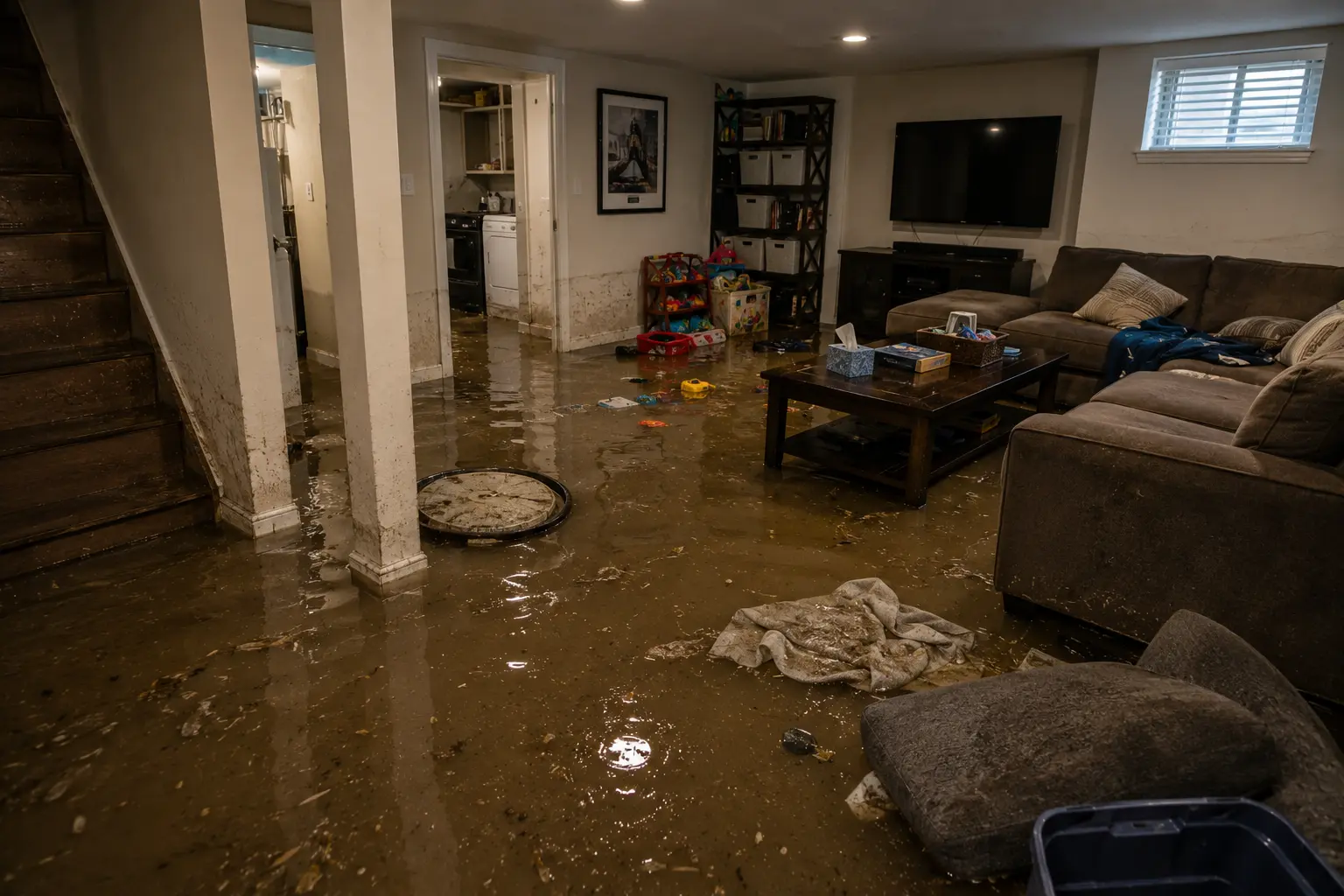
Sewer backups in Chicago basements are one of the most stressful problems homeowners can face. A basement backup can bring wastewater through a floor drain, shower, toilet, laundry drain, or utility sink, damaging flooring, walls, stored belongings, mechanical equipment, and finished living areas.
In older Chicago homes, basement sewer backups are often connected to aging sewer lines, clay pipe deterioration, tree root intrusion, sewer line bellies, offset joints, heavy rainfall, or plumbing changes made during past renovations. The problem may look sudden, but the underlying cause often develops over time.
The most important step is to determine whether the backup was a one-time blockage or a warning sign of a larger sewer issue. Repeated basement backups should not be treated as normal. For more guidance on older Chicago homes and property-specific sewer risks, visit the Older Chicago Homes & Property Types resource hub.
Key Takeaways
- Basement sewer backups are common in older Chicago homes because many have aging sewer lines and lower-level drains.
- Common causes include main sewer clogs, tree roots, cracked clay pipe, offset joints, sewer bellies, collapsed pipe, and heavy water use.
- Finished basements can turn a sewer backup into a major restoration problem.
- Recurring backups usually deserve a sewer camera inspection, not just repeated drain cleaning.
- Repair options depend on whether the issue is a temporary blockage or a structural sewer defect.
- Insurance coverage varies and may depend on sewer backup endorsements, service line coverage, exclusions, and documentation.
Why Do Sewer Backups Happen in Chicago Basements?
Sewer backups happen in Chicago basements when wastewater cannot move properly through the home’s drainage system or main sewer line. When flow is blocked or restricted, wastewater may come back through the lowest drain or plumbing fixture, which is often located in the basement.
In older homes, the cause may be a simple clog, but recurring backups often point to deeper problems such as root intrusion, cracked clay sewer pipe, a sagging sewer line, offset joints, or partial collapse. A sewer camera inspection is usually the best way to determine whether the issue can be cleaned, repaired, or may require replacement.
Why Chicago Basements Are Especially Vulnerable
Chicago has a large number of older homes with basements, including bungalows, greystones, two-flats, and small multi-family buildings. Many of these properties were built before modern sewer materials and basement waterproofing expectations became common.
Basements are also where sewer symptoms often appear first because they are located at the lowest level of the home. If the main sewer line is restricted, wastewater may exit through the lowest available opening.
Older Sewer Infrastructure
Many older Chicago homes still have clay sewer pipe or mixed sewer materials underground. These lines can crack, separate, shift, or allow roots to enter as they age.
Homeowners dealing with older-property sewer concerns may also want to read Common Sewer Problems in Older Chicago Homes.
Basement Drains and Lower-Level Fixtures
Floor drains, basement toilets, showers, laundry drains, and utility sinks can all become backup points. The more lower-level plumbing a basement has, the more places sewer problems may appear.
Finished Basement Exposure
A sewer backup in an unfinished basement is serious. A sewer backup in a finished basement can be significantly more expensive because flooring, drywall, insulation, furniture, and personal belongings may be damaged.
For homes with improved lower levels, see Sewer Repair for Homes With Finished Basements.
Common Causes of Basement Sewer Backups
Main Sewer Line Blockage
A blockage in the main sewer line can prevent wastewater from leaving the home. When that happens, water from toilets, showers, laundry, or sinks may back up into the basement.
Blockages may be caused by grease, wipes, paper products, debris, roots, or buildup inside an older pipe.
Tree Root Intrusion
Mature trees are common in Chicago neighborhoods. Roots naturally seek moisture and can enter sewer lines through cracks, loose joints, or small openings in older pipe.
Once roots enter the line, they trap waste and debris. If the roots are repeatedly removed but keep returning, the pipe likely has an entry point that needs further evaluation. More detail is available in Sewer Issues in Homes Near Large Trees.
Cracked Clay Sewer Pipe
Clay sewer pipe is common in many older Chicago homes. Clay can last a long time, but cracks and separated joints become more likely as the line ages. These defects allow roots, soil, and water to enter the line.
For a deeper explanation of clay pipe issues, see Clay Sewer Pipes in Chicago Homes: Risks and Replacement Options.
Sewer Line Belly
A sewer belly is a low spot in the pipe where water and waste collect. Instead of flowing smoothly, solids can settle in the sagging section and cause repeated backups.
Offset Joints
An offset joint occurs when pipe sections shift out of alignment. Waste and paper can catch at the offset, restricting flow. Roots may also enter through the gap.
Collapsed Sewer Line
A collapsed sewer line is a structural failure. Cleaning may not restore proper flow if the pipe has partially or fully collapsed. Repair or replacement is usually required once collapse is confirmed.
Heavy Water Use or Storm Conditions
Some backups occur during periods of heavy rain or high household water use. In an older home with a partially restricted sewer line, added water volume may expose a problem that was already developing.
Warning Signs Before a Basement Backup
Some backups seem sudden, but many are preceded by warning signs. Homeowners should pay attention to repeated symptoms, especially when they involve multiple fixtures or the basement level.
Warning signs include:
- Basement floor drain gurgling
- Sewage odors in the basement
- Slow drains throughout the home
- Toilets bubbling when other fixtures drain
- Water appearing near basement drains
- Laundry drain backups
- Basement shower or toilet backing up
- Frequent need for sewer rodding or jetting
- Backups that return after cleaning
Any single symptom may have a simple explanation. Repeated or building-wide symptoms are more concerning and should be investigated.
What to Do After a Sewer Backup
After a basement sewer backup, homeowners should focus on safety, documentation, cleanup, and diagnosis. Sewer water may contain contaminants, so it should not be treated like ordinary clean water.
- Stop using water if possible. Avoid running showers, laundry, dishwashers, toilets, or sinks until the problem is evaluated.
- Avoid direct contact with contaminated water. Keep children, pets, and vulnerable household members away from the affected area.
- Document the damage. Take photos and videos before cleanup if it is safe to do so.
- Protect valuables if possible. Move unaffected belongings away from the wet area without spreading contamination.
- Review insurance coverage. Contact the insurance provider if there may be covered damage.
- Arrange diagnosis. A sewer camera inspection may be needed after the line is cleared enough to inspect.
Important: Cleaning up the basement does not solve the underlying sewer problem. If the cause is structural, another backup may happen unless the sewer line is repaired.
How Sewer Camera Inspections Help Identify the Cause
A sewer camera inspection allows a contractor to view the inside of the sewer line and locate the cause of recurring backups. This is especially useful when a basement backup has happened more than once.
A camera inspection may reveal:
- Root intrusion
- Cracked pipe
- Clay pipe deterioration
- Offset joints
- Sewer line bellies
- Standing water
- Collapsed pipe sections
- Grease or debris buildup
- Improper connections
Inspection is also important when buying an older Chicago home with a basement. Sewer defects are usually not visible during a standard home inspection. Buyers should review Sewer Inspection Before Buying a Chicago Home.
Cleaning, Repair, or Replacement: What Makes Sense?
The right solution depends on why the backup happened. Some basement backups are caused by a temporary clog. Others are symptoms of an underground sewer line that is failing structurally.
| Finding | Possible Solution | Homeowner Decision Point |
|---|---|---|
| One-time clog with no visible pipe damage | Cleaning may be enough | Monitor for repeat symptoms |
| Grease or debris buildup | Cleaning and usage changes | Identify whether pipe defects are also present |
| Minor roots at one joint | Cleaning, monitoring, or spot repair | Consider how quickly roots return |
| Repeated root intrusion | Repair or replacement may be evaluated | Cleaning alone may become temporary |
| Offset joint | Targeted repair or replacement | Severity and location matter |
| Severe belly with standing water | Repair may need to correct slope | Recurring backups may continue without correction |
| Collapsed pipe | Replacement or excavation usually required | Structural failure should be addressed promptly |
When Cleaning May Be Enough
Cleaning may be reasonable when the backup was caused by a simple clog and the pipe is otherwise in good condition. This is more likely when the backup is isolated and does not recur.
When Repair May Be Needed
Repair may be needed when the inspection shows a localized defect, such as a crack, root entry point, or offset joint.
When Replacement May Be Considered
Replacement may be considered when the sewer line has widespread deterioration, repeated roots, severe sagging, or collapse. In older homes, replacement decisions should be based on inspection findings rather than age alone.
Chicago-Specific Considerations
Older Homes With Clay Pipe
Many Chicago homes with basements were built when clay pipe was common. Clay pipe problems may remain hidden until roots, cracks, or offsets begin causing backups.
Bungalows, Greystones, and Two-Flats
Basement backups can affect many older property types. Bungalows often have finished or partially finished basements. Greystones may have lower-level living or utility space. Two-flats and multi-family buildings may have shared drainage systems serving multiple units.
Property-specific guidance is available in Sewer Replacement for Chicago Bungalows: What Homeowners Should Know, Sewer Repair for Chicago Greystone Homes, and Sewer Repair for Two-Flats in Chicago.
Renovations and Added Basement Plumbing
Many basement improvements add bathrooms, laundry areas, drains, or wet bars. These improvements can expose weaknesses in an older sewer system, especially if the line was not evaluated before renovation.
If problems started after remodeling, see Sewer Problems After a Home Renovation.
Rental and Multi-Family Properties
Basement backups in rental or multi-family properties can affect tenants, storage, laundry access, and habitability. Owners may need to act quickly and document the condition of the sewer line.
Cost Factors After a Basement Sewer Backup
The total cost of a basement sewer backup may include more than the sewer repair itself. Homeowners should consider both plumbing costs and cleanup or restoration costs.
Potential cost factors include:
- Cause of the backup
- Length and depth of sewer line damage
- Whether excavation is required
- Whether trenchless methods are possible
- Pipe material and condition
- Permit and inspection requirements
- Basement cleanup and sanitizing
- Flooring removal and replacement
- Drywall, trim, and insulation repairs
- Furniture or personal property damage
- Mechanical equipment exposure
- Temporary loss of basement use
| Cost Category | What It May Include |
|---|---|
| Sewer diagnosis | Inspection, locating, camera footage, assessment |
| Line clearing | Rodding, jetting, blockage removal |
| Sewer repair | Spot repair, partial replacement, full replacement, excavation |
| Restoration | Concrete, flooring, drywall, trim, landscaping, or sidewalk repairs |
| Cleanup | Sanitizing, drying, debris removal, contamination control |
| Property loss | Damaged furniture, stored items, appliances, or belongings |
Insurance Considerations
Insurance coverage for basement sewer backups varies. Homeowners should review their policy carefully rather than assuming all sewer damage is covered.
Important questions include:
- Does the policy include sewer backup coverage?
- Does the policy include service line coverage?
- Are basement finishes covered?
- Are personal belongings covered?
- Are cleanup and sanitation costs limited?
- Are roots, age, wear, or deterioration excluded?
- Does coverage apply to the pipe repair, the resulting damage, or both?
- What deductible and limits apply?
Important: Sewer backup coverage and service line coverage are often different. One may apply to cleanup or interior damage, while the other may apply to certain underground pipe failures. Homeowners should confirm both before relying on insurance.
Common Mistakes Homeowners Make
Cleaning the Basement but Not Diagnosing the Sewer Line
Cleanup is necessary, but it does not explain why the backup happened. Recurring backups should be investigated.
Assuming a Backup Is Always Caused by Heavy Rain
Rain may contribute to the timing of a backup, but pipe defects, roots, and blockages can still be part of the problem.
Replacing Finished Materials Too Soon
Restoring flooring or drywall before correcting the sewer issue can lead to repeated damage.
Relying on Repeated Rodding Without Camera Inspection
Repeated cleaning may hide a structural issue temporarily. Camera footage can reveal whether the line is damaged.
Ignoring Insurance Details Until After a Backup
Homeowners should understand sewer backup and service line coverage before a loss occurs.
Waiting Until Selling the Home
Prior sewer backups may become part of buyer due diligence. Sellers should understand how sewer issues can affect negotiations by reviewing Sewer Line Problems Before Selling a House.
Frequently Asked Questions
Why does sewage back up into my basement?
Sewage may back up into the basement when wastewater cannot flow through the main sewer line. The blockage or restriction may be caused by roots, debris, cracked pipe, a sewer belly, an offset joint, or a collapsed section.
Is a basement sewer backup always an emergency?
A sewer backup should be treated seriously because wastewater may be contaminated. If plumbing use is affected or wastewater is entering the home, homeowners should stop using water when possible and arrange cleanup and diagnosis promptly.
Does one basement backup mean I need sewer replacement?
Not always. A one-time clog may only require cleaning. Replacement becomes more likely when backups recur or inspection shows structural pipe damage.
Should I get a sewer camera inspection after a basement backup?
Yes, especially if the backup has happened more than once, affected multiple fixtures, or involved a finished basement. Inspection can reveal whether the sewer line has roots, cracks, bellies, offsets, or collapse.
Can tree roots cause basement sewer backups?
Yes. Roots can enter older sewer lines through cracks or joints, then trap waste and restrict flow. This can eventually cause wastewater to back up into the basement.
Will homeowners insurance cover a sewer backup?
Coverage depends on the policy. Some homeowners have sewer backup endorsements or service line coverage, but normal wear, roots, age-related deterioration, and pipe replacement may be excluded.
Can a finished basement be restored before the sewer line is fixed?
It is risky to restore finished materials before identifying and addressing the cause of the backup. If the sewer problem returns, new flooring, drywall, or furnishings may be damaged again.
Conclusion
Sewer backup problems in Chicago basements should be taken seriously, especially in older homes with clay pipe, mature trees, finished lower levels, or a history of recurring drainage issues. A backup may be caused by a simple clog, but repeated problems often point to roots, cracks, offsets, bellies, or structural sewer failure.
The most practical approach is to clean and document the damage safely, identify the cause with proper diagnosis, and compare repair options based on the condition of the sewer line. For homeowners, preventing the next backup is just as important as cleaning up the last one.