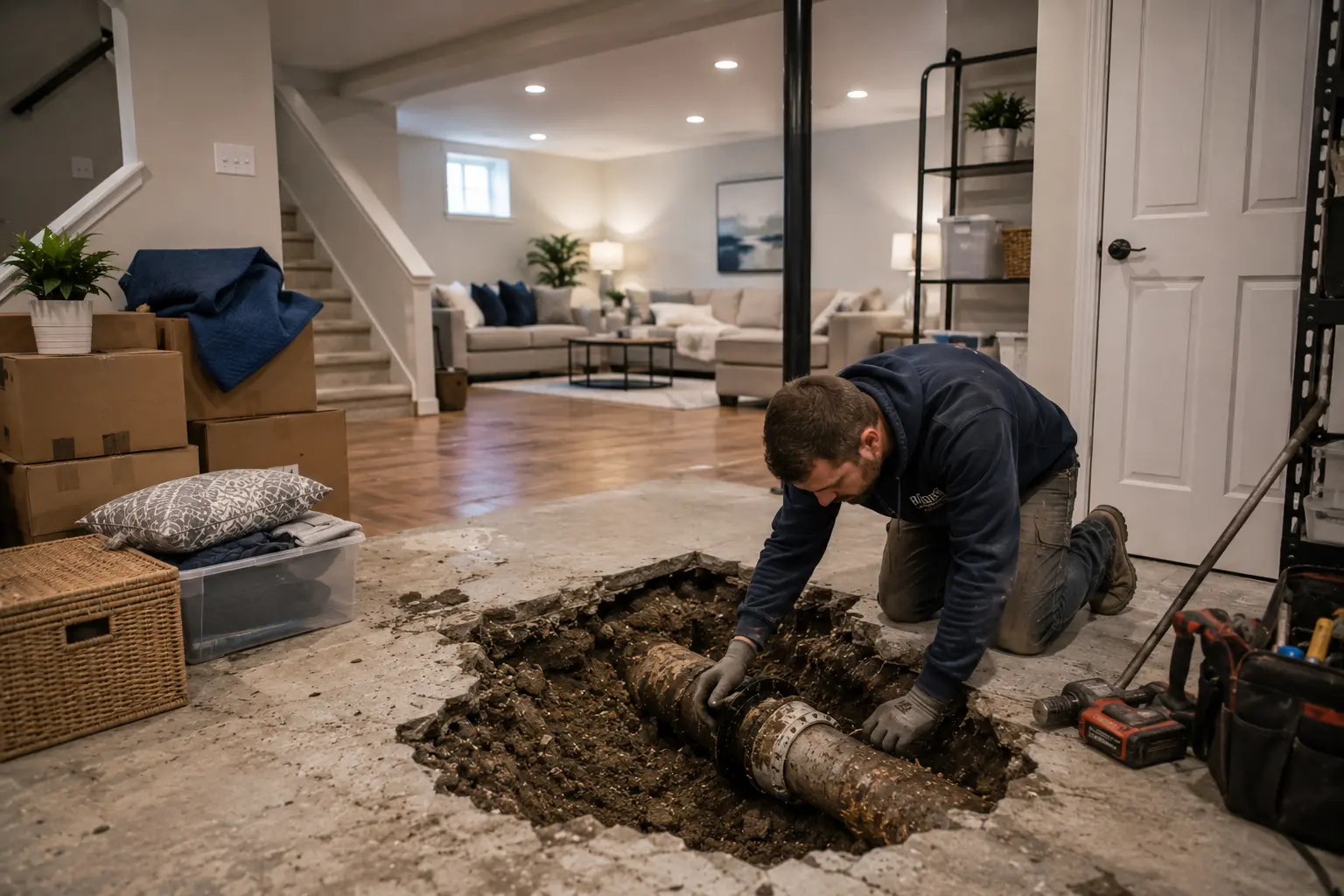
Sewer line problems can create difficult decisions when selling a house in Chicago, especially if the home is older, has a basement, or sits near mature trees. A sewer issue that was manageable while living in the home can become a negotiation problem once a buyer orders inspections, asks for credits, or questions whether the property has hidden repair needs.
For sellers, the main concern is timing. A cracked clay sewer pipe, recurring root intrusion, basement backup history, or partially collapsed line may not be visible during showings, but it can become a major issue during due diligence. That does not always mean a seller must replace the sewer line before listing. It does mean the seller should understand the condition of the line, the likely buyer concerns, and the tradeoffs between repairing, disclosing, crediting, or selling as-is.
This guide explains how sewer line problems can affect a Chicago home sale, what warning signs sellers should consider before listing, and how to think through repair decisions. For more guidance on older Chicago homes and property types, visit the Older Chicago Homes & Property Types resource hub.
Key Takeaways
- Sewer line problems can affect buyer confidence, inspection negotiations, repair credits, closing timelines, and sale price.
- Older Chicago homes may have clay sewer pipe, root intrusion, offset joints, sewer bellies, or partially collapsed lines.
- A sewer camera inspection before listing can help sellers understand the issue before a buyer discovers it.
- Not every sewer defect requires full replacement before selling, but recurring backups or structural damage should be taken seriously.
- Homes with finished basements, rental units, or recent renovations may receive closer sewer scrutiny during a sale.
- Sellers should consider disclosure duties, repair documentation, buyer perception, and the cost of delays when deciding what to do.
Should You Fix Sewer Problems Before Selling a Chicago House?
You do not always need to fix every sewer issue before selling a Chicago house, but you should understand the condition of the sewer line before listing if there have been warning signs. Recurring backups, repeated sewer cleaning, visible root intrusion, cracked clay pipe, pipe collapse, or a history of basement sewage problems can all become negotiation issues once a buyer orders a sewer inspection.
Some sellers choose to repair the problem before listing. Others disclose the issue and price accordingly, offer a repair credit, or negotiate after inspection. The right choice depends on the severity of the defect, local market conditions, buyer expectations, available documentation, and whether the problem affects the home’s safe and functional use.
Why Sewer Issues Matter During a Home Sale
Sewer problems are different from many cosmetic repairs because they are underground, expensive to diagnose without special equipment, and potentially disruptive to fix. Buyers may worry that a sewer issue could lead to basement backups, excavation, property damage, or major repair costs shortly after closing.
In Chicago, these concerns are common because many homes were built decades ago and may still have original or partially original sewer lines. This is especially true for bungalows, greystones, two-flats, and other older property types.
For a broader look at older-home risks, see Common Sewer Problems in Older Chicago Homes.
Buyers Are More Aware of Sewer Inspections
Many buyers now request sewer camera inspections during due diligence, especially when purchasing older homes. A standard home inspection may not reveal underground pipe defects, but a sewer scope can show roots, cracks, offsets, standing water, or collapse.
Buyers considering older properties may review issues similar to those discussed in Sewer Inspection Before Buying a Chicago Home.
Sewer Defects Can Delay Closing
If a significant defect is discovered late in the process, the sale may slow down while both sides evaluate repair estimates, credits, access, permits, or contractor availability.
Buyers May Overestimate the Problem
When a buyer sees roots or pipe damage on camera footage, they may assume the worst. Clear documentation and realistic repair information can help prevent confusion, but unresolved sewer issues can still create anxiety.
Common Sewer Problems That Affect Chicago Home Sales
Tree Root Intrusion
Root intrusion is one of the most common sewer issues in older Chicago neighborhoods. Roots can enter through cracks, separated joints, or older clay pipe connections. If roots keep returning after cleaning, buyers may worry that the line needs more than maintenance.
More detail is available in Sewer Issues in Homes Near Large Trees.
Clay Sewer Pipe Deterioration
Many older Chicago homes still have clay sewer pipe. Clay pipe can function for many years, but cracks, offsets, joint separation, and root intrusion become more likely as the system ages.
For more information, see Clay Sewer Pipes in Chicago Homes: Risks and Replacement Options.
Basement Sewer Backups
A history of basement backups can be especially concerning to buyers. If a basement is finished, the concern may be even greater because backups can damage flooring, drywall, furniture, and personal property.
Homeowners with this issue should review Sewer Backup Problems in Chicago Basements and Sewer Repair for Homes With Finished Basements.
Offset Joints
Offset joints occur when pipe sections shift out of alignment. Waste can catch at the offset, causing recurring clogs. Buyers may see this as a structural concern if the offset is significant.
Sewer Line Bellies
A sewer belly is a sagging section of pipe that holds standing water. If the camera inspection shows significant standing water, a buyer may question whether backups are likely in the future.
Collapsed Sewer Pipe
A collapsed pipe is one of the more serious findings. If a line has partially or fully collapsed, cleaning alone usually will not solve the problem. Buyers may request repair before closing or a substantial credit.
Warning Signs Sellers Should Consider Before Listing
Some homeowners know there may be a sewer issue before listing but are unsure whether it is serious enough to address. Repeated symptoms matter more than one isolated problem.
Warning signs that deserve attention before selling include:
- Recurring basement backups
- Repeated sewer rodding or jetting
- Slow drains throughout the home
- Gurgling toilets or basement drains
- Sewage odors in the basement
- Roots found during previous sewer cleaning
- Prior camera footage showing cracks, offsets, or standing water
- Water appearing near lower-level drains
- Known clay pipe with repeated issues
- Past sewer repairs with limited documentation
If any of these symptoms are present, sellers may benefit from understanding the line’s condition before a buyer raises the issue.
Should Sellers Get a Sewer Camera Inspection Before Listing?
A pre-listing sewer camera inspection can help sellers avoid surprises. It may reveal that the line is in acceptable condition, or it may identify a problem that should be addressed before buyers see it.
Inspection can help answer important questions:
- What material is the sewer line made from?
- Are roots present?
- Are there cracks, offsets, bellies, or collapsed sections?
- Is the issue isolated or widespread?
- Is there standing water in the line?
- Has a previous repair created a weak transition point?
- Would the issue likely concern a buyer?
Benefits of Inspecting Before Listing
- Fewer surprises during buyer due diligence
- More time to compare repair options
- Ability to document a completed repair
- Stronger negotiating position if the line is in good condition
- More realistic pricing if the line has defects
Potential Downsides
- The inspection may reveal a problem the seller must decide how to handle.
- The seller may need to disclose known issues depending on the situation.
- Repair decisions may delay listing if the problem is significant.
Practical note: A seller should discuss disclosure obligations with a qualified real estate professional or attorney. Sewer disclosure rules and expectations can depend on the facts, documentation, and transaction context.
Repair, Credit, or Sell As-Is?
There is no single correct answer for every seller. The right strategy depends on the sewer condition, market demand, buyer type, repair complexity, and the seller’s timeline.
| Option | When It May Make Sense | Potential Tradeoff |
|---|---|---|
| Repair before listing | The defect is serious, the seller wants fewer objections, or the home is marketed as move-in ready | Requires upfront cost and coordination |
| Disclose and price accordingly | The seller wants transparency but does not want to manage the repair | Some buyers may discount heavily or walk away |
| Offer a repair credit | The buyer wants control over the repair after closing | Credit amount may become a negotiation point |
| Negotiate after inspection | The seller is unsure whether buyers will raise the issue | Can create stress and delay after the offer is accepted |
| Sell as-is | The property is priced for condition or marketed to investors | Buyer pool may be smaller and offers may be lower |
When Repair Before Listing May Be Worth Considering
Pre-listing repair may make sense when the sewer line has a clear structural defect, the seller wants to avoid buyer uncertainty, or the home has a finished basement where backup risk could be a major concern.
When a Credit May Be More Practical
A credit may be practical when the buyer wants to choose the contractor or when the timing of repair before closing is difficult. However, some lenders or transaction structures may affect how credits are handled.
When Selling As-Is May Fit
An as-is sale may fit an investor-focused property or a home already priced below market due to condition. Even then, buyers may still want to understand the sewer issue before closing.
Chicago-Specific Considerations for Sellers
Older Property Types
Chicago bungalows, greystones, and two-flats may receive closer sewer scrutiny because buyers know these homes often have older underground infrastructure.
Property-specific concerns are covered in Sewer Replacement for Chicago Bungalows: What Homeowners Should Know, Sewer Repair for Chicago Greystone Homes, and Sewer Repair for Two-Flats in Chicago.
Finished Basements
A finished basement can increase buyer concern because sewer backups can cause expensive damage. If the basement has been recently remodeled, buyers may want reassurance that the sewer line can support the improved space.
Rental or Multi-Family Use
If the property is a rental, two-flat, or multi-family building, buyers may focus on tenant disruption and future operating costs. Sewer problems may affect both due diligence and investment calculations.
Renovation History
Homes that recently added bathrooms, laundry areas, basement fixtures, or new kitchens may raise questions about whether the sewer line was evaluated during the renovation.
If sewer symptoms appeared after remodeling, sellers may want to review Sewer Problems After a Home Renovation.
Access and Restoration
Chicago properties often have narrow gangways, sidewalks, concrete patios, parkways, alleys, and mature landscaping. These conditions can affect repair cost and buyer expectations.
How Sewer Problems Can Affect Price and Negotiation
Sewer issues can affect negotiations in several ways. A buyer may request a repair, ask for a closing credit, reduce the offer price, request additional inspections, or walk away if the problem seems too uncertain.
Factors that influence negotiation include:
- Severity of the sewer defect
- Whether the issue is documented with camera footage
- Whether repair estimates are available
- Whether the home has a history of backups
- Whether the basement is finished
- Whether the property is owner-occupied or tenant-occupied
- How competitive the local market is
- Whether the buyer is an owner-occupant or investor
- Whether the seller has repair records
| Inspection Finding | Likely Buyer Concern | Seller Consideration |
|---|---|---|
| Minor roots at one joint | Will roots return? | Provide cleaning records or evaluate repair options |
| Cracked clay pipe | Is the line deteriorating? | Determine whether damage is isolated or widespread |
| Standing water in a belly | Will backups happen later? | Assess severity and repair options |
| Offset joint | Is the pipe structurally shifted? | Clarify location and severity |
| Collapsed section | Major repair may be needed | Expect repair or credit negotiations |
| Prior basement backup | Could finished space be damaged again? | Document cleanup and sewer diagnosis |
Documentation Sellers Should Gather
Good documentation can make sewer conversations less confusing during a sale. Sellers do not need to overwhelm buyers, but clear records can help explain what happened and what was done.
Useful documents may include:
- Sewer camera inspection footage or report
- Invoices for sewer cleaning or repair
- Documentation of pipe replacement or spot repair
- Permits or inspection records when available
- Photos of completed work
- Cleanup and restoration records after any backup
- Insurance claim documents if applicable
- Contractor recommendations or estimates
Practical note: Documentation does not eliminate every buyer concern, but it can help separate a resolved issue from an unknown or recurring problem.
Insurance and Disclosure Considerations
If a sewer problem caused property damage, sellers may have insurance records, restoration invoices, or prior claims. These documents may become relevant during a sale, especially if the buyer asks about water or sewer history.
Insurance coverage varies. Some policies may cover certain sewer backup damage if the homeowner had the right endorsement, while ordinary wear, roots, deterioration, or pipe replacement may be excluded.
Sellers should consider:
- Whether a prior backup caused damage
- Whether cleanup or restoration was completed
- Whether the sewer line itself was repaired
- Whether any insurance claim was filed
- Whether documentation is available
- Whether the issue must be disclosed
Because disclosure obligations can be fact-specific, sellers should seek guidance from their real estate agent, attorney, or other qualified professional involved in the transaction.
Common Mistakes Sellers Make
Waiting for the Buyer to Discover the Problem
If the seller already suspects a sewer issue, waiting may lead to rushed negotiations after the buyer’s inspection.
Assuming Rodding Records Prove the Sewer Is Fine
Repeated cleaning may actually suggest an unresolved structural issue. Buyers may ask why cleaning was needed more than once.
Ignoring Basement Backup History
A prior basement backup may matter to buyers, especially if the basement is finished or recently remodeled.
Making Cosmetic Repairs Before Sewer Diagnosis
Fresh paint or new flooring may not reassure buyers if the sewer line is still questionable.
Overpromising What a Repair Solved
If only one section was repaired, older sections may still remain. Sellers should be clear about what work was actually completed.
Failing to Keep Records
Without invoices, footage, or documentation, buyers may treat sewer history as an unknown risk.
Frequently Asked Questions
Do I have to replace my sewer line before selling my house?
Not always. Replacement depends on the severity of the problem, buyer expectations, market conditions, and negotiation strategy. Some issues can be repaired, credited, disclosed, or handled after inspection.
Should I get a sewer inspection before listing an older Chicago home?
It can be helpful, especially if the home has had backups, repeated sewer cleaning, mature trees, clay pipe, or a finished basement. A pre-listing inspection can reduce surprises during buyer due diligence.
Can a buyer ask for sewer repairs after inspection?
Yes. If a buyer’s inspection finds roots, cracks, standing water, offsets, or collapse, the buyer may request repairs, a credit, a price reduction, or additional evaluation.
Will a sewer problem scare buyers away?
It can, especially if the issue is serious or unclear. Clear documentation, repair records, and realistic pricing may help reduce uncertainty.
Is a sewer backup something I need to disclose?
Disclosure obligations depend on the facts and applicable transaction requirements. Sellers should discuss this with their real estate agent or attorney rather than guessing.
Can I sell a house as-is with a sewer problem?
Yes, in some situations. However, buyers may still inspect the sewer line and factor repair risk into their offer.
Does homeowners insurance affect a home sale after a sewer backup?
It can if there was a claim, cleanup, or repair history. Buyers may ask what happened, whether the damage was restored, and whether the sewer issue was corrected.
Conclusion
Sewer line problems before selling a house can create stress, but they are easier to manage when the seller understands the condition of the line before negotiations begin. In Chicago, older homes with clay pipe, mature trees, finished basements, or prior backups often deserve closer attention before listing.
The best approach is to identify warning signs early, consider a sewer camera inspection when appropriate, gather documentation, and compare the options of repair, credit, disclosure, or as-is sale. A sewer issue does not automatically prevent a successful sale, but uncertainty can make negotiations harder. Clear information gives sellers more control over the process.