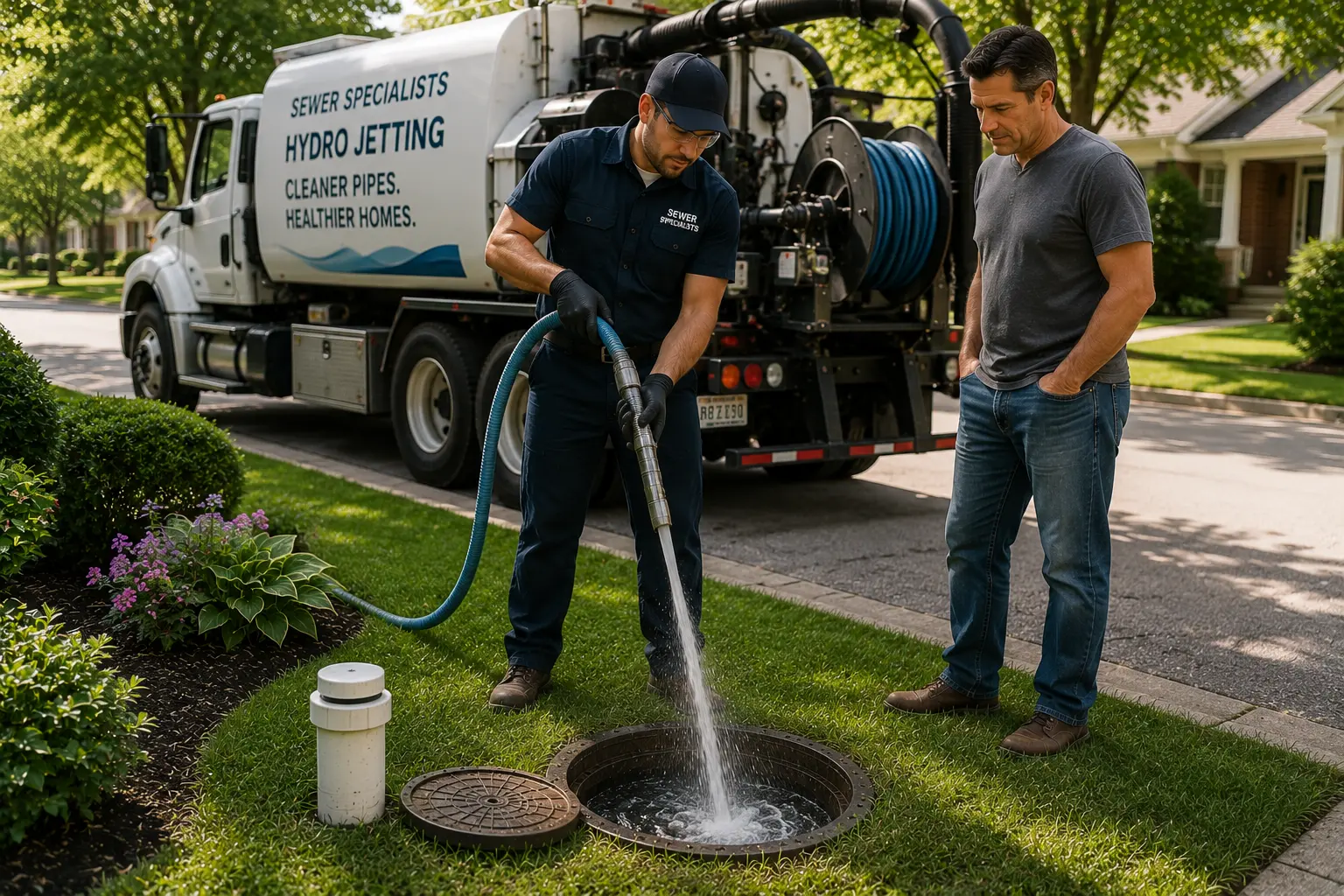
Hydro jetting is often described as a powerful sewer cleaning method, but homeowners should understand when it is useful, when it is unnecessary, and when it may not be appropriate. Used correctly, hydro jetting can be an effective part of preventative sewer maintenance because it removes buildup from the inside of the pipe rather than simply punching a temporary hole through a clog.
For Chicago homeowners, hydro jetting may be worth considering when sewer lines have recurring grease buildup, sludge, soft blockages, or minor root intrusion. It is especially relevant for older homes, properties with mature trees, and sewer lines that have needed repeated cleaning.
However, hydro jetting is not a cure for every sewer problem. If a pipe is collapsed, severely cracked, badly offset, or structurally fragile, cleaning alone will not solve the underlying issue. A camera inspection is often the best first step before deciding whether hydro jetting makes sense.
Key Takeaways
- Hydro jetting uses high-pressure water to clean the inside walls of a sewer line.
- It can remove grease, sludge, sediment, debris, and some root growth when the pipe is suitable.
- Hydro jetting can be useful for preventative maintenance, not just emergency clogs.
- A sewer camera inspection is often recommended before hydro jetting older or damaged pipes.
- Hydro jetting does not repair cracks, collapsed sections, offset joints, or major pipe defects.
- Chicago homes with older pipes, mature trees, and basement backup risk should approach hydro jetting as part of a broader maintenance plan.
When Is Hydro Jetting Useful for Sewer Maintenance?
Hydro jetting is useful when a sewer line has buildup that needs to be removed from the pipe walls, such as grease, sludge, mineral scale, soft debris, or limited root intrusion. It may be especially helpful for homes with recurring sewer clogs where basic snaking clears the line temporarily but does not fully clean it.
Before hydro jetting, homeowners should understand the pipe’s condition. If the sewer line is old, cracked, collapsed, or structurally weak, inspection should come before high-pressure cleaning.
What Is Hydro Jetting?
Hydro jetting is a sewer cleaning method that uses pressurized water to scour the inside of a drain or sewer pipe. A hose with a specialized nozzle is inserted into the line, usually through a sewer cleanout. Water is then directed through the pipe to break up and flush away buildup.
Unlike a basic drain snake, which may only open a pathway through a blockage, hydro jetting can clean more of the pipe interior. This makes it useful when the problem is not just one isolated clog but a buildup pattern along the pipe walls.
Hydro jetting is commonly considered for:
- Grease accumulation
- Sludge buildup
- Soap residue
- Soft blockages
- Small root intrusions
- Sediment or debris inside the line
- Recurring clogs after standard cleaning
Hydro jetting is one tool within a larger Sewer Line Maintenance for Homeowners plan.
How Hydro Jetting Helps Prevent Sewer Backups
Sewer backups often occur when a partial restriction gradually becomes a full blockage. Grease, wipes, toilet paper, roots, and debris can collect in a narrowed section of pipe until wastewater can no longer move freely.
Hydro jetting can reduce backup risk by removing buildup before it becomes severe. This is why it is sometimes used for preventative maintenance, especially when a sewer line has a history of recurring restrictions.
Hydro jetting may help prevent backups by:
- Cleaning the full pipe interior more thoroughly than basic clearing
- Removing grease that can trap other debris
- Reducing sludge accumulation
- Breaking up soft obstructions
- Improving wastewater flow through the line
- Helping delay recurring clogs in problem-prone pipes
For a wider prevention checklist, see How to Prevent Sewer Line Backups.
Hydro Jetting vs. Snaking: What Is the Difference?
Homeowners often hear both terms used during sewer cleaning discussions. While both methods can restore flow, they do not work the same way.
| Method | How It Works | Best Used For | Limitations |
|---|---|---|---|
| Snaking or rodding | A cable or cutting head breaks through a clog | Opening a blocked line quickly | May leave buildup on pipe walls |
| Hydro jetting | High-pressure water cleans the pipe interior | Grease, sludge, debris, and recurring buildup | May not be suitable for damaged pipes |
| Camera inspection | A camera shows the inside of the pipe | Diagnosing the cause of clogs | Does not clean the line by itself |
In some cases, snaking may be enough to restore flow. In other cases, hydro jetting may be more useful because it removes more material from the pipe. The right method depends on what is causing the restriction and whether the pipe is in good enough condition for jetting.
When Hydro Jetting Makes Sense
Hydro jetting is most useful when the sewer line is structurally sound but restricted by buildup.
Recurring Grease or Sludge Buildup
Kitchen grease, soap residue, food debris, and organic material can accumulate over time. When these materials coat the inside of the sewer pipe, clogs may return even after basic cleaning.
Hydro jetting may help remove these deposits more thoroughly.
Repeated Clogs After Snaking
If a sewer line is snaked repeatedly but the same problem returns, the issue may involve buildup that remains on the pipe walls. Hydro jetting may be considered after inspection confirms the pipe condition.
Minor Root Intrusion
Hydro jetting may help remove some root growth and debris. However, roots usually enter through cracks or joints. If the opening remains, roots can return.
Homeowners dealing with roots should also review Tree Root Prevention for Sewer Lines.
Preventative Maintenance for High-Risk Lines
Some homes have sewer lines that are known to collect buildup. If inspection history shows recurring restrictions, planned hydro jetting may be considered before a full backup occurs.
For timing considerations, see How Often Should a Sewer Line Be Cleaned?.
When Hydro Jetting May Not Be the Right Choice
Hydro jetting is powerful, but that does not mean it is always appropriate.
Hydro jetting may not be suitable when:
- The sewer pipe is collapsed
- The pipe has severe cracks or missing sections
- There are major offsets between pipe joints
- The line has a serious belly that holds standing water
- The pipe material is fragile or deteriorated
- The blockage is caused by a hard object or structural failure
- The cleanout access is poor or unsafe
In these situations, hydro jetting may not solve the problem and could potentially make a fragile pipe condition worse. This is why inspection matters before choosing a cleaning method.
Homeowner decision point: If a sewer line keeps clogging after cleaning, the issue may not be cleaning frequency. It may be a structural problem that needs diagnosis.
Why Camera Inspection Matters Before Hydro Jetting
A camera inspection helps determine whether hydro jetting is appropriate. It can show whether the pipe contains grease, roots, debris, cracks, collapse, offsets, or other defects.
Inspection before hydro jetting can help answer several important questions:
- What is causing the blockage or restriction?
- Is the pipe structurally sound enough for hydro jetting?
- Where is the problem located?
- Is cleaning likely to help?
- Is repair or replacement a better long-term solution?
- Is the cleanout access adequate?
Without inspection, homeowners may pay for repeated cleaning without understanding why the problem keeps returning.
The Role of the Sewer Cleanout
Hydro jetting typically requires safe and practical access to the sewer line. The sewer cleanout often provides that access.
A cleanout allows equipment to reach the main sewer line without removing toilets or using less convenient entry points. If the cleanout is buried, damaged, missing, or inaccessible, hydro jetting may become more complicated.
Homeowners should know where the cleanout is and keep it accessible. For more guidance, see Sewer Cleanout Maintenance: What Homeowners Should Know.
Chicago-Specific Considerations for Hydro Jetting
Chicago homes can present several sewer maintenance challenges that affect whether hydro jetting is useful.
Older Clay Sewer Lines
Many older Chicago homes have clay sewer pipes. Clay sewer lines can remain functional for decades, but the joints may separate or allow roots to enter. Hydro jetting may help clear buildup or roots, but it will not repair damaged joints.
Mature Trees and Root Intrusion
Chicago neighborhoods often have mature trees along streets, alleys, and parkways. If roots are entering the sewer line, hydro jetting may be part of maintenance, but the underlying pipe opening still matters.
Finished Basements
A sewer backup can be especially damaging when a basement is finished or used for storage, laundry, utilities, or living space. Preventative maintenance can be valuable when the sewer line has a known history of restrictions.
Basement-focused prevention is covered in How to Prevent Basement Sewer Backups.
Heavy Rain and Sewer System Stress
Hydro jetting a private sewer line will not prevent every storm-related municipal sewer surcharge. However, keeping the private sewer line clear can reduce avoidable restrictions that may worsen backup risk during wet weather.
More prevention topics are available in the Prevention & Maintenance hub.
Cost Factors for Hydro Jetting
Hydro jetting costs vary because the condition and access needs of each property are different. Homeowners should be cautious about assuming that a simple advertised price applies to every sewer line.
Common cost factors include:
- Whether a camera inspection is performed first
- The severity of the blockage or buildup
- The length of the sewer line
- The availability and condition of the cleanout
- Whether roots are involved
- Whether the service is preventative or emergency
- The condition of the pipe
- Whether additional repairs are needed
Hydro jetting may cost more than basic snaking, but it may also provide more thorough cleaning when buildup is the true problem. The value depends on whether the sewer line is a good candidate for the method.
For broader budgeting context, see Sewer Line Maintenance Plan Cost.
Hydro Jetting as Part of a Maintenance Plan
Hydro jetting works best when it is part of a planned sewer maintenance strategy rather than a guess during a crisis.
A practical maintenance plan may include:
- Documenting past sewer problems and cleaning dates.
- Locating and maintaining the sewer cleanout.
- Scheduling camera inspections when symptoms appear or risk is high.
- Using hydro jetting only when pipe condition supports it.
- Adjusting cleaning frequency based on inspection findings.
- Considering repair if the same problem keeps returning.
This approach helps homeowners avoid both extremes: ignoring the sewer line until a backup happens, or paying for unnecessary cleaning without evidence that it is needed.
Common Mistakes Homeowners Make With Hydro Jetting
- Assuming hydro jetting is always better than snaking
- Using hydro jetting without confirming pipe condition
- Expecting hydro jetting to repair cracked or collapsed pipe
- Ignoring recurring root intrusion after cleaning
- Letting cleanout access become buried or blocked
- Waiting until sewage backs up before considering maintenance
- Choosing a cleaning method based only on price
Important: Hydro jetting is a cleaning method, not a structural repair. If the sewer line has major damage, the long-term decision may involve repair rather than repeated cleaning.
Warning Signs Hydro Jetting May Be Worth Discussing
Hydro jetting may be worth asking about when a sewer line shows signs of recurring buildup rather than a one-time clog.
- The main line clogs repeatedly
- Snaking restores flow but symptoms return
- Grease buildup has been found in the sewer line
- Roots and debris have appeared in prior inspections
- Several drains slow down at the same time
- Basement floor drains gurgle or smell
- The home has a history of sewer backups
These symptoms do not automatically mean hydro jetting is required, but they do suggest the sewer line should be evaluated.
Frequently Asked Questions
Is hydro jetting good for preventative sewer maintenance?
Hydro jetting can be useful for preventative maintenance when a sewer line has grease, sludge, debris, or recurring buildup and the pipe is structurally sound enough for high-pressure cleaning.
How often should hydro jetting be done?
There is no universal schedule. Frequency should depend on inspection findings, pipe condition, buildup history, root intrusion, and prior backup problems. Some homes may not need hydro jetting at all.
Can hydro jetting damage old sewer pipes?
Hydro jetting may not be appropriate for severely damaged, fragile, collapsed, or badly cracked pipes. Older sewer lines should often be inspected before hydro jetting is selected.
Does hydro jetting remove tree roots?
Hydro jetting may remove some roots and debris, but it does not seal the crack or joint where roots entered. If roots keep returning, the pipe condition should be evaluated.
Is hydro jetting better than snaking?
Hydro jetting can clean pipe walls more thoroughly than snaking, but it is not always the better choice. Snaking may be sufficient for some blockages, while hydro jetting may be better for recurring buildup.
Does homeowners insurance cover hydro jetting?
Routine hydro jetting for maintenance is generally considered a homeowner expense. Insurance coverage may vary for sewer backup damage depending on the policy and any sewer or water backup endorsements.
Should Chicago homeowners hydro jet before heavy rain season?
Some higher-risk homes may benefit from inspection and cleaning before heavy rain periods, especially if the sewer line has a history of restrictions. Hydro jetting should be based on pipe condition and actual maintenance needs.
Conclusion
Hydro jetting can be a valuable preventative sewer maintenance tool when used for the right reasons. It is especially useful for cleaning grease, sludge, debris, and certain root-related restrictions from sewer lines that are structurally sound.
For Chicago homeowners, hydro jetting may be worth considering when older pipes, mature trees, recurring clogs, or basement backup risks are present. Still, it should not be treated as a universal solution. Inspection, cleanout access, pipe condition, and maintenance history all matter.
The best decision is not simply whether hydro jetting is powerful. The better question is whether the sewer line’s condition, symptoms, and risk factors make hydro jetting the right maintenance choice.