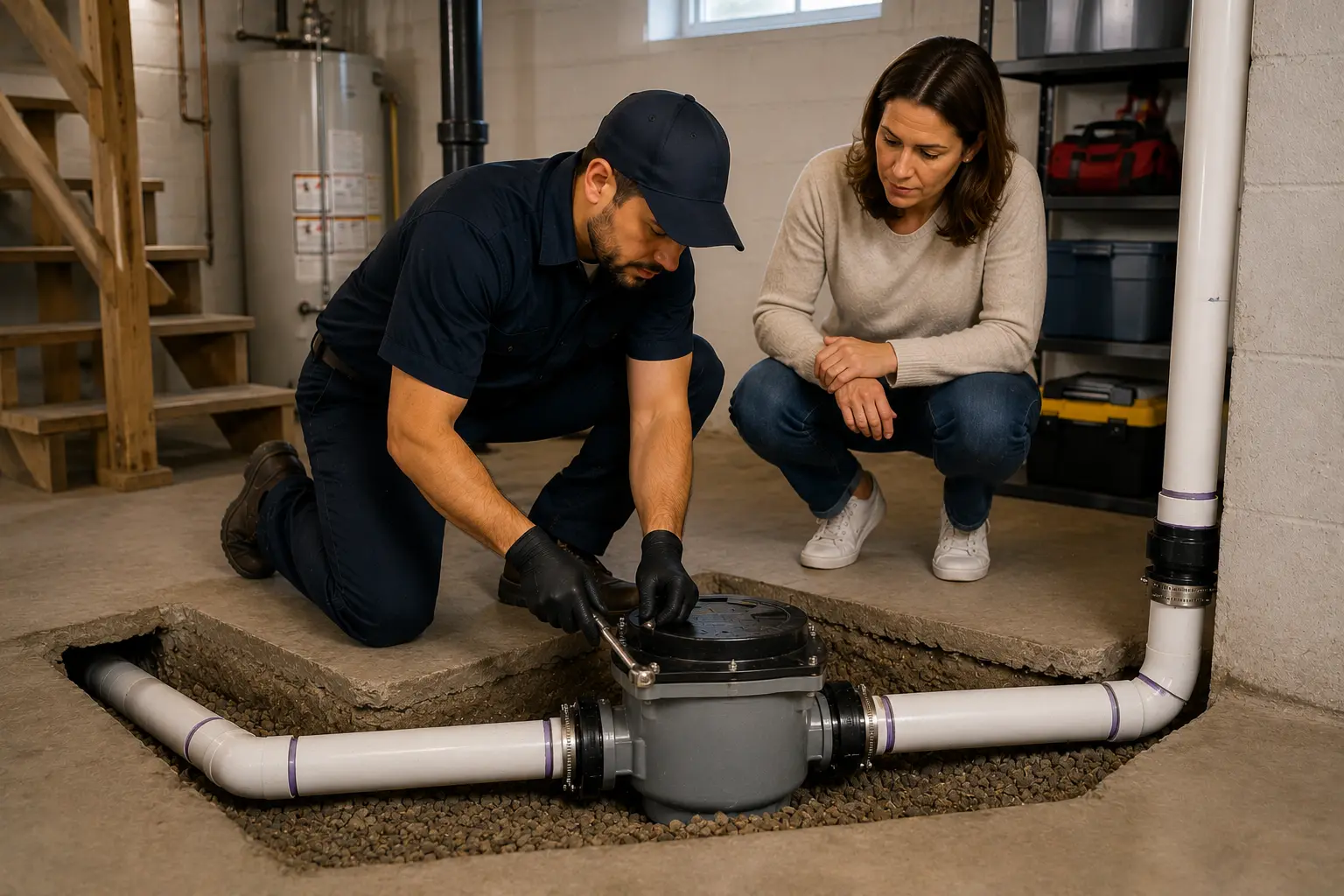
A backwater valve is one of the most important sewer backup protection devices a Chicago homeowner may consider, especially for homes with basement bathrooms, floor drains, laundry areas, or finished living space below grade. When sewer flow reverses during certain surcharge conditions, a properly installed backwater valve can help stop wastewater from backing up into the home.
Backwater valve installation is not the right solution for every property, and it does not replace sewer line maintenance. It is a specific form of protection against reverse flow from the sewer system. Homeowners should understand what a backwater valve does, where it is installed, what it costs, how it must be maintained, and what problems it cannot solve.
For Chicago homeowners, this decision is especially relevant because older sewer infrastructure, heavy rain events, mature neighborhoods, and below-grade plumbing fixtures can all increase basement backup risk.
Key Takeaways
- A backwater valve helps prevent wastewater from flowing backward into a home during certain sewer surcharge conditions.
- It is most relevant for homes with basement drains, basement bathrooms, or prior sewer backup history.
- A backwater valve does not fix clogged, broken, collapsed, or poorly maintained sewer lines.
- Installation may require excavation, permits, plumbing evaluation, and access planning.
- Backwater valves require inspection and maintenance to remain functional.
- Chicago homeowners should consider private sewer condition, storm history, basement use, and insurance coverage before deciding.
When Should Chicago Homeowners Consider a Backwater Valve?
Chicago homeowners may want to consider a backwater valve if their basement has experienced sewer backups, if the home has below-grade plumbing fixtures, or if sewer surcharge during heavy rain is a recurring concern in the area.
A backwater valve can help protect against reverse sewer flow, but it should be evaluated alongside sewer inspections, cleanout access, pipe condition, maintenance history, and other basement backup prevention steps.
What Is a Backwater Valve?
A backwater valve is a plumbing device installed in a sewer or drain line to help prevent wastewater from flowing backward into the home. Under normal conditions, wastewater flows out of the house toward the public sewer. During reverse-flow conditions, the valve flap or gate closes to reduce the chance of sewage entering the property.
Backwater valves are commonly discussed when a home has:
- Basement floor drains
- Basement bathrooms
- Basement laundry areas
- Below-grade showers or tubs
- Previous sewer backup history
- Storm-related backup concerns
Backwater protection is one part of a broader Prevention & Maintenance strategy for sewer risk reduction.
How a Backwater Valve Helps Prevent Basement Backups
Basement sewer backups often happen because basement drains are the lowest plumbing fixtures in the home. If wastewater cannot move away from the property, or if sewer flow reverses from the public system, wastewater may appear first through floor drains, showers, toilets, or laundry drains.
A backwater valve is designed to close when flow reverses. This can help block sewage from moving backward into the home during certain surcharge conditions.
For a broader look at basement protection, see How to Prevent Basement Sewer Backups.
Important: A backwater valve helps with reverse flow. It does not prevent every sewer backup, and it does not correct a blockage or damaged pipe on the house side of the valve.
What a Backwater Valve Does Not Solve
A backwater valve is useful only when it matches the actual problem. If a homeowner installs one expecting it to solve every sewer issue, disappointment is likely.
A backwater valve does not fix:
- Tree roots inside the private sewer line
- Grease buildup or wipes in the drain system
- Collapsed sewer pipe
- Broken or offset pipe joints
- Clogs located upstream of the valve
- Improper drain habits inside the home
- Groundwater seepage through foundation walls
- Sump pump failures
If the home has recurring clogs, slow drains, or root intrusion, sewer maintenance should be addressed separately. Start with Sewer Line Maintenance for Homeowners for a broader maintenance framework.
Backwater Valve vs. Sump Pump: Different Problems
Many homeowners confuse sewer backup protection with sump pump protection. These systems address different water problems.
| System | Primary Purpose | Helps With | Does Not Solve |
|---|---|---|---|
| Backwater valve | Blocks reverse sewer flow | Sewer surcharge backing toward the home | Groundwater around the foundation |
| Sump pump | Moves groundwater out of a sump pit | Foundation drainage and groundwater collection | Sewage backing up through drains |
| Sewer cleaning | Clears private sewer restrictions | Roots, grease, debris, and buildup | Reverse municipal sewer flow by itself |
| Sewer repair | Corrects pipe defects | Broken, collapsed, or damaged sewer sections | Public sewer surcharge conditions |
For a clearer comparison, read Sump Pump vs Sewer Backup Problems: Understanding the Difference.
When a Backwater Valve May Be Worth Considering
A backwater valve may be worth evaluating when the risk of reverse sewer flow is meaningful and the home has vulnerable fixtures below grade.
Prior Basement Sewer Backup
A previous backup is one of the strongest reasons to investigate protection options. The cause of the backup should still be identified. If the backup came from a private sewer blockage, cleaning or repair may matter more than backflow protection.
Below-Grade Plumbing Fixtures
Basement bathrooms, showers, laundry drains, and floor drains increase vulnerability because they sit lower than the main living area.
Storm-Related Backup Pattern
If backups tend to occur during heavy rain, a backwater valve may be part of the conversation. Homeowners should also review Preventing Sewer Problems During Heavy Rain.
Finished Basement Investment
Finished basements increase the cost and disruption of a sewer backup. Flooring, walls, furniture, storage, utilities, and mechanical equipment can all be affected.
Inspection Before Installation
Before installing a backwater valve, the sewer line and drainage layout should be evaluated. Installation without understanding the existing system can create problems or fail to address the real source of backups.
An evaluation may consider:
- Where the main sewer line exits the home
- Whether the existing cleanout is accessible
- Whether the pipe is structurally sound
- Whether roots or grease are present
- Where below-grade fixtures connect
- Whether the backup source is private or municipal
- Whether the valve can be accessed for future maintenance
If roots, buildup, or pipe defects are present, those issues may need to be addressed before or during installation. Related guidance is available in Tree Root Prevention for Sewer Lines.
Where Backwater Valves Are Installed
Backwater valves are typically installed on the building sewer or branch lines serving below-grade fixtures. The exact location depends on the home’s plumbing layout, access, local code requirements, and the type of protection needed.
Possible installation locations include:
- Inside the basement floor
- Near the main sewer exit point
- Outside the foundation
- In an accessible pit or vault
- On a branch line serving specific basement fixtures
Access is critical. A backwater valve should not be buried behind finished materials or placed where future inspection and cleaning are impractical.
Maintenance Requirements After Installation
A backwater valve is not a set-it-and-forget-it device. It has moving parts that can be affected by debris, grease, paper products, roots, or improper use of the plumbing system.
Maintenance may include:
- Periodic visual inspection
- Checking that the flap or gate moves freely
- Removing debris from the valve body
- Keeping the access cover reachable
- Avoiding wipes, grease, and paper towels
- Scheduling professional evaluation if backups or odors occur
Good drain habits remain important. See What Not to Flush: Protecting Your Sewer Line for common household items that can interfere with sewer performance.
Homeowner tip: If a backwater valve access panel is hidden beneath flooring, furniture, storage, or finished construction, maintenance becomes much harder when it matters most.
Chicago-Specific Installation Considerations
Chicago homes can present unique backwater valve installation challenges.
Older Homes and Existing Plumbing Layouts
Older homes may have unusual sewer routing, clay pipe sections, previous repairs, or limited access. These conditions can affect where a backwater valve can be installed and whether other sewer work is needed first.
Basement Use
Many Chicago basements are used for living space, laundry, storage, utilities, or rental-style layouts. The more valuable or finished the basement is, the more important backup prevention planning becomes.
Permits and Code Requirements
Backwater valve installation may involve plumbing permits and code requirements. Homeowners should confirm that installation is performed according to applicable local rules and that future access is preserved.
Heavy Rain Exposure
Storm-related sewer concerns are a major reason homeowners consider backwater valves. However, private sewer condition still matters. A valve will not compensate for a neglected line that is already restricted by roots, grease, or debris.
Cost Factors for Backwater Valve Installation
Backwater valve installation costs vary widely because each home’s plumbing layout is different. Homeowners should be cautious about assuming that one quoted range applies to every property.
Common cost factors include:
- Indoor versus outdoor installation
- Depth of the sewer line
- Whether concrete must be cut and repaired
- Whether excavation is required
- Condition of the existing sewer pipe
- Whether a cleanout needs to be added or modified
- Permit and inspection requirements
- Whether basement finishes must be disturbed
- Whether sewer repairs are needed at the same time
For broader budgeting context, homeowners can review Sewer Line Maintenance Plan Cost.
Tradeoffs Homeowners Should Consider
A backwater valve can be valuable, but it also comes with responsibilities and limitations.
| Potential Benefit | Tradeoff or Limitation |
|---|---|
| Helps reduce reverse sewer flow risk | Does not solve private sewer clogs upstream of the valve |
| Can protect vulnerable basement fixtures | Requires proper installation and access |
| May reduce damage during certain surcharge events | Needs inspection and maintenance |
| Can be part of a larger backup prevention plan | May require excavation or basement disruption |
The decision should be based on the home’s actual risk profile, not fear alone. Sewer history, basement value, neighborhood drainage patterns, pipe condition, and insurance coverage all matter.
Common Backwater Valve Mistakes
- Installing a valve without diagnosing the source of backups
- Assuming a backwater valve prevents every sewer problem
- Ignoring private sewer line clogs or root intrusion
- Covering the valve access after installation
- Failing to inspect or maintain the valve
- Flushing wipes or pouring grease into drains after installation
- Confusing sump pump problems with sewer backup problems
- Waiting until after a finished basement is damaged to evaluate protection
Warning Signs a Home May Need Backup Protection Evaluation
- Basement floor drains have backed up before
- Sewage odors appear near basement drains
- Backups occur during heavy rain
- Water bubbles from floor drains or basement fixtures
- The home has below-grade bathrooms or laundry drains
- Neighbors have experienced sewer backup issues
- The basement is finished or contains valuable stored items
- The sewer line has a history of recurring restrictions
These signs do not automatically mean a backwater valve is required. They mean the property’s sewer backup risk should be evaluated more carefully.
Frequently Asked Questions
Does a backwater valve prevent all sewer backups?
No. A backwater valve helps protect against certain reverse-flow conditions from the sewer system. It does not fix clogs, roots, grease buildup, collapsed pipe, or problems located upstream of the valve.
Is a backwater valve worth installing in Chicago?
It may be worth considering for homes with basement fixtures, prior sewer backups, storm-related backup concerns, or finished basement space. The decision should be based on sewer history, pipe condition, drainage layout, and installation feasibility.
Can I still use plumbing during a sewer surcharge?
When a backwater valve is closed due to reverse flow, wastewater from inside the home may not be able to exit normally. Homeowners should understand how the device works and avoid excessive water use during surcharge conditions.
How often does a backwater valve need maintenance?
Maintenance frequency depends on use, debris exposure, and manufacturer recommendations. Homeowners should at least keep access available and periodically check that the valve is clean and operating properly.
Does homeowners insurance require a backwater valve?
Requirements vary by insurer and policy. Some policies may offer sewer or water backup endorsements, but coverage terms differ. Homeowners should review policy language and ask specifically about sewer backup coverage.
Can a backwater valve be installed in an older Chicago home?
Often, yes, but older homes may require more evaluation because of pipe material, sewer depth, access issues, and existing plumbing layouts. Installation may be more complex than in newer homes.
Should I inspect my sewer line before installing a backwater valve?
Yes, inspection is often helpful. It can identify roots, damage, clogs, or layout issues that may affect whether a valve is appropriate and where it should be installed.
Conclusion
Backwater valve installation can be a valuable sewer backup prevention measure for Chicago homeowners, especially when basement fixtures or storm-related backup risks are present. A properly installed and maintained valve can help reduce the chance of wastewater flowing backward into the home during certain sewer surcharge events.
However, a backwater valve is not a substitute for sewer maintenance, good drain habits, cleanout access, or pipe repair when the private sewer line is damaged. The best protection plan starts with understanding the actual cause of sewer backup risk.
For many homeowners, the right decision involves combining inspection, maintenance, backup prevention devices, insurance review, and realistic expectations about what each solution can and cannot do.