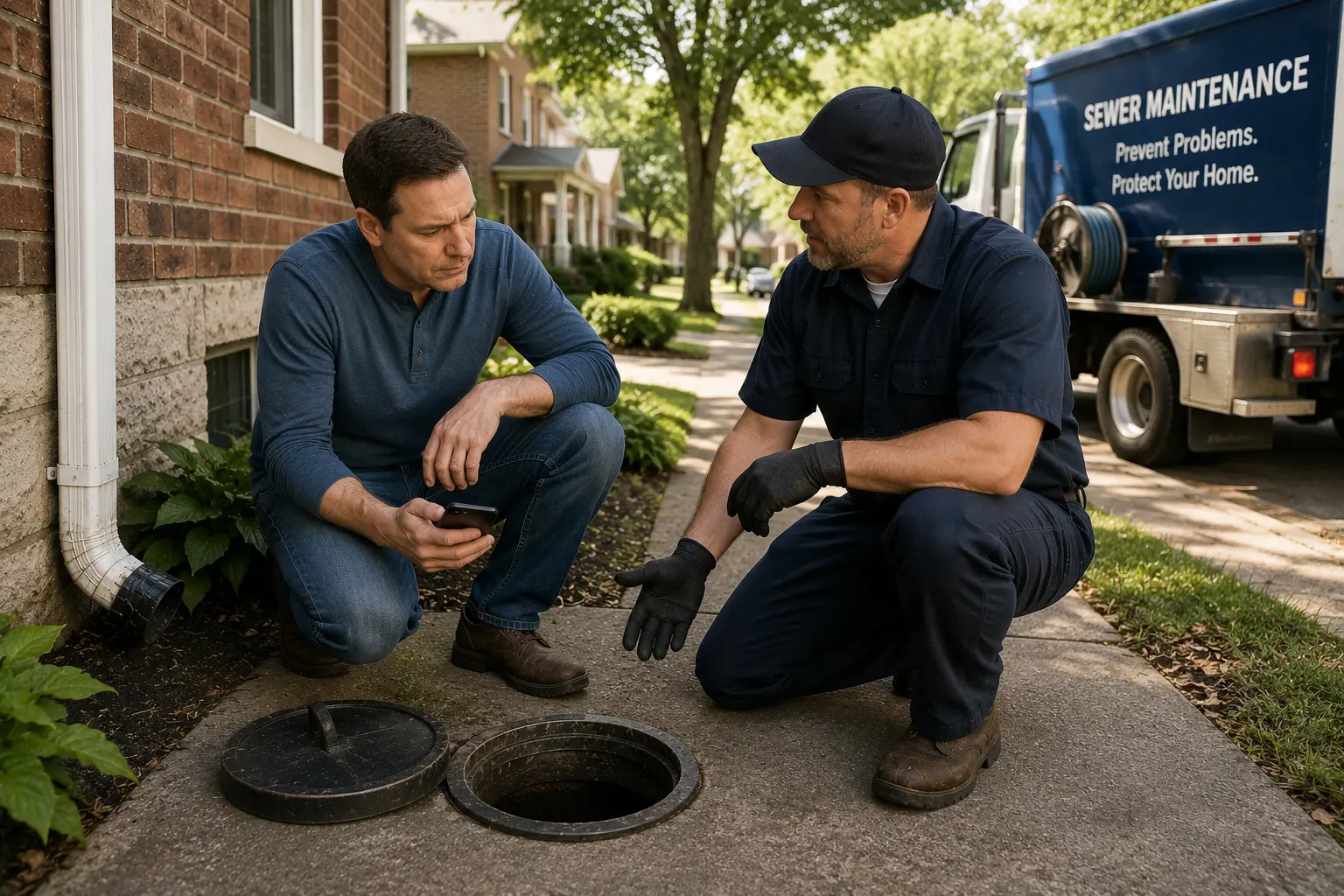
A sewer line maintenance plan can help homeowners budget for inspections, cleaning, and preventative care before a sewer problem becomes an emergency. Instead of waiting for slow drains, recurring clogs, or basement backups, a maintenance plan gives homeowners a structured way to manage risk over time.
The cost of a sewer line maintenance plan depends on the age of the home, pipe condition, tree root exposure, cleanout access, inspection needs, cleaning frequency, and whether services such as hydro jetting or backwater valve maintenance are included. There is no single price that applies to every Chicago home because sewer risk varies from property to property.
For Chicago homeowners, maintenance planning can be especially useful because many properties have older sewer lines, mature trees, basement plumbing fixtures, and exposure to heavy rain events. A thoughtful plan can help reduce avoidable backups while making long-term sewer costs easier to understand.
Key Takeaways
- Sewer line maintenance plan costs vary based on pipe condition, access, cleaning needs, and inspection frequency.
- Older Chicago homes with clay sewer lines or mature trees may need more proactive maintenance.
- A maintenance plan may include inspections, cleaning, cleanout checks, root monitoring, and preventative recommendations.
- Hydro jetting, root removal, and emergency services may cost more than basic maintenance.
- A maintenance plan does not replace needed pipe repair when the sewer line is damaged or failing.
- The best plan is based on actual sewer conditions, not a one-size-fits-all schedule.
What Affects the Cost of a Sewer Line Maintenance Plan?
The biggest cost factors are the condition of the sewer line, whether tree roots or grease are present, how often the line needs cleaning, whether camera inspections are included, how accessible the sewer cleanout is, and whether the home has a history of backups.
For many Chicago homeowners, the right maintenance plan starts with an inspection or review of prior sewer history. That helps determine whether the home needs routine monitoring, periodic cleaning, hydro jetting, root management, or a more serious repair evaluation.
What Is a Sewer Line Maintenance Plan?
A sewer line maintenance plan is a structured approach to keeping the main sewer line functioning properly. It may be a formal service plan offered by a contractor, or it may simply be a homeowner’s organized schedule for inspections, cleaning, and prevention tasks.
A useful maintenance plan may include:
- Sewer camera inspections
- Preventative sewer cleaning
- Root intrusion monitoring
- Hydro jetting when appropriate
- Cleanout access checks
- Drain habit recommendations
- Backwater valve maintenance reminders
- Documentation of prior clogs, backups, and repairs
For a broader overview of what maintenance involves, see Sewer Line Maintenance for Homeowners.
Why Maintenance Plan Costs Vary
Sewer line maintenance is not the same for every property. A newer home with a smooth sewer line, no mature trees, and no backup history may need very little ongoing maintenance. An older Chicago home with clay pipe, root intrusion, and a finished basement may require more frequent inspections or cleaning.
Cost depends on risk. Higher-risk sewer lines generally need more monitoring, more frequent cleaning, or more detailed evaluation.
Common cost drivers include:
- Age of the sewer line
- Pipe material and condition
- Tree root exposure
- History of clogs or backups
- Cleanout accessibility
- Whether a camera inspection is included
- Whether hydro jetting is needed
- Whether service is scheduled or emergency-based
- Whether the line has structural defects
A maintenance plan should be based on the actual sewer line condition rather than a generic schedule.
Common Services Included in Sewer Maintenance Planning
Sewer Camera Inspection
A camera inspection helps identify what is happening inside the sewer line. It can reveal roots, cracks, offsets, pipe bellies, grease buildup, debris, or collapse.
Inspection is especially useful before committing to recurring cleaning. If the line is structurally damaged, cleaning may only provide temporary relief.
Preventative Sewer Cleaning
Preventative cleaning removes buildup before it causes a full blockage. Cleaning may be recommended when inspections show roots, grease, sludge, or debris restricting flow.
The correct cleaning frequency depends on the property. For more detail, see How Often Should a Sewer Line Be Cleaned?.
Root Management
Tree roots are a major factor in sewer maintenance costs. If roots repeatedly enter through cracks or joints, the line may need regular monitoring, cleaning, or repair evaluation.
For prevention guidance, review Tree Root Prevention for Sewer Lines.
Cleanout Maintenance
The sewer cleanout provides access for inspections and cleaning. If the cleanout is buried, damaged, or inaccessible, maintenance may be more difficult and more expensive.
Homeowners should review Sewer Cleanout Maintenance: What Homeowners Should Know as part of any maintenance planning.
Hydro Jetting
Hydro jetting uses high-pressure water to clean the inside of the sewer line. It may be useful for grease, sludge, debris, or certain root conditions when the pipe is structurally suitable.
Hydro jetting may cost more than basic cleaning, but it may provide more thorough cleaning when buildup is the main issue. Learn more in Hydro Jetting for Preventative Sewer Maintenance.
Maintenance Plan Cost Factors by Property Type
The same maintenance plan does not make sense for every home. The table below explains how property conditions can affect planning needs.
| Property Condition | Likely Maintenance Need | Cost Consideration |
|---|---|---|
| Newer sewer line with no symptoms | Low-frequency monitoring | Routine cleaning may not be necessary unless symptoms appear |
| Older home with unknown sewer condition | Inspection-first approach | Initial camera inspection may guide future costs |
| Clay pipe with mature trees nearby | Root monitoring and possible cleaning | Costs may increase if roots return repeatedly |
| History of basement backups | More proactive maintenance | Inspection, cleaning, and backflow evaluation may be considered |
| Recurring clogs after cleaning | Diagnosis beyond routine cleaning | Repeated cleaning may signal repair needs |
| Finished basement | Higher prevention priority | Backup prevention may be worth stronger planning |
Chicago-Specific Cost Considerations
Older Sewer Infrastructure
Many Chicago homes have older sewer lines that may include clay, cast iron, or previous repair sections. Older materials can increase the need for inspection because cracks, offsets, roots, and pipe deterioration may not be obvious from inside the home.
Mature Trees
Tree-lined streets are common in many Chicago neighborhoods. Roots can enter sewer lines through small openings and create recurring maintenance needs.
Basement Backup Risk
Chicago homes often have basement floor drains, laundry areas, bathrooms, and finished living space. Because basement fixtures are low in the plumbing system, backups can cause significant damage.
Homeowners concerned about basement protection should review How to Prevent Basement Sewer Backups.
Heavy Rain Events
Heavy rain can stress sewer systems and reveal private sewer restrictions. Maintenance planning may include both private line care and backup protection evaluation.
More guidance is available in Preventing Sewer Problems During Heavy Rain.
Additional prevention resources are available in the Prevention & Maintenance hub.
Maintenance Plan vs. Emergency Sewer Service
One of the main reasons homeowners consider maintenance planning is to avoid emergency decision-making. Emergency sewer service may involve urgent cleaning, after-hours response, cleanup, restoration, and possibly temporary living disruptions if wastewater enters the home.
Preventative maintenance can be easier to schedule and budget for. However, maintenance does not eliminate all risk. It reduces avoidable risk when the plan is based on real sewer conditions.
| Approach | Potential Benefit | Limitation |
|---|---|---|
| Preventative maintenance | Can identify and address developing issues early | Cannot prevent every municipal surcharge or sudden failure |
| Emergency service only | No upfront maintenance cost | Problems may become more expensive and disruptive |
| Inspection-based planning | Helps match maintenance to actual pipe condition | Requires homeowners to act before a crisis |
| Recurring cleaning without inspection | May keep flow open temporarily | Can miss structural problems that need repair |
When a Maintenance Plan Is Worth Considering
A sewer line maintenance plan may be especially worth considering when the home has a higher risk profile.
Common reasons include:
- Previous sewer backup
- Recurring main line clogs
- Older clay sewer pipe
- Mature trees near the sewer route
- Finished basement space
- Basement floor drains or below-grade fixtures
- Known grease, roots, or sludge buildup
- Past hydro jetting or repeated sewer cleaning
- Heavy rain backup concerns
If the home has no symptoms, no tree exposure, and newer sewer infrastructure, a lighter maintenance approach may be enough.
When Maintenance Is Not Enough
Maintenance is useful when the sewer line is functional but at risk of buildup, roots, or recurring restrictions. It is not a substitute for repair when the pipe itself is failing.
Maintenance may not be enough when:
- The sewer line is collapsed
- There are severe cracks or missing pipe sections
- Pipe joints are badly offset
- A pipe belly holds standing waste
- Roots return quickly after every cleaning
- Backups continue despite regular maintenance
- The same section repeatedly clogs
Homeowner decision point: If maintenance costs keep repeating without lasting improvement, the better question may be whether the sewer line needs repair, not more frequent cleaning.
What to Ask Before Paying for a Maintenance Plan
Homeowners should understand exactly what is included before agreeing to a maintenance plan.
- Does the plan include camera inspections?
- Is sewer cleaning included or discounted?
- Does it include hydro jetting or only basic cleaning?
- Are emergency visits covered or priced separately?
- Does the plan include cleanout checks?
- Will inspection footage or findings be documented?
- Are root problems treated differently?
- Are repairs included, discounted, or separate?
- Can the plan be adjusted based on pipe condition?
- Does the plan make sense for this specific home?
Clear answers help homeowners compare value rather than looking only at the advertised plan price.
Insurance, Maintenance, and Sewer Backup Costs
Insurance is an important part of sewer risk planning, but it should not be confused with maintenance.
Routine sewer maintenance is generally a homeowner responsibility. Sewer backup damage may be handled differently depending on the policy and whether the homeowner has a sewer or water backup endorsement.
Homeowners should review:
- Whether sewer backup coverage is included
- Whether a separate endorsement is needed
- Coverage limits
- Deductibles
- Exclusions for neglect or maintenance issues
- Whether service line coverage is available
- How sump pump overflow is treated
Insurance may help with certain losses, but it does not prevent a backup. Maintenance helps reduce risk before damage occurs.
Common Mistakes Homeowners Make With Maintenance Plans
- Choosing a plan without knowing the sewer line condition
- Paying for recurring cleaning when repair is needed
- Assuming maintenance prevents every backup
- Ignoring tree root history
- Letting the sewer cleanout become inaccessible
- Comparing plan costs without comparing what is included
- Skipping camera inspection after repeated clogs
- Confusing sump pump protection with sewer backup protection
- Not reviewing insurance until after a sewer backup
For help separating basement water risks, see Sump Pump vs Sewer Backup Problems: Understanding the Difference.
Warning Signs You May Need a More Proactive Plan
- Multiple drains slow down at the same time
- Basement floor drains smell like sewage
- Toilets gurgle when other fixtures drain
- Roots have appeared in a prior inspection
- Main line clogs return after cleaning
- The home has had a previous sewer backup
- Backups occur during heavy rain
- The sewer cleanout shows standing water or overflow
- The basement is finished or contains valuable storage
These signs do not automatically mean an expensive plan is needed. They do mean the sewer line deserves closer evaluation.
Practical Sewer Maintenance Planning Checklist
- Locate and clear access to the sewer cleanout
- Document prior clogs, cleaning visits, and backups
- Schedule inspection if symptoms are recurring
- Ask whether roots, grease, or damage were found
- Base cleaning frequency on inspection findings
- Avoid wipes, grease, and paper products in drains
- Monitor mature trees near the sewer route
- Review backwater valve options if backups occur during storms
- Review sewer or water backup insurance coverage
- Reassess the plan if problems continue after maintenance
Frequently Asked Questions
How much does a sewer line maintenance plan cost?
Costs vary based on what is included, how often service occurs, whether inspections or cleanings are part of the plan, and the condition of the sewer line. A basic reminder-based plan is different from a plan that includes camera inspections, cleaning, hydro jetting, or emergency response.
Is a sewer maintenance plan worth it?
It can be worthwhile for homes with older sewer lines, mature trees, previous backups, recurring clogs, or finished basements. Homes with newer lines and no symptoms may need a lighter approach.
Does a maintenance plan prevent all sewer backups?
No. Maintenance can reduce avoidable backups caused by roots, grease, debris, and buildup, but it cannot prevent every municipal sewer surcharge, sudden pipe failure, or severe structural problem.
Should a maintenance plan include camera inspections?
Inspection is often valuable because it helps determine whether cleaning is needed and whether the sewer line has structural damage. Without inspection, homeowners may pay for repeated cleaning without understanding the cause.
Are older Chicago homes more likely to need sewer maintenance plans?
Many older Chicago homes have clay sewer lines, mature trees, basement drains, and older plumbing layouts. These factors can make preventative planning more useful.
Does insurance pay for sewer line maintenance?
Routine maintenance is generally not covered by homeowners insurance. Damage from a sewer backup may depend on the policy and whether the homeowner has a sewer or water backup endorsement.
What if I keep paying for cleaning but the sewer keeps clogging?
Recurring clogs after repeated cleaning may indicate root intrusion, a pipe belly, offset joints, collapse, or other structural issues. A camera inspection can help determine whether repair should be considered.
Conclusion
Sewer line maintenance plan cost depends on risk, access, pipe condition, and the services included. There is no universal plan that fits every Chicago home. The best approach is to understand the sewer line’s condition first, then build a maintenance strategy around the property’s actual needs.
For homeowners with older pipes, mature trees, basement backup concerns, or prior sewer problems, preventative planning may reduce avoidable emergencies and make future costs easier to anticipate. For lower-risk homes, basic monitoring and good drain habits may be enough.
A sewer maintenance plan should help homeowners make better decisions, not lock them into unnecessary services. Inspection, cleanout access, drain habits, cleaning frequency, and repair decisions should all work together as part of a practical prevention strategy.