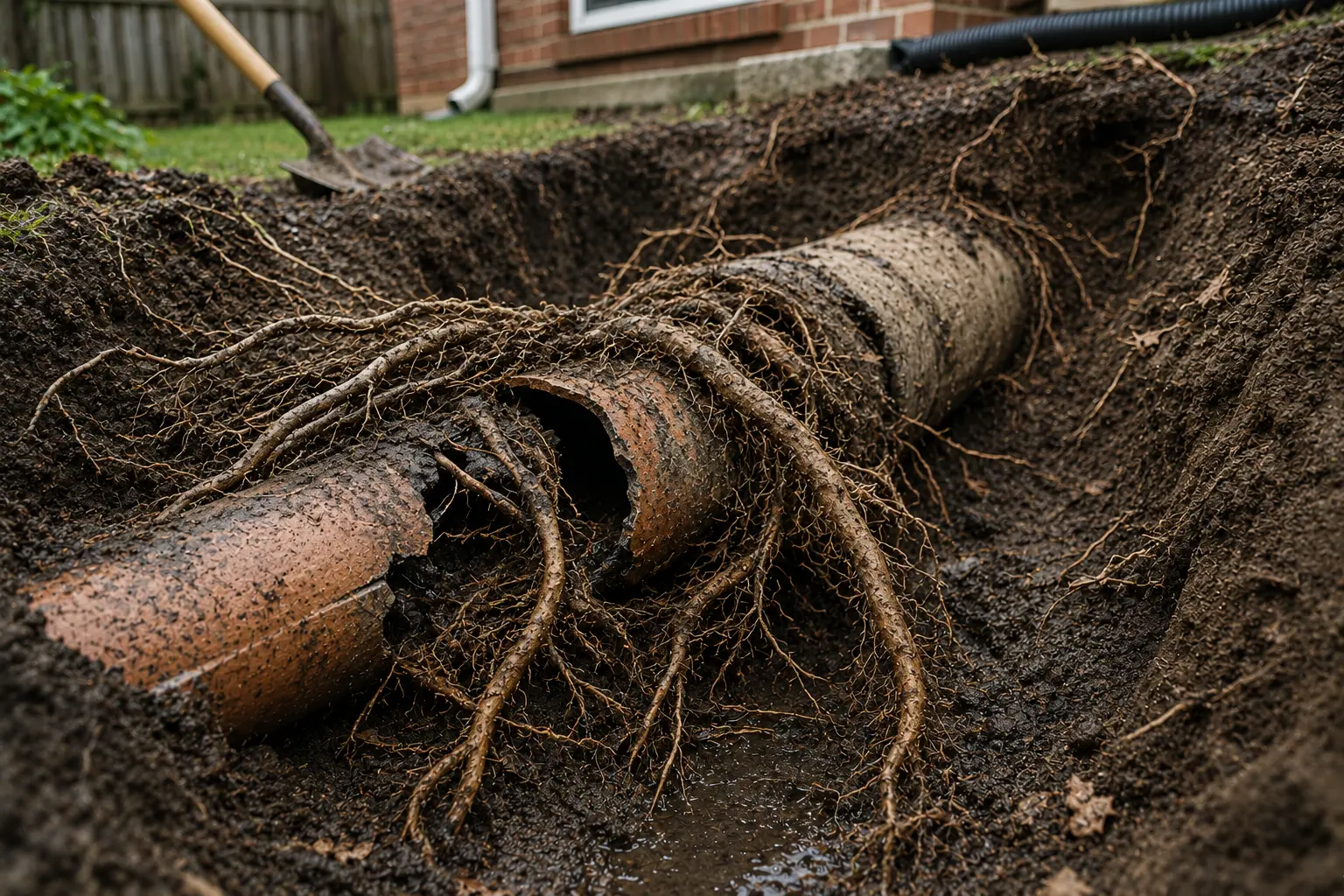
A broken sewer line can show up as repeated backups, sewage odors, slow drains throughout the house, gurgling toilets, wet or sunken yard areas, recurring clogs, or visible evidence from a sewer camera inspection. The warning signs are usually more serious when they affect multiple fixtures, keep coming back after cleaning, or appear alongside basement drainage problems.
For Chicago homeowners, these symptoms deserve careful attention because many properties have older sewer laterals, clay pipe sections, mature tree roots, basement floor drains, and compact lots where sewer problems can quickly become disruptive. A broken sewer line does not always mean the entire line must be replaced, but it does mean the pipe may be cracked, separated, offset, collapsed, root-intruded, or leaking.
The most important step is to move from symptoms to diagnosis. A toilet clog or one slow sink may not be serious. A pattern of whole-house drainage problems, sewer smells, and repeated backups is different. Those signs should be investigated before the problem turns into interior damage, emergency excavation, or a more expensive repair decision.
Key Takeaways
- A broken sewer line often causes repeated backups, slow drains in multiple rooms, sewer odors, gurgling fixtures, or unexplained wet areas outside.
- Basement backups are a major warning sign in Chicago homes because basement drains are often the lowest point in the plumbing system.
- Tree roots, cracked clay pipe, offset joints, bellies, and collapsed sections are common causes of recurring sewer problems.
- Cleaning the line may restore flow temporarily, but it does not fix structural damage.
- A sewer camera inspection is usually needed to confirm whether the problem is a clog, a repairable break, or a larger line failure.
- Homeowners should compare repair, partial replacement, and full replacement based on the actual pipe condition rather than symptoms alone.
How a Broken Sewer Line Usually Shows Up
The most common signs of a broken sewer line are wastewater backing up into the home, several drains slowing at the same time, sewage smells, gurgling toilets or drains, repeated main line clogs, tree roots returning after cleaning, water pooling in the yard, or camera footage showing cracks, offsets, bellies, or collapse.
A single clog does not prove the sewer line is broken. The concern rises when symptoms are repeated, widespread, or connected to the main sewer line. If the problem affects the basement, multiple fixtures, or the outside sewer route, homeowners should treat it as more than a routine drain issue.
Common Signs of a Broken Sewer Line
Repeated Sewer Backups
A sewer backup is one of the clearest warning signs that the main line may be blocked or damaged. If wastewater backs up through a basement floor drain, tub, shower, toilet, or laundry drain, the sewer line may not be carrying waste away from the home properly.
One backup can be caused by a clog. Repeated backups suggest a deeper problem. If the line is rodded or cleaned and the backup returns, the cause may be roots, a collapsed pipe, a belly, an offset joint, or a cracked section of sewer line.
Chicago homeowners should pay close attention to lower-level backups because basements are common and often contain floor drains, laundry areas, mechanical spaces, or finished living space. The article Sewer Backup in Basement: Causes and Warning Signs explains this symptom in more detail.
Slow Drains Throughout the House
A slow bathroom sink usually points to a local clog. Slow drains throughout the house are more concerning. When several fixtures begin draining poorly at the same time, the issue may be in the main sewer line rather than an individual branch drain.
Signs of a main line problem can include a toilet that drains slowly, a shower that backs up while the washing machine runs, or water appearing in a tub after another fixture is used. These patterns suggest wastewater is meeting resistance after it leaves the home’s interior plumbing.
For homeowners trying to tell the difference between a fixture clog and a main sewer problem, What Slow Drains Throughout the House Can Mean is a useful next step.
Sewage Odors Indoors
A sewage smell inside the house can come from several sources, including a dry trap, loose toilet seal, venting issue, or contaminated drain. But when the smell is persistent, appears near basement drains, or happens alongside slow drainage, a sewer line problem should be considered.
A broken sewer line can allow sewer gas or wastewater to escape where it should not. The odor may be strongest near lower-level bathrooms, utility rooms, crawl spaces, or floor drains. If the smell appears after heavy water use or during backups, the main line may be involved.
Because sewer odors have multiple possible causes, homeowners should avoid assuming the worst without checking. The related guide Why Your House Smells Like Sewage covers common odor sources and when they may point to a sewer issue.
Gurgling Toilets and Drains
Gurgling sounds can happen when trapped air moves through the drain system because wastewater is not flowing normally. A toilet may bubble when a shower drains, or a tub drain may gurgle when the washing machine empties.
Gurgling by itself does not always prove the sewer line is broken. It becomes more concerning when it affects multiple fixtures or appears with slow drains, backups, or sewage odors. That combination may mean the main line is partially blocked or structurally restricted.
For a closer look at this symptom, see What Causes Gurgling Toilets and Drains?.
Frequent Sewer Clogs
Every home can have an occasional clog. Frequent sewer clogs are different. If the same main line keeps needing service, something may be catching waste inside the pipe.
Common causes include roots, cracked pipe, offset joints, a sewer line belly, grease buildup, or a section of pipe that has partially collapsed. Cleaning can remove the immediate blockage, but the obstruction may return if the pipe defect remains.
If clogs keep coming back, homeowners should focus on why the line keeps clogging rather than only clearing it again. The guide Why Do Sewer Lines Keep Clogging? explains the most common recurring causes.
Water Pooling or Soft Soil Outside
A broken sewer line may leak wastewater into the surrounding soil. Outside signs can include wet ground, soft spots, sewage odors, unusually green grass, sinking soil, or water pooling near the sewer route.
In Chicago, exterior signs may be harder to notice because many properties have small yards, gangways, paved areas, sidewalks, or parkways. A leaking sewer lateral may not create an obvious puddle right away. Sometimes the first clues are odor, soil movement, or recurring indoor backups.
Mold or Moisture After a Sewer Backup
A sewer backup can leave moisture behind in flooring, baseboards, drywall, storage areas, or hidden spaces. If cleanup is delayed or incomplete, mold can become a secondary concern.
Mold does not prove the sewer line is broken, but mold after a backup may show that the sewer problem caused more than a temporary inconvenience. If backups are repeated, the risk of interior damage increases. Homeowners can review Mold After a Sewer Backup: What Homeowners Should Know for related cleanup and risk considerations.
What Actually Breaks in a Sewer Line?
A broken sewer line is not always broken in the same way. Some pipes crack. Others collapse. Some shift out of alignment, develop low spots, or separate at the joints. The type of damage matters because it affects whether the line can be cleaned, repaired, lined, partially replaced, or fully replaced.
| Problem | What Happens | Common Warning Signs |
|---|---|---|
| Cracked pipe | The pipe wall opens, allowing roots, soil, water, or waste to move where they should not. | Recurring clogs, sewer odors, roots, leaks, or camera-visible cracks. |
| Offset joint | Two pipe sections shift out of alignment. | Frequent clogs, waste catching at the joint, poor flow, or camera-visible separation. |
| Sewer line belly | A low section holds water and waste instead of draining fully. | Repeated blockages, slow drains, odors, or standing water seen on camera. |
| Root intrusion | Roots enter through cracks or joints and grow inside the pipe. | Clogs that return after cleaning, especially near trees or older clay pipe. |
| Collapsed line | A section caves in or becomes physically blocked. | Severe backups, little or no drainage, urgent failure, or camera obstruction. |
| Deteriorated clay pipe | Older pipe sections crack, shift, or separate over time. | Roots, offsets, recurring clogs, soil movement, or multiple damaged sections. |
Why Chicago Homes Are Vulnerable to Sewer Line Problems
Older Sewer Materials
Many Chicago homes were built with older sewer materials that may have been in place for decades. Clay pipe can last a long time, but it can also crack, separate, or shift as soil conditions change. Older cast iron may corrode or deteriorate. Previous repairs may also leave transitions between materials that deserve inspection.
If an inspection shows clay pipe damage, homeowners may want to review Cracked Clay Sewer Pipes: Causes and Risks to understand why these pipes can become vulnerable over time.
Basements and Lower-Level Fixtures
Chicago homes often have basements with floor drains, laundry drains, bathrooms, or utility areas. These lower fixtures can be the first places where a sewer issue becomes visible. If the main line is restricted, wastewater may seek the lowest opening.
This is why a sewer problem may appear suddenly in the basement even if upper-level fixtures still seem usable. The location of the backup can provide important clues about whether the issue is local or main-line related.
Mature Trees and Root Pressure
Tree roots naturally seek moisture and can enter small openings in older sewer pipes. Once roots enter, they can expand inside the line and trap waste. Mature trees along streets, parkways, and older residential lots can increase root-related sewer problems.
Root intrusion is especially common where pipe joints are loose, cracked, or offset. Repeated root cleaning may be a sign that the pipe itself needs repair.
Tight Access and Restoration Issues
Chicago lots can include narrow gangways, fences, garages, sidewalks, alleys, parkways, and concrete surfaces. These conditions can make repair or replacement more complex. A broken sewer line under open soil is different from one beneath a sidewalk, driveway, finished basement floor, or public way.
Access and restoration needs can affect timing, cost, and the type of repair method considered.
How a Sewer Camera Inspection Helps Confirm the Problem
Symptoms are important, but they do not show the inside of the pipe. A sewer camera inspection can help identify the location and type of damage. It can also show whether the issue is isolated or spread across multiple sections.
A camera inspection may reveal:
- Cracks in the pipe wall
- Roots entering through joints or breaks
- Offset pipe sections
- Standing water from a belly
- Collapsed or crushed pipe
- Grease, wipes, or debris buildup
- Improper slope
- Evidence of previous repairs
- Pipe material changes
Homeowners should ask whether the inspection footage can be reviewed and whether the problem location is clearly identified. A useful diagnosis should connect the symptoms to a visible pipe condition.
Inspection Tip for Homeowners
Ask the contractor to explain what the camera shows in plain language. The key questions are where the damage is, how severe it is, whether the rest of the pipe looks usable, and what repair options are realistic.
Repair, Cleaning, or Replacement: What Happens Next?
A broken sewer line does not always require full replacement. The right next step depends on the cause, severity, location, and history of the problem.
Cleaning May Be Enough When
- The issue is a one-time blockage.
- The pipe is intact after inspection.
- The line drains fully after cleaning.
- There is no major cracking, offset, belly, or collapse.
- The problem was caused by grease, debris, or improper flushing.
Targeted Repair May Be Enough When
- The damage is limited to one section.
- Only one joint is offset or root-intruded.
- The rest of the sewer line is in usable condition.
- The repair addresses the actual failure point.
- The cost is reasonable compared with replacing a longer run.
Replacement May Be Considered When
- The pipe has collapsed.
- Multiple sections are cracked or separated.
- Roots keep returning through several joints.
- A belly causes chronic standing waste.
- The line has a long history of backups.
- Several repairs would be needed to solve the full problem.
If the problem appears to be moving from repairable damage toward larger failure, Signs Your Sewer Line May Need Replacement can help homeowners understand when replacement becomes a more serious consideration.
Cost Factors Homeowners Should Understand
The cost to address a broken sewer line depends on what is actually wrong and where the damage is located. A simple cleaning is different from a spot repair, and a spot repair is different from replacing a long sewer run.
Major cost factors include:
- Depth: Deeper sewer lines may require more labor, equipment, shoring, and safety planning.
- Location: Damage under a yard is usually less complicated than damage under concrete, a finished basement floor, sidewalk, alley, or street.
- Length of damaged pipe: A short broken section may be less involved than widespread pipe failure.
- Pipe material: Clay, cast iron, PVC, and mixed-material lines may require different repair approaches.
- Access: Narrow lots, fences, landscaping, garages, and paved surfaces can affect the work.
- Restoration: Concrete, landscaping, flooring, or parkway restoration may or may not be included in the quoted price.
- Urgency: Emergency work can reduce time for comparison and may affect scheduling or cost.
Homeowners should compare written scopes carefully. Two quotes may sound similar but include different assumptions about excavation, permits, inspections, cleanup, and restoration.
When a Broken Sewer Line Becomes an Emergency
Some sewer problems can be inspected and planned. Others need immediate attention. A broken sewer line may become urgent when sewage is actively backing up, drains are unusable, strong odors are present, or wastewater is affecting living areas.
Emergency warning signs include:
- Sewage backing up into the basement or bathroom
- Multiple drains refusing to drain
- Standing wastewater inside the home
- Strong sewer odors with active drainage problems
- Signs of a collapsed line
- Water or waste threatening finished areas, utilities, or stored belongings
When homeowners are unsure whether the problem can wait, When Does a Sewer Problem Become an Emergency? provides a practical way to think through urgency.
Common Mistakes Homeowners Make
Treating Every Backup as a Simple Clog
A clog may be simple the first time. If backups return, the issue may be structural. Repeated service calls without diagnosis can delay the repair that actually addresses the problem.
Approving Major Work Without Understanding the Camera Findings
A contractor may recommend repair or replacement, but homeowners should ask what the inspection shows. The explanation should identify the type of damage, its location, and whether the rest of the line appears stable.
Ignoring Sewer Odors
Sewer smells are easy to dismiss, especially if they come and go. Persistent odors near lower-level drains, utility rooms, or bathrooms should be investigated, particularly when they appear with slow drains or gurgling.
Comparing Prices Without Comparing Scope
A lower price may exclude restoration, permits, longer pipe sections, or cleanup. Homeowners should compare what each quote includes, not just the final number.
Waiting Until the Sewer Line Fails Completely
Waiting can reduce options. Once sewage is backing up or the line is unusable, homeowners may have less time to compare repair methods, contractors, and costs.
FAQ
What is the first sign of a broken sewer line?
The first sign may be slow drains, gurgling toilets, sewer odors, or a backup at the lowest drain in the home. In many Chicago homes, that may be a basement floor drain or lower-level bathroom fixture.
Does one sewer backup mean the sewer line is broken?
Not necessarily. One backup may be caused by a clog or temporary blockage. A broken sewer line becomes more likely when backups repeat, affect multiple fixtures, or return soon after cleaning.
How can I tell if it is a main sewer line problem?
Main sewer line problems often affect more than one fixture. If toilets, tubs, showers, laundry drains, and basement drains all show symptoms, the issue is more likely to be in the main line than in one local drain.
Can a broken sewer line cause a sewage smell in the house?
Yes. A cracked or leaking sewer line can allow sewer gas or wastewater odors to escape. However, sewer smells can also come from dry traps, toilet seals, or venting problems, so diagnosis matters.
Do tree roots mean the sewer line is broken?
Roots usually enter through an opening, crack, joint, or weak spot in the pipe. Root intrusion does not always require full replacement, but it often means the pipe has a defect that should be inspected.
Should I get a sewer camera inspection?
Yes, if symptoms are repeated, widespread, or serious. A camera inspection can show whether the issue is a clog, crack, offset joint, belly, collapsed pipe, or root problem. It also helps homeowners compare repair and replacement options.
Will insurance cover a broken sewer line?
Coverage depends on the policy, endorsements, cause of damage, and whether the claim involves backup damage, service line coverage, or gradual wear. Homeowners should review their policy and ask about sewer backup or service line endorsements before assuming the repair is covered.
Can a broken sewer line be repaired without replacing the whole line?
Sometimes. If the damage is limited to one section and the rest of the pipe is in usable condition, a targeted repair may be possible. Full replacement becomes more likely when the line has widespread damage, collapse, repeated root intrusion, or several failing sections.
Conclusion
The common signs of a broken sewer line include repeated backups, slow drains throughout the house, sewer odors, gurgling fixtures, recurring clogs, wet yard areas, and inspection findings that show cracks, offsets, bellies, roots, or collapse. The key is the pattern. A one-time clog may not be serious, but repeated or whole-house symptoms should not be ignored.
For Chicago homeowners, early diagnosis can make a major difference. Older sewer materials, basement drains, mature tree roots, tight lots, and restoration requirements can all affect the best repair path. A camera inspection, clear explanation of the pipe condition, and careful comparison of repair options can help homeowners make a more informed decision before the problem becomes an emergency.