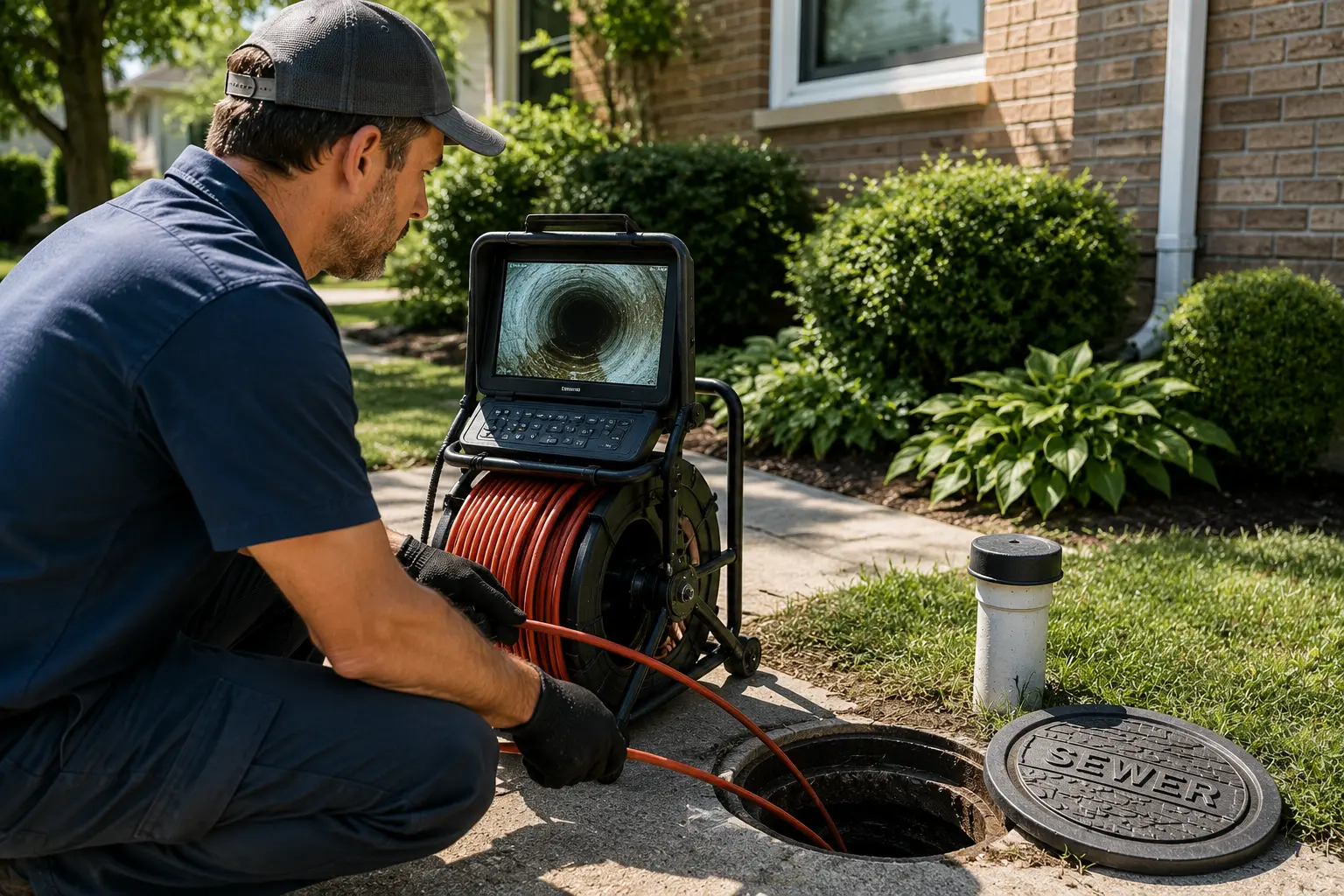
A sewer camera inspection is one of the most valuable diagnostic tools available to homeowners dealing with drainage problems, sewer backups, recurring clogs, or concerns about an aging sewer line. Rather than relying on guesswork, a camera inspection allows a technician to view the inside of the pipe and identify the actual cause of the problem.
For Chicago homeowners, sewer camera inspections are especially useful because many neighborhoods contain older sewer infrastructure, aging clay pipes, tree-lined streets, and homes built decades before modern plumbing standards. Understanding what a sewer camera inspection can reveal—and what its limitations are—can help you make better repair decisions and avoid unnecessary work.
For additional sewer diagnostic resources, visit the Sewer Inspections & Diagnosis hub.
Key Takeaways
- A sewer camera inspection uses a specialized waterproof camera to examine the interior of a sewer line.
- Inspections can identify root intrusion, pipe cracks, blockages, collapses, offsets, corrosion, and other defects.
- Camera inspections are commonly recommended before repairs, after backups, and during home purchases.
- The inspection provides visual evidence of pipe conditions but does not repair the problem.
- Older Chicago homes often benefit from periodic inspections because aging sewer systems are more prone to hidden defects.
What Is a Sewer Camera Inspection?
A sewer camera inspection involves inserting a high-resolution waterproof camera into a sewer line through a cleanout or access point. The camera travels through the pipe while transmitting live video to a monitor, allowing the operator to identify damage, obstructions, root intrusion, sagging sections, or other issues.
For homeowners, the primary benefit is simple: instead of guessing why a sewer line is malfunctioning, the inspection provides direct visual confirmation of what is happening underground.
How a Sewer Camera Inspection Works
The process is relatively straightforward but requires specialized equipment.
- The technician locates an access point, usually a sewer cleanout.
- A flexible cable with an attached camera is inserted into the pipe.
- The camera records real-time video as it moves through the sewer line.
- Problem areas are identified and documented.
- Many systems also include locating equipment that helps determine the exact position and depth of defects.
If you want a deeper look at the findings that may appear during an inspection, see What Does a Sewer Camera Inspection Show?.
When Homeowners Should Consider a Sewer Camera Inspection
Not every plumbing issue requires a sewer scope, but certain situations make an inspection particularly valuable.
Recurring Drain Backups
If multiple drains repeatedly clog or back up despite cleaning attempts, a camera inspection can determine whether the issue is caused by roots, pipe damage, grease buildup, or a more serious structural defect.
Before Buying a Home
Many sewer problems remain hidden during a standard home inspection. A camera inspection can uncover expensive underground issues before a purchase is finalized. Learn more in Sewer Inspection Before Buying a House.
After a Sewer Backup
Once cleanup is complete, homeowners often need to determine why the backup occurred. An inspection can help identify whether the issue was temporary or indicates a larger problem. Additional guidance is available in Sewer Inspection After a Sewer Backup.
Before Major Sewer Repairs
A visual inspection helps verify whether a repair is actually necessary and may reveal alternatives that are less disruptive or less expensive.
For Older Properties
Many Chicago neighborhoods contain homes with sewer systems that are decades old. In these situations, inspections can help identify deterioration before a failure occurs.
What Problems Can a Sewer Camera Inspection Identify?
Modern camera systems can reveal a surprisingly wide range of sewer line conditions.
| Issue | What the Camera May Show |
|---|---|
| Tree Root Intrusion | Roots entering through joints, cracks, or damaged pipe sections |
| Pipe Cracks | Visible fractures, separations, or broken sections |
| Offset Joints | Misaligned pipe connections disrupting flow |
| Blockages | Grease, debris, foreign objects, or heavy buildup |
| Pipe Collapse | Severe deformation or complete obstruction |
| Corrosion | Deterioration of older metal pipes |
| Bellies or Sags | Low spots where water collects |
Many inspection reports include still images and video footage to document these findings.
What a Sewer Camera Inspection Cannot Do
Although camera inspections are extremely useful, they are not perfect.
- They cannot repair the problem.
- Heavy standing water may obscure certain defects.
- Extremely severe blockages can prevent the camera from reaching all sections of the line.
- Some underground conditions may require additional testing.
- The quality of results depends heavily on the skill of the operator and the quality of equipment used.
In some cases, additional diagnostic methods such as Sewer Line Smoke Testing Explained or Sewer Dye Testing: When Is It Used? may be recommended.
Understanding Sewer Scope Reports
After the inspection, homeowners may receive a written report, video recording, photos, or a combination of all three.
A quality report typically identifies:
- Pipe material
- Approximate pipe condition
- Location of defects
- Distance measurements
- Recommended next steps
- Supporting images or video evidence
If you receive an inspection report and are unsure how to interpret the findings, review How to Read a Sewer Scope Report.
Chicago-Specific Sewer Inspection Considerations
Chicago presents several unique challenges that make sewer inspections particularly important.
Older Sewer Infrastructure
Many Chicago homes were built long before modern sewer materials became standard. Clay tile and cast iron systems remain common throughout many neighborhoods.
Tree-Lined Streets
Chicago’s mature urban canopy contributes to widespread root intrusion issues. Tree roots naturally seek moisture and can enter even small openings in sewer lines.
Freeze-Thaw Cycles
Seasonal temperature fluctuations can place stress on aging underground infrastructure, potentially worsening existing cracks and joint separations.
Historic Neighborhoods
Older neighborhoods often contain sewer systems that have undergone multiple repairs over the decades, creating a mix of pipe materials and connection points.
Chicago Homeowner Tip: If your home was built before the 1970s and has never had a sewer inspection, obtaining a baseline camera inspection can provide valuable information about the condition of the underground sewer line.
Owners of older properties may also benefit from reviewing Sewer Inspections for Older Chicago Homes.
How Sewer Line Location and Depth Affect Inspections
One advantage of modern inspection systems is the ability to electronically locate the camera underground.
This helps identify:
- The exact location of defects
- Pipe routing across the property
- Approximate pipe depth
- Potential excavation areas if repairs become necessary
For more information, see Sewer Line Depth and Location Explained.
Related Decision Factors After an Inspection
Once an inspection identifies a problem, homeowners often face several decisions.
Monitor or Repair?
Not every defect requires immediate replacement. Minor root intrusion or limited cracking may be manageable through maintenance and monitoring.
Repair or Replace?
The severity of the damage, pipe material, age, and location all influence whether a repair or full replacement makes sense.
Further Testing Needed?
Some situations require additional locating or testing services to fully understand the extent of a problem.
If the exact route of the sewer line remains unclear, homeowners may also find value in How to Find a Sewer Line Under Your Yard.
Warning Signs of a Poor Sewer Inspection
Not all inspections are performed to the same standard.
Potential red flags include:
- No video recording provided
- Vague descriptions without supporting evidence
- Failure to inspect the full line when possible
- No defect locations identified
- Recommendations that are unsupported by camera footage
- Inability to explain findings clearly
Additional guidance is available in Signs a Sewer Inspection Was Done Poorly.
Frequently Asked Questions
How much does a sewer camera inspection cost in Chicago?
Costs vary based on accessibility, property layout, equipment used, and whether the inspection is performed as a standalone service or alongside other plumbing work. Homeowners should compare what is included rather than focusing solely on price.
How long does a sewer camera inspection take?
Many inspections can be completed in less than an hour, although complex properties or difficult access situations may take longer.
Can a sewer camera inspection detect tree roots?
Yes. Root intrusion is one of the most common findings during sewer camera inspections, especially in older Chicago neighborhoods with mature trees.
Should I get a sewer inspection before buying a Chicago home?
In many cases, yes. Sewer line repairs can be expensive, and a standard home inspection may not identify underground sewer defects.
Will homeowners insurance cover sewer inspection costs?
Coverage varies by policy. Some insurers may reimburse diagnostic expenses when associated with a covered claim, while others may not. Homeowners should review their individual policy terms.
Can a camera inspection determine if a sewer line needs replacement?
It can provide critical information, but replacement decisions typically depend on multiple factors including pipe condition, age, extent of damage, repair history, and future risk.
Conclusion
A sewer camera inspection is one of the most effective ways to understand the condition of an underground sewer line without excavation. For Chicago homeowners dealing with recurring drainage issues, purchasing an older property, investigating a sewer backup, or simply assessing the health of an aging sewer system, a camera inspection provides valuable information that can guide repair and maintenance decisions.
Rather than relying on assumptions, homeowners can use visual evidence to better understand risks, prioritize repairs, and make informed choices about their property’s sewer infrastructure.