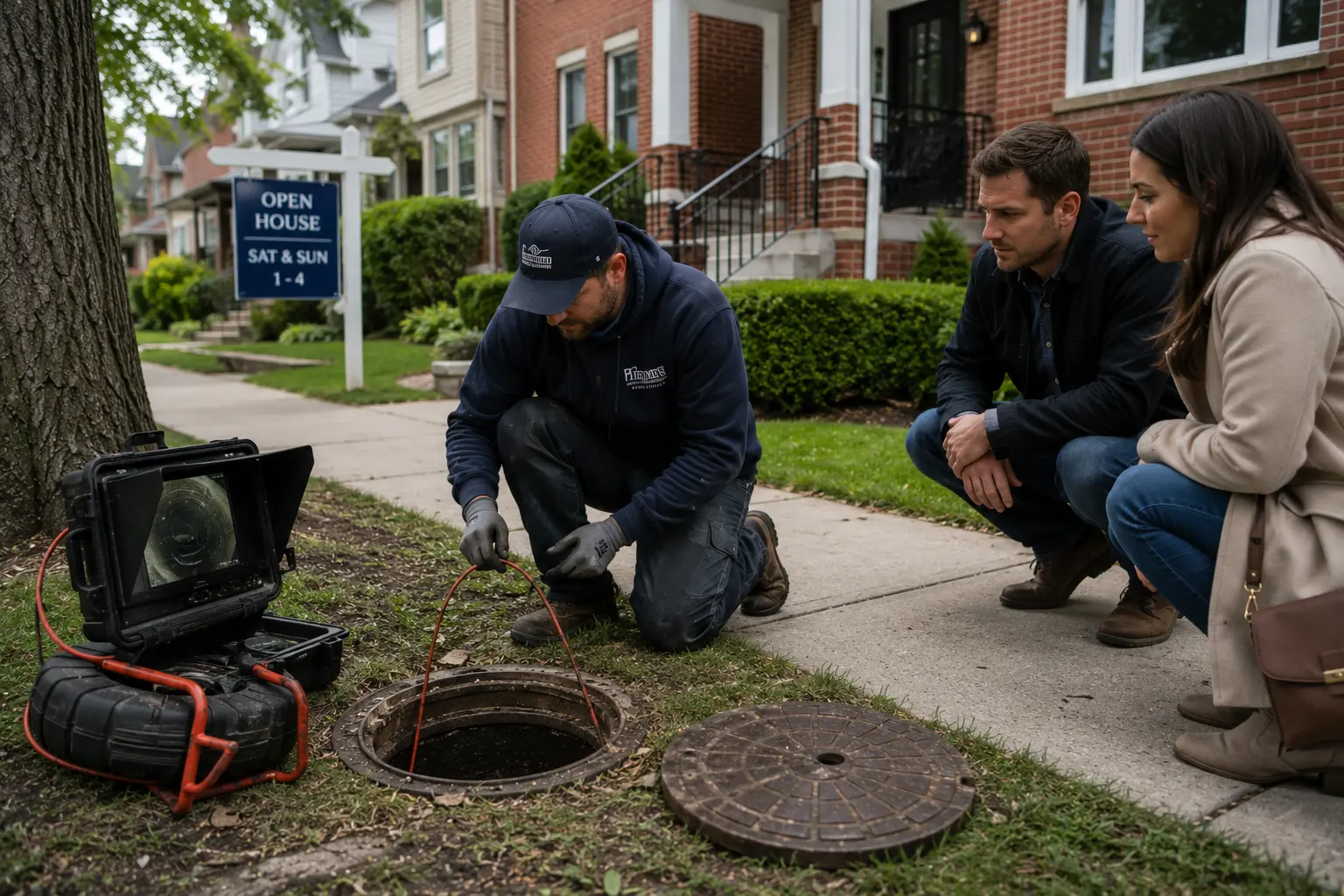
Buying a Chicago home often means evaluating more than the roof, furnace, electrical panel, and visible plumbing. In many older homes, one of the most important systems is buried underground: the sewer line. A sewer problem may not be obvious during a showing or standard home inspection, but it can become expensive and disruptive after closing.
A sewer inspection before buying a Chicago home can help identify root intrusion, cracked clay pipe, offset joints, sewer bellies, collapsed sections, and other underground problems before the purchase is final. This is especially important for older bungalows, greystones, two-flats, multi-family buildings, homes with finished basements, and properties near large trees.
The goal is not to scare buyers away from older Chicago homes. Many older properties remain excellent purchases. The goal is to understand the condition of the sewer line before making a major financial decision. For more guidance on older homes and property types, visit the Older Chicago Homes & Property Types resource hub.
Key Takeaways
- A standard home inspection usually does not fully evaluate the underground sewer line.
- Older Chicago homes may have clay sewer pipe, root intrusion, offset joints, sewer bellies, or deteriorated sewer sections.
- A sewer camera inspection can help buyers identify hidden problems before closing.
- Sewer findings can affect negotiations, repair credits, purchase decisions, and long-term maintenance planning.
- Homes with finished basements, rental units, large trees, or prior renovations deserve extra sewer attention.
- Buyers should understand whether a sewer issue is minor, repairable, or a sign of larger replacement risk.
Should You Get a Sewer Inspection Before Buying a Chicago Home?
Yes, a sewer inspection is often wise before buying an older Chicago home, especially if the property has mature trees, a basement, clay sewer pipes, prior backup history, or unknown sewer repair records. A standard home inspection may identify visible plumbing concerns, but it usually cannot show the condition of the buried sewer lateral.
A sewer camera inspection can reveal whether the line has roots, cracks, standing water, offsets, collapse, or older pipe materials. If a problem is found, the buyer can decide whether to negotiate repairs, ask for a credit, request more information, or proceed with a clearer understanding of future risk.
Why Sewer Inspections Matter in Chicago
Chicago has a large number of homes built decades ago, and many of those homes still have original or partially original underground sewer systems. Even when the interior plumbing has been updated, the sewer line outside or beneath the property may not have been replaced.
This matters because sewer defects can remain hidden until the home is under heavy use, during wet weather, or after roots and debris create a blockage. Once the buyer owns the home, repair decisions and costs become their responsibility.
Older Housing Stock
Bungalows, greystones, two-flats, and other older property types are common throughout Chicago. These homes may have aging clay sewer pipe or mixed pipe materials from past repairs.
For a broader overview of older-home sewer risks, see Common Sewer Problems in Older Chicago Homes.
Mature Trees
Large parkway trees, backyard trees, and side-yard trees are common in established neighborhoods. Roots can enter sewer lines through cracks, loose joints, or older pipe connections.
Buyers considering homes on tree-lined blocks may also want to read Sewer Issues in Homes Near Large Trees.
Finished Basements
Finished basements can increase the financial impact of a sewer failure. A backup can damage flooring, drywall, furniture, storage, laundry areas, bathrooms, and mechanical systems.
For homes with improved lower levels, review Sewer Repair for Homes With Finished Basements.
What a Sewer Inspection Can Reveal
A sewer camera inspection uses a camera to view the inside of the sewer line. The inspection can help identify problems that would not be visible from inside the home.
Common findings include:
- Tree roots inside the line
- Cracked pipe sections
- Clay sewer pipe deterioration
- Offset joints
- Sewer line bellies
- Standing water
- Collapsed pipe sections
- Grease, debris, or scale buildup
- Past repairs or pipe material transitions
- Improper connections or unusual pipe conditions
Important: A sewer inspection does not automatically mean the buyer should walk away from a property. It provides information so the buyer can understand the condition, ask better questions, and negotiate from a more informed position.
Common Sewer Problems Buyers Find in Older Chicago Homes
Clay Sewer Pipe
Clay sewer pipe is common in older Chicago homes. Clay can perform for many decades, but it may crack, shift, or separate at the joints as it ages. Root intrusion is especially common at weak joints.
Buyers can learn more in Clay Sewer Pipes in Chicago Homes: Risks and Replacement Options.
Tree Root Intrusion
Roots inside the sewer line can cause recurring clogs and backups. Minor root intrusion may be manageable, but roots entering at multiple points may suggest widespread pipe deterioration.
Sewer Line Bellies
A sewer belly is a low section of pipe where water and waste collect. If the inspection shows significant standing water, the line may be more likely to clog in the future.
Offset Joints
Offset joints occur when pipe sections no longer align properly. Waste can catch at the offset, roots may enter, and repeated drainage problems may occur.
Collapsed Pipe
A collapsed pipe is a serious structural issue. If a sewer line has collapsed, cleaning alone will not provide a lasting repair. Buyers should understand the likely repair scope before closing.
Past Partial Repairs
Some Chicago homes have sewer lines repaired in sections over time. A newer section does not always mean the full sewer line is updated. The remaining older sections may still have defects.
Which Chicago Homes Most Need Sewer Inspection?
Any home can have a sewer issue, but some property types deserve extra attention before purchase.
| Property Feature | Why It Matters | Buyer Concern |
|---|---|---|
| Older bungalow | May have original or aging sewer lines | Clay pipe, roots, basement backup risk |
| Greystone home | Often older with basement or lower-level space | Access, aging pipe, masonry-adjacent repairs |
| Two-flat | May have shared sewer use between units | Multiple households affected by one defect |
| Multi-family building | Higher usage and tenant impact | Operating risk and repair disruption |
| Finished basement | Higher damage potential from backups | Flooring, drywall, and personal property exposure |
| Large nearby trees | Roots may enter older pipe joints | Recurring clogs or root-related repairs |
Buyers considering specific older property types may find additional guidance in Sewer Replacement for Chicago Bungalows: What Homeowners Should Know, Sewer Repair for Chicago Greystone Homes, and Sewer Repair for Two-Flats in Chicago.
How Sewer Findings Can Affect a Home Purchase
Sewer inspection results can influence the transaction in several ways. A clean inspection may give the buyer confidence. A concerning inspection may lead to additional questions, negotiation, or repair planning.
Negotiating Repairs
If the sewer line has a significant defect, the buyer may ask the seller to repair the issue before closing. This may be more likely when the defect is clearly structural, such as collapse, severe offset, or widespread root intrusion.
Requesting a Credit
Some buyers prefer a credit so they can choose the contractor and manage the repair after closing. Credits may be subject to lender, contract, and negotiation limitations.
Adjusting the Offer
If sewer work is needed, buyers may factor the expected repair cost and disruption into the purchase price.
Walking Away
In some cases, a buyer may decide the sewer issue is too serious, too uncertain, or too expensive relative to the property.
Planning Future Maintenance
Not every sewer finding requires immediate action. Some buyers proceed with the purchase but plan for cleaning, monitoring, or future repair.
How to Interpret Sewer Inspection Results
A sewer inspection is most useful when the buyer understands the severity of the findings. The presence of an issue does not always mean full replacement is needed.
| Inspection Finding | Possible Meaning | Buyer Question |
|---|---|---|
| Minor debris or buildup | May be maintenance-related | Is the pipe otherwise sound? |
| Small roots at one joint | Localized root entry point | How often might roots return? |
| Roots at multiple joints | Possible widespread clay pipe weakness | Is replacement likely soon? |
| Standing water | Possible belly or slope issue | How severe is the low spot? |
| Offset joint | Pipe movement or misalignment | Is flow restricted? |
| Cracked pipe | Structural defect | Is it isolated or widespread? |
| Collapsed pipe | Major failure | What repair is needed before or after closing? |
Practical note: Buyers should ask for the inspection video, not just a verbal summary. Footage can help compare opinions and understand whether the problem is minor, moderate, or serious.
Questions Buyers Should Ask After a Sewer Inspection
If the inspection finds a problem, buyers should slow down and gather useful information before making a decision.
- Where exactly is the defect located?
- What pipe material is present?
- Is the issue isolated or widespread?
- Is the line still draining properly?
- Are roots present?
- Is there standing water?
- Is there evidence of collapse?
- Has the sewer line been repaired before?
- What older sections remain?
- Could the issue affect a finished basement?
- Would repair require excavation, trenchless work, or interior access?
- Are estimates needed before the inspection period ends?
Chicago-Specific Considerations for Buyers
Bungalows and Finished Basements
Many Chicago bungalows have basements that may be finished, partially finished, or used for storage and laundry. Sewer backup risk can be especially important in these homes.
Greystones and Older Masonry Homes
Greystones may have older sewer lines, basement spaces, and access limitations due to masonry features, stairs, sidewalks, or narrow lots.
Two-Flats and Rental Properties
For two-flats and rental properties, a sewer issue can affect multiple households. Buyers should consider both repair cost and future tenant disruption.
Rental-focused buyers may also want to read Sewer Replacement for Rental Properties.
Homes With Renovations
A newly renovated home can still have an old sewer line. Added bathrooms, basement plumbing, laundry areas, or kitchens may increase demand on an older system.
If the home has recent work, review Sewer Problems After a Home Renovation.
Cost Factors Buyers Should Consider
Sewer repair or replacement costs vary widely because each property has different underground conditions. Buyers should be cautious about assuming a specific price without an inspection and repair scope.
Cost factors may include:
- Length of pipe affected
- Depth of the sewer line
- Pipe material and condition
- Location of the defect
- Whether excavation is required
- Whether trenchless methods are possible
- Access through yard, basement, gangway, alley, sidewalk, or public way
- Permit and inspection requirements
- Concrete, landscaping, basement floor, or sidewalk restoration
- Whether the repair is planned or urgent
- Whether the home has finished basement damage risk
Buyer note: The financial impact of a sewer issue is not limited to pipe repair. Basement cleanup, restoration, tenant disruption, landscaping, concrete replacement, and future maintenance may also matter.
Insurance Considerations After Buying
Buyers should not assume homeowners insurance will cover sewer repair after closing. Coverage depends on the policy, endorsements, cause of damage, and exclusions.
Before closing or soon after purchase, buyers should review:
- Sewer backup coverage
- Service line coverage
- Coverage limits and deductibles
- Exclusions for roots, age, wear, or deterioration
- Coverage for basement finishes
- Coverage for personal belongings
- Whether rental or multi-family use requires different coverage
Sewer backup coverage and service line coverage are often different. One may address certain interior damage, while the other may address certain underground pipe issues. Buyers should confirm both rather than assuming coverage exists.
Common Mistakes Buyers Make
Skipping the Sewer Inspection Because the Home Looks Updated
New flooring, fixtures, cabinets, or bathrooms do not prove the underground sewer line was replaced.
Assuming the Standard Home Inspection Covers the Sewer Line
Most standard inspections do not provide a full camera view of the sewer lateral.
Ignoring Mature Trees
Large trees near older sewer lines can increase root intrusion risk, especially when clay pipe is present.
Overreacting to Minor Findings
Not every root or small defect means the home is a bad purchase. The key is understanding severity, location, and recurrence risk.
Underestimating a Serious Finding
Collapsed pipe, widespread root intrusion, or significant standing water should not be dismissed as a normal maintenance issue.
Failing to Get Documentation
Buyers should request inspection footage, written findings, repair records, and any available sewer-related documentation from the seller.
Frequently Asked Questions
Is a sewer inspection worth it before buying a Chicago home?
For many older Chicago homes, yes. A sewer inspection can reveal underground problems that are not visible during a standard home inspection.
What does a sewer camera inspection show?
It can show pipe material, roots, cracks, offsets, bellies, standing water, collapsed sections, buildup, and signs of past repairs.
Do all older Chicago homes have sewer problems?
No. Many older homes have functioning sewer lines. The purpose of inspection is to understand the specific condition of the property being purchased.
Should I walk away if the sewer inspection finds roots?
Not necessarily. Minor roots may be manageable, while repeated or widespread root intrusion may be more serious. The severity and pipe condition matter.
Can I negotiate after a sewer inspection?
Often, yes. Buyers may request repairs, credits, price adjustments, or additional evaluation depending on the contract terms and inspection findings.
Will homeowners insurance cover sewer problems after I buy?
Coverage varies. Many policies exclude wear, age, roots, and deterioration. Buyers should review sewer backup and service line coverage carefully.
Should I inspect the sewer line on a renovated Chicago home?
Yes, especially if the home is older. Interior renovations do not necessarily mean the underground sewer line was replaced or evaluated.
Conclusion
A sewer inspection before buying a Chicago home can help buyers avoid expensive surprises and make more informed decisions. Older homes, finished basements, mature trees, clay sewer pipes, two-flats, greystones, and rental properties all present sewer considerations that may not appear during a standard inspection.
The value of a sewer inspection is not just finding problems. It is understanding their severity, negotiating with better information, planning future maintenance, and deciding whether the property still makes sense. For Chicago buyers, seeing what is underground can be just as important as evaluating what is visible above it.