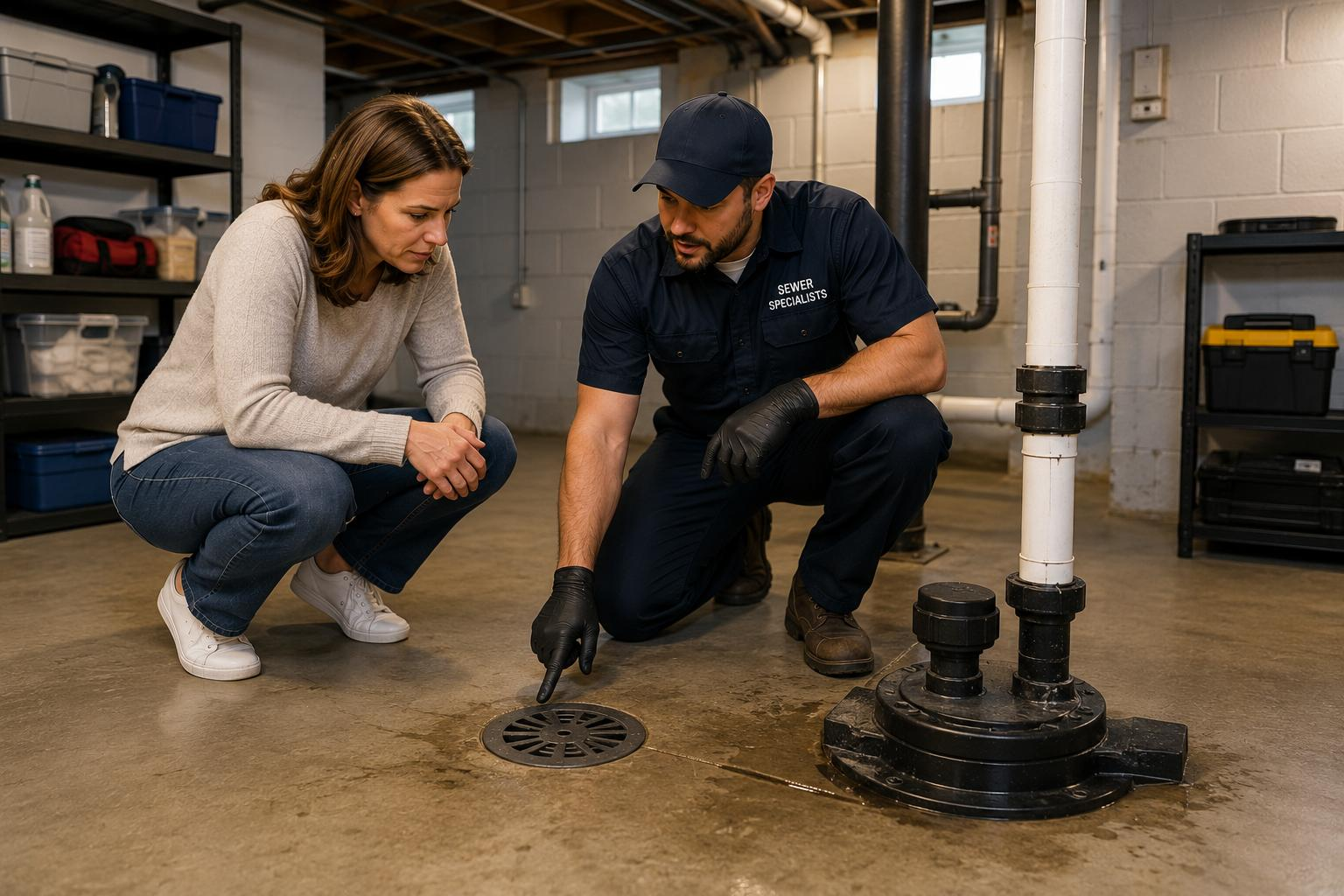
Basement sewer backups are one of the most stressful plumbing problems a homeowner can experience. When wastewater comes up through a basement floor drain, shower, toilet, or laundry sink, the issue can quickly move from an inconvenience to a cleanup and property damage concern.
The best way to prevent basement sewer backups is to reduce blockage risks in the private sewer line, maintain accessible cleanouts, avoid flushing problem materials, manage tree root intrusion, consider backwater protection when appropriate, and pay attention to early warning signs before wastewater enters the home.
For Chicago homeowners, basement backup prevention deserves special attention. Many homes have older sewer lines, mature trees, below-grade plumbing fixtures, finished basements, and exposure to heavy rain events that can stress both private and municipal sewer systems.
Key Takeaways
- Basement sewer backups often happen because the main sewer line is blocked, restricted, damaged, or overwhelmed.
- Preventing backups starts with routine sewer maintenance and better drain habits inside the home.
- Tree roots, grease, wipes, pipe damage, and heavy rain can all contribute to basement backups.
- A backwater valve may help protect some homes from municipal sewer surcharge events.
- Sump pumps and sewer backup prevention systems solve different problems.
- Chicago homes with finished basements and older sewer lines should be especially proactive.
How Can Homeowners Reduce Basement Sewer Backup Risk?
Homeowners can reduce basement sewer backup risk by keeping the main sewer line clear, scheduling inspections when symptoms appear, maintaining the sewer cleanout, avoiding wipes and grease, managing tree roots, and considering a backwater valve if the home is vulnerable to sewer surcharges.
No single step prevents every possible backup, but a layered prevention strategy can lower the chance of avoidable wastewater problems in the basement.
Why Sewer Backups Often Show Up in the Basement
Basement fixtures are usually the lowest plumbing points in the home. When wastewater cannot move properly through the main sewer line, it often seeks the lowest available exit.
That may be a:
- Basement floor drain
- Basement shower or tub
- Basement toilet
- Laundry sink
- Utility room drain
- Below-grade bathroom fixture
This is why a main sewer line problem may appear as a basement problem first. The issue may not be the basement drain itself. It may be a blockage, restriction, or pressure issue farther downstream.
For broader prevention strategies, see How to Prevent Sewer Line Backups.
Common Causes of Basement Sewer Backups
Main Sewer Line Blockages
A blockage in the main sewer line can prevent wastewater from leaving the home. When water continues to be used inside the house, pressure builds behind the restriction and wastewater can back up through basement drains.
Common blockage materials include:
- Grease
- Wipes
- Paper towels
- Sanitary products
- Food debris
- Sludge
- Tree roots
Tree Root Intrusion
Tree roots enter sewer lines through cracks, gaps, or loose joints. Once inside, they catch paper, grease, wipes, and debris until the pipe becomes restricted.
Chicago homes with mature trees nearby should pay close attention to root risk. More detail is available in Tree Root Prevention for Sewer Lines.
Grease and Improper Flushing
Many basement backups begin with everyday drain habits. Wipes, grease, paper towels, cotton products, and hygiene items may clear the toilet or sink but still create problems inside the sewer line.
For a practical household list, read What Not to Flush: Protecting Your Sewer Line.
Damaged or Aging Sewer Pipes
Older sewer lines may crack, collapse, settle, or separate. A damaged pipe can trap debris and cause recurring blockages even after cleaning.
Heavy Rain and Municipal Sewer Surcharges
During intense rainfall, municipal sewer systems may experience heavy flow conditions. If wastewater flows backward toward a home, basement drains may be vulnerable.
Private sewer maintenance cannot prevent every public sewer surcharge, but it can reduce avoidable restrictions in the homeowner’s own line.
Start With Routine Sewer Line Maintenance
Preventing basement sewer backups begins with maintaining the sewer line before it becomes fully blocked.
A practical maintenance approach may include:
- Knowing where the main sewer line runs
- Keeping the cleanout accessible
- Scheduling inspections when symptoms appear
- Cleaning the line when buildup or roots are present
- Tracking prior clogs and backup history
- Addressing recurring issues instead of repeatedly clearing them
For a full overview, see Sewer Line Maintenance for Homeowners.
Homeowner decision point: If the same basement drain backs up repeatedly, the issue may not be that drain. It may be a main sewer line restriction, root intrusion, pipe defect, or surcharge condition that needs diagnosis.
Use Sewer Camera Inspections Before Problems Escalate
A sewer camera inspection can help identify the cause of recurring basement backup symptoms. Instead of guessing, homeowners can see whether the line contains roots, grease, debris, cracks, offsets, or low spots.
Inspection can help answer important questions:
- Is the problem inside the private sewer line?
- Are roots present?
- Is the line partially blocked?
- Does the pipe have structural damage?
- Is cleaning likely to help?
- Is repair or replacement worth considering?
Camera inspection is especially helpful when backups recur after cleaning. Repeated clearing without diagnosis can become expensive and may delay the repair decision.
Keep the Sewer Cleanout Accessible
The sewer cleanout provides access to the main sewer line for inspections and cleaning. If a basement backup occurs, an accessible cleanout can make diagnosis and clearing less disruptive.
Homeowners should:
- Know where the cleanout is located
- Keep it visible and reachable
- Avoid covering it with mulch, concrete, flooring, or storage
- Make sure the cap is secure
- Watch for odors or wastewater around the cleanout
If the cleanout is hidden or damaged, sewer maintenance may require less convenient access through interior fixtures. For more detail, see Sewer Cleanout Maintenance: What Homeowners Should Know.
Consider Preventative Sewer Cleaning When Risk Is High
Preventative cleaning can remove roots, grease, sludge, and debris before they create a full blockage. Not every home needs routine cleaning on a fixed schedule, but some properties benefit from planned maintenance.
Higher-risk situations include:
- Older clay sewer lines
- Large trees near the sewer route
- Previous basement backups
- Recurring slow drains
- Known grease or sludge buildup
- Repeated main line clogs
The right cleaning schedule depends on pipe condition, past problems, and inspection findings. See How Often Should a Sewer Line Be Cleaned? for more guidance.
When Hydro Jetting May Help
Hydro jetting uses high-pressure water to clean the pipe interior. It may be useful for grease, sludge, debris, and certain root-related restrictions when the pipe is in suitable condition.
Hydro jetting is not appropriate for every sewer line, especially if the pipe is fragile, collapsed, or severely damaged. More information is available in Hydro Jetting for Preventative Sewer Maintenance.
Understand Backwater Valves
A backwater valve is designed to help prevent wastewater from flowing backward into a home during certain sewer surcharge conditions. It can be especially relevant for homes with basement fixtures or a history of storm-related backups.
Backwater valves are not a universal solution. They need proper installation, maintenance, and realistic expectations.
| Protection Measure | What It Helps With | What It Does Not Solve |
|---|---|---|
| Backwater valve | Reverse flow from sewer surcharge events | Clogs or damaged pipe upstream of the valve |
| Sewer cleaning | Roots, grease, sludge, and debris restrictions | Municipal sewer surcharge by itself |
| Sewer repair | Broken, collapsed, or severely damaged pipe | Public sewer overload conditions |
| Sump pump | Groundwater around the foundation | Sewage backing up through drains |
Homeowners considering this protection should review Backwater Valve Installation in Chicago.
Sump Pump Problems vs. Sewer Backup Problems
Basement water problems can be confusing because water may appear in similar areas for different reasons.
A sump pump generally handles groundwater collected around the foundation. A sewer backup involves wastewater coming from the drainage system.
These problems have different causes and different solutions.
- Clear water near the sump pit may point to groundwater issues.
- Sewage odor or wastewater from a floor drain may point to sewer backup.
- Water appearing during rain does not automatically mean the sump pump is the cause.
- Basement fixtures backing up after toilet, shower, or laundry use may suggest sewer line restriction.
For a detailed comparison, see Sump Pump vs Sewer Backup Problems: Understanding the Difference.
Chicago-Specific Basement Backup Considerations
Older Housing Stock
Many Chicago homes were built before modern sewer materials and drainage expectations. Older lines may include clay, cast iron, or previous repair sections that behave differently as they age.
Finished Basements
Finished basements increase the financial and practical risk of sewer backups. Flooring, drywall, furniture, laundry equipment, mechanical systems, and stored belongings can all be affected.
Mature Trees
Large trees are common in Chicago neighborhoods. Root intrusion is a frequent contributor to repeated sewer restrictions, especially in older clay lines.
Heavy Rain Events
Chicago’s drainage systems can face significant stress during heavy rain. Homeowners in areas with repeated storm-related basement backups may need to evaluate both private sewer line condition and backflow protection options.
Additional seasonal guidance is available in Preventing Sewer Problems During Heavy Rain.
More homeowner prevention topics are available in the Prevention & Maintenance hub.
Cost Factors for Basement Sewer Backup Prevention
Prevention costs vary because the right solution depends on the source of the risk. A simple maintenance issue is different from a failing sewer line or repeated municipal surcharge exposure.
Common cost factors include:
- Whether a sewer inspection is needed
- Whether cleaning is preventative or emergency
- Whether roots or grease are present
- Whether the sewer cleanout is accessible
- Whether a backwater valve is being considered
- Whether excavation is required
- Whether the basement has already been damaged
- Whether pipe repair or replacement is needed
Homeowners budgeting for ongoing maintenance may find Sewer Line Maintenance Plan Cost helpful.
Important: Prevention costs are usually easier to plan for than emergency cleanup, restoration, and repair after sewage enters a finished basement.
Warning Signs of a Basement Sewer Backup Risk
Basement sewer backups often give warning signs before a major event. Homeowners should pay attention when symptoms affect multiple fixtures or appear near the lowest drains.
- Basement floor drains smell like sewage
- Water bubbles from a floor drain
- Toilets gurgle when laundry drains
- Water backs up into a basement shower or tub
- Several drains slow down at once
- Clogs return after being cleared
- The cleanout shows standing wastewater
- Backups occur during heavy rain
These symptoms may indicate a private sewer restriction, root intrusion, pipe damage, or a surcharge condition. The pattern matters, so homeowners should document when symptoms occur.
Common Basement Backup Prevention Mistakes
- Assuming every basement water problem is caused by the sump pump
- Ignoring sewer odors from basement drains
- Flushing wipes or paper towels
- Pouring grease into kitchen drains
- Waiting for a backup before inspecting the sewer line
- Cleaning the line repeatedly without diagnosing the cause
- Covering or losing access to the sewer cleanout
- Assuming a backwater valve requires no maintenance
- Finishing a basement without considering sewer backup risk
Practical Basement Backup Prevention Checklist
- Locate the sewer cleanout and keep it accessible
- Avoid flushing anything except human waste and toilet paper
- Keep grease, wipes, and food debris out of drains
- Schedule inspection if multiple drains slow down
- Monitor large trees near the sewer route
- Consider preventative cleaning if roots or buildup are documented
- Evaluate backwater protection if storm backups are a concern
- Review insurance coverage for sewer or water backup endorsements
- Keep valuable belongings elevated in vulnerable basement areas
- Document prior backup dates and weather conditions
Frequently Asked Questions
What causes sewage to back up into a basement?
Sewage can back up into a basement when wastewater cannot flow properly through the main sewer line or when sewer flow reverses during surcharge conditions. Causes may include roots, grease, wipes, debris, pipe damage, or heavy rain stress on the sewer system.
Can a backwater valve prevent all basement sewer backups?
No. A backwater valve may help protect against certain reverse-flow conditions, but it does not fix private sewer clogs, damaged pipe, or backups caused by issues upstream of the valve.
How do I know if the problem is my sump pump or sewer line?
Clear groundwater near the sump pit often points to a sump or drainage issue. Wastewater, sewage odor, gurgling drains, or backups through basement fixtures may indicate a sewer problem.
Should I inspect my sewer line before finishing a basement?
It is often wise to evaluate sewer backup risk before investing in finished basement space. A sewer inspection can identify roots, damage, or restrictions that could affect future basement protection decisions.
Does homeowners insurance cover basement sewer backups?
Coverage depends on the policy. Many standard policies require a separate sewer or water backup endorsement for this type of damage. Homeowners should review coverage before a backup occurs.
Are Chicago basements more vulnerable to sewer backups?
Many Chicago homes have older sewer lines, mature trees, below-grade fixtures, and exposure to heavy rain events. These factors can increase basement backup risk, especially when maintenance is neglected.
What should I do if a basement floor drain smells like sewage?
Sewer odor may be caused by a dry trap, drain issue, venting problem, or sewer line concern. If the odor is recurring or paired with slow drains, gurgling, or backups, the sewer system should be evaluated.
Conclusion
Preventing basement sewer backups requires more than one solution. Homeowners should combine good drain habits, routine sewer line maintenance, accessible cleanouts, inspection when warning signs appear, tree root awareness, and backflow protection when appropriate.
For Chicago homeowners, this proactive approach is especially important because older sewer lines, finished basements, mature trees, and heavy rain conditions can increase the consequences of a backup.
The best time to reduce basement sewer backup risk is before wastewater appears on the floor. A clear prevention plan can help homeowners make better decisions, avoid unnecessary damage, and respond more confidently when warning signs appear.