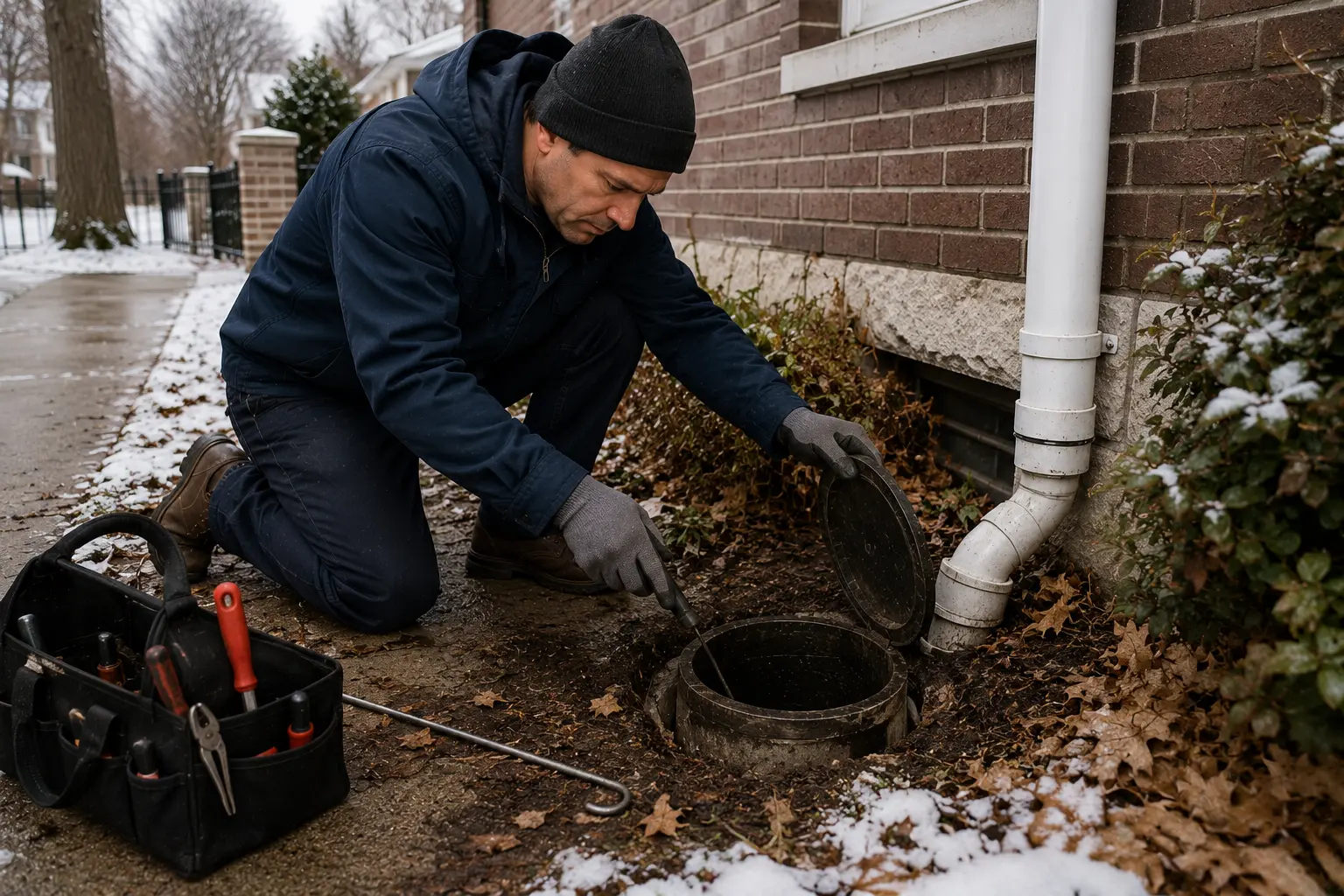
Winter can expose sewer problems that were easy to ignore during warmer months. Slow drains, partial blockages, root intrusion, poor cleanout access, grease buildup, and basement drainage issues can become more disruptive once freezing temperatures, snowmelt, holiday guests, and heavy indoor water use arrive.
The best way to prevent sewer problems before winter is to address warning signs early, keep grease and wipes out of drains, inspect older sewer lines when symptoms appear, maintain cleanout access, manage tree root risks, and consider preventative cleaning when the pipe condition supports it.
For Chicago homeowners, pre-winter sewer maintenance is especially important because many homes have older sewer lines, mature trees, basement plumbing fixtures, and exposure to freeze-thaw conditions. A small drainage issue in October can become a much larger problem during a cold snap, holiday gathering, or winter storm.
Key Takeaways
- Fall is a practical time to check for sewer warning signs before winter conditions arrive.
- Slow drains, recurring clogs, sewer odors, and basement floor drain issues should be addressed before freezing weather.
- Grease, wipes, roots, and aging pipes are common contributors to winter sewer problems.
- Chicago homes with older clay sewer lines or mature trees may need more proactive maintenance.
- Keeping the sewer cleanout accessible is important before snow, ice, and frozen ground make access harder.
- Preventative inspection and cleaning may reduce the chance of emergency sewer problems during winter.
What Should Homeowners Do Before Winter?
Before winter, homeowners should check for slow drains, sewer odors, gurgling fixtures, basement drain issues, and recurring clogs. They should also keep the sewer cleanout accessible, avoid flushing wipes or pouring grease into drains, monitor tree root risks, and schedule a sewer inspection if symptoms suggest a main line problem.
Homes with older sewer lines, previous backups, or mature trees nearby may benefit from preventative cleaning or a camera inspection before cold weather makes sewer problems harder to address.
Why Winter Can Make Sewer Problems Worse
Winter does not usually create sewer problems from nothing. More often, it exposes existing weaknesses in the drainage system.
A sewer line that already has roots, grease, sludge, a partial blockage, or poor slope may continue functioning until extra stress arrives. Cold weather, heavier indoor water use, holiday cooking, houseguests, snowmelt, and frozen ground can make the consequences more noticeable.
Common winter sewer risk factors include:
- More grease entering kitchen drains during holiday cooking
- Higher toilet, shower, and laundry use when guests visit
- Cold temperatures affecting exposed or vulnerable plumbing areas
- Snow and ice limiting access to outdoor cleanouts
- Frozen ground making emergency excavation more difficult
- Existing roots and buildup restricting wastewater flow
- Basement drains becoming the first sign of a backup
For a broader prevention overview, see How to Prevent Sewer Line Backups.
Start With a Pre-Winter Drain Check
Homeowners do not need special tools to notice early sewer warning signs. A simple walk-through before winter can help identify issues that deserve attention.
Check the following areas:
- Kitchen sink drains
- Bathroom sinks
- Showers and tubs
- Toilets
- Basement floor drains
- Laundry drains
- Utility sinks
- Sewer cleanout areas
Warning signs include:
- Multiple drains slowing at the same time
- Gurgling sounds from toilets or drains
- Water backing up into tubs or showers
- Recurring toilet clogs
- Sewer odors from basement drains
- Standing water near a cleanout
- Drain problems that worsen during laundry or heavy water use
Several slow drains at once may point to a main sewer line issue rather than a simple fixture clog.
Keep the Sewer Cleanout Accessible Before Snow and Ice
The sewer cleanout provides access to the main sewer line for inspections, cleaning, and emergency clearing. If the cleanout is buried under snow, blocked by stored items, covered by landscaping, or hidden behind basement clutter, winter service can become more difficult.
Before winter, homeowners should:
- Locate the cleanout
- Clear leaves, mulch, debris, or storage from the area
- Make sure the cap is visible and secure
- Avoid piling snow directly over outdoor access points
- Take a photo of the cleanout location for reference
- Make sure basement cleanouts are not blocked by boxes or furniture
For more detail, review Sewer Cleanout Maintenance: What Homeowners Should Know.
Homeowner tip: If you cannot find your sewer cleanout in mild weather, it will be even harder to find during snow, ice, or a winter sewer emergency.
Reduce Grease Buildup Before Holiday Cooking
Winter often brings more cooking, baking, hosting, and food preparation. That can increase the amount of grease and food waste entering kitchen drains if homeowners are not careful.
Grease may move through a sink drain as a liquid, but it can cool, thicken, and stick to pipe walls. Over time, grease can trap food particles, wipes, paper products, and other debris.
To reduce grease-related sewer problems:
- Never pour cooking grease into the sink
- Let grease cool in a container before throwing it away
- Wipe greasy pans before washing them
- Use sink strainers to catch food scraps
- Avoid relying on hot water to “wash grease through”
- Limit heavy garbage disposal use with fibrous or starchy foods
Good drain habits are a simple but important part of Sewer Line Maintenance for Homeowners.
Stop Flushing Items That Can Create Winter Clogs
Winter sewer problems are often linked to household habits. More guests, more bathroom use, and holiday gatherings can increase the chance that wipes, paper towels, hygiene products, or other problem items are flushed.
Toilets should only be used for human waste and toilet paper.
Do not flush:
- Flushable wipes
- Paper towels
- Baby wipes
- Feminine hygiene products
- Cotton swabs
- Dental floss
- Cleaning wipes
- Diapers
- Cat litter
Even if a product clears the toilet, it can still catch inside the sewer line. This is especially true in older pipes with roots, rough surfaces, offsets, or grease buildup.
For a full household list, see What Not to Flush: Protecting Your Sewer Line.
Address Tree Root Problems Before the Ground Freezes
Tree root intrusion can restrict sewer flow at any time of year. But winter can make root-related problems more inconvenient because frozen ground and snow can complicate access, excavation, and emergency response.
If roots have been found in a prior sewer inspection, fall is a good time to review the line’s condition and determine whether cleaning or repair decisions should be made before winter.
Possible signs of root intrusion include:
- Recurring main line clogs
- Slow drains throughout the home
- Toilets gurgling during heavy water use
- Basement drain odors
- Backups that return after cleaning
- Known mature trees near the sewer route
For more guidance, see Tree Root Prevention for Sewer Lines.
Consider Sewer Inspection Before Winter if Warning Signs Exist
A sewer camera inspection can help determine whether a drainage issue is caused by roots, grease, debris, pipe damage, a belly, or an offset joint. This matters because cleaning is not always the right answer.
Inspection may be worth considering before winter when:
- Multiple drains are slow
- Basement drains smell or gurgle
- The home has a previous sewer backup history
- Roots have been found before
- The sewer line needs frequent cleaning
- The home is older and the sewer condition is unknown
- The basement is finished or used for storage
Inspection can help homeowners decide whether preventative cleaning makes sense or whether a structural issue needs attention.
When Preventative Sewer Cleaning Makes Sense
Preventative cleaning can remove roots, grease, sludge, and debris before the sewer line becomes fully blocked. It is not necessary for every home, but it can be useful for higher-risk properties.
Cleaning may be worth discussing before winter if:
- Roots are already documented
- The sewer line has recurring buildup
- Past clogs happened during heavy water use
- Previous backups occurred in winter or during holidays
- Several drains are showing warning signs
- A camera inspection shows a developing restriction
The right cleaning schedule depends on pipe condition and history. See How Often Should a Sewer Line Be Cleaned?.
Hydro Jetting Considerations
Hydro jetting may help remove grease, sludge, debris, and some root-related restrictions when the sewer line is structurally suitable. Older or damaged pipes should usually be inspected before hydro jetting is selected.
Learn more in Hydro Jetting for Preventative Sewer Maintenance.
Chicago-Specific Winter Sewer Considerations
Older Sewer Lines
Many Chicago homes were built with older sewer materials such as clay or cast iron. These lines may have cracks, joint separations, root intrusion, or rough interior surfaces that catch debris more easily.
Basement Plumbing
Basement floor drains, laundry sinks, and below-grade bathrooms are common in Chicago homes. If the main sewer line becomes restricted, the basement may show the first signs of trouble.
Homeowners with basement risk should review How to Prevent Basement Sewer Backups.
Snowmelt and Winter Rain
Chicago winters can include snow, ice, freeze-thaw cycles, and periods of rain. These conditions may reveal existing drainage problems around the home.
Finished Basement Risk
If a basement is finished, even a limited sewer backup can damage flooring, drywall, furniture, stored belongings, and mechanical equipment. Pre-winter prevention can be especially valuable for these homes.
More seasonal and maintenance topics are available in the Prevention & Maintenance hub.
Basement Backup Prevention Before Winter
Winter is a good time to think about basement backup risk because cleanup can be harder during cold weather, and basements often hold stored seasonal items, mechanical equipment, laundry areas, or finished rooms.
Before winter, homeowners should:
- Check basement floor drains for odors
- Watch for gurgling or bubbling when laundry drains
- Keep valuables elevated off basement floors
- Confirm the sewer cleanout is accessible
- Review prior backup history
- Consider whether backwater protection is appropriate
- Review insurance coverage for sewer or water backup endorsements
Backwater valves may be relevant for some homes with sewer surcharge risk. See Backwater Valve Installation in Chicago for more information.
Cost Factors for Pre-Winter Sewer Prevention
Costs vary depending on the condition of the sewer line and what kind of prevention is needed. A simple inspection is different from cleaning a root-filled line or repairing a damaged pipe.
| Pre-Winter Task | Purpose | Cost Factors |
|---|---|---|
| Drain habit improvements | Reduce avoidable buildup | Usually low cost, mostly behavior-based |
| Cleanout maintenance | Preserve sewer access | Cap condition, visibility, access issues |
| Camera inspection | Diagnose hidden pipe issues | Access, pipe length, reporting detail |
| Preventative cleaning | Remove roots, grease, sludge, or debris | Severity, cleanout access, cleaning method |
| Hydro jetting | Deep cleaning for suitable lines | Pipe condition, buildup, access, inspection needs |
| Backwater protection evaluation | Assess reverse-flow risk | Plumbing layout, basement fixtures, installation complexity |
For broader planning, see Sewer Line Maintenance Plan Cost.
Important: Pre-winter prevention is not about paying for every possible service. It is about identifying the home’s actual risks and addressing the problems most likely to cause disruption.
Common Mistakes Homeowners Make Before Winter
- Ignoring slow drains until cold weather arrives
- Pouring holiday cooking grease down the sink
- Flushing wipes when guests visit
- Letting outdoor cleanouts get buried by snow or debris
- Assuming basement sewer odors are harmless
- Waiting until frozen ground makes repairs harder
- Using chemical drain cleaners repeatedly instead of diagnosing recurring clogs
- Failing to review insurance before a backup occurs
- Assuming sump pump problems and sewer backups are the same issue
For help separating groundwater issues from sewer backups, see Sump Pump vs Sewer Backup Problems: Understanding the Difference.
Pre-Winter Sewer Maintenance Checklist
- Check all drains for slow flow or gurgling
- Look for sewer odors near basement drains
- Find and clear access to the sewer cleanout
- Stop flushing wipes, paper towels, and hygiene products
- Keep grease and food scraps out of kitchen drains
- Document recurring clogs or past backups
- Consider inspection if multiple fixtures show symptoms
- Review known tree root issues before freezing weather
- Keep basement valuables off the floor in vulnerable areas
- Review sewer backup insurance coverage
Frequently Asked Questions
Can sewer lines freeze in Chicago winters?
Properly installed sewer lines are usually deep enough to reduce freezing risk, but vulnerable sections, poor slope, low flow, exposed piping, or existing problems can create winter concerns. Slow drains or repeated clogs should not be ignored.
Should I clean my sewer line before winter every year?
Not every home needs annual cleaning. Cleaning should depend on pipe condition, root history, buildup, inspection findings, and prior backup problems.
Why do sewer problems show up during the holidays?
Holiday cooking, grease disposal, guests, heavier toilet use, laundry, and increased drain demand can expose a sewer line that was already partially restricted.
What is the most important sewer task before winter?
The most important step is to address warning signs early. Multiple slow drains, sewer odors, basement drain bubbling, or recurring clogs should be evaluated before cold weather makes problems harder to manage.
Can a backwater valve help during winter storms or snowmelt?
A backwater valve may help with certain reverse-flow sewer conditions, but it does not fix private sewer clogs or damaged pipe. It should be considered based on the home’s specific backup risk.
Does homeowners insurance cover winter sewer backups?
Coverage depends on the policy. Sewer or water backup damage may require a separate endorsement. Routine maintenance and preventable clogs are often treated differently from covered sudden losses.
Are older Chicago homes at higher winter sewer risk?
Many older Chicago homes have aging sewer lines, mature tree exposure, basement drains, and older plumbing layouts. These factors can increase the importance of pre-winter maintenance.
Conclusion
Preventing sewer problems before winter starts with recognizing that cold weather often exposes existing sewer weaknesses. Slow drains, root intrusion, grease buildup, hidden clogs, inaccessible cleanouts, and basement drain symptoms should be addressed before freezing conditions, snow, and holiday water use make problems more difficult.
For Chicago homeowners, pre-winter maintenance is especially valuable because older sewer lines, mature trees, basements, and seasonal weather can all increase risk. A practical plan may include better drain habits, cleanout access, inspection when warning signs appear, and cleaning when the line condition supports it.
The best time to deal with a developing sewer problem is before winter turns it into an emergency.