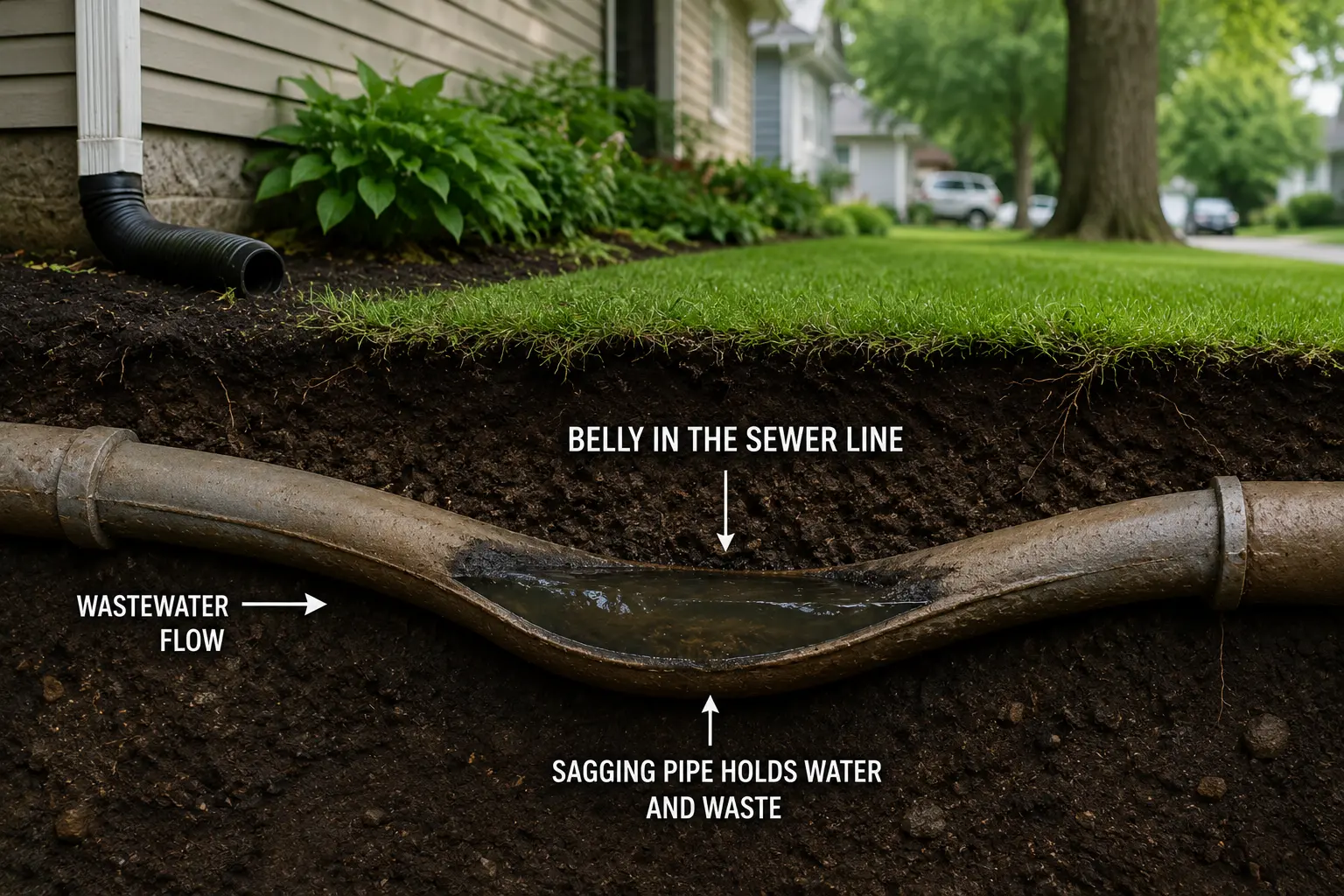
A sewer line belly is a low or sagging section of pipe where wastewater and solids collect instead of flowing smoothly toward the city sewer. Because the pipe has lost its proper slope, water can sit in the low spot, debris can build up, and the line may develop recurring clogs, slow drains, sewer odors, gurgling fixtures, or basement backups.
A belly is different from an ordinary clog. A clog is something blocking the pipe. A belly is a shape or slope problem in the pipe itself. Cleaning may temporarily remove waste from the low section, but it does not correct the sag that allows water and debris to collect again.
For Chicago homeowners, sewer line bellies matter because many homes have older sewer laterals, basements, clay pipe sections, settled soil, previous repairs, and tight access conditions. A belly may not always require full sewer replacement, but it should be taken seriously when symptoms keep returning or the camera inspection shows standing water in the line.
Key Takeaways
- A sewer line belly is a sagging or low section of pipe that holds water and waste.
- Common signs include recurring clogs, slow drains throughout the house, gurgling drains, sewer odors, and basement backups.
- Drain cleaning may clear buildup temporarily, but it does not fix the pipe slope.
- A sewer camera inspection is usually needed to confirm whether a belly exists and how severe it is.
- Small bellies may be monitored in some situations, but severe bellies can cause repeated blockages and backups.
- Chicago homes with older sewer laterals, clay pipe, soil settlement, or past sewer repairs may be more vulnerable.
- Repair decisions depend on the belly’s length, depth, location, severity, and whether it is causing repeated problems.
What a Sewer Line Belly Means for Homeowners
A sewer line belly means part of the sewer pipe has sagged or settled low enough that water no longer drains fully. Instead of flowing continuously away from the home, wastewater pools in the low spot. Over time, solids, paper, grease, and debris can collect there and cause recurring sewer problems.
A belly does not always mean the entire sewer line must be replaced. The decision depends on how much water is standing in the pipe, whether backups are happening, whether the belly is getting worse, and whether the affected section can be repaired. If slow drains, gurgling, sewer smells, or repeated clogs are present, the belly may be more than a minor inspection finding.
How a Sewer Line Belly Forms
Soil Settlement Beneath the Pipe
Sewer pipes need consistent support underneath them. If soil settles, washes away, or was not compacted properly during a previous installation or repair, part of the pipe can sink. That creates a low spot where water collects.
In older areas of Chicago, soil movement, previous utility work, old repairs, and years of ground shifting can all affect how a sewer lateral sits underground. A sewer line may have worked for years before settlement becomes noticeable.
Poor Pipe Installation or Improper Slope
A sewer line must be installed with the correct slope so wastewater can move by gravity. If a section was installed too flat, too steep, or unevenly supported, a belly can form or remain after the work is complete.
This can happen during older repairs, partial replacements, or work where the line transitions between different pipe materials. Even a small alignment issue can create a place where waste slows down.
Broken or Deteriorated Pipe Support
Older sewer pipes may crack, separate, shift, or lose support over time. If a section drops out of alignment, it can create a belly. Clay pipe sections may be especially vulnerable if joints separate or the surrounding soil changes.
A belly may also appear near areas with offset joints, previous repairs, or pipe sections that have moved. Homeowners comparing related pipe alignment issues may find Offset Sewer Pipe Joints Explained helpful.
Heavy Loads or Surface Changes Above the Sewer Line
Driveways, garages, patios, sidewalks, and other surface changes can affect soil and pipe conditions over time. Heavy loads do not automatically create a sewer belly, but they can contribute to settlement or stress if the pipe is poorly supported or already weakened.
In dense Chicago neighborhoods, sewer lines may run under concrete, gangways, yards, parkways, or other areas where access and soil conditions vary.
Common Signs of a Sewer Line Belly
Frequent Sewer Clogs
Recurring clogs are one of the most common signs of a sewer line belly. Wastewater may pass through the pipe, but solids can settle in the low section. Over time, that buildup narrows the line until another clog forms.
If the sewer line keeps clogging after cleaning, the problem may not be what was flushed recently. The line may have a physical condition that keeps collecting waste. The article Why Do Sewer Lines Keep Clogging? explains how repeated clogs can point to deeper sewer defects.
Slow Drains Throughout the House
A belly can restrict the main sewer line enough to affect multiple fixtures. Toilets, tubs, showers, laundry drains, and basement floor drains may all begin draining slowly because wastewater is moving through a partially obstructed low spot.
This is more concerning than one slow sink. If several fixtures are slow at once, homeowners should consider whether the main drain or sewer lateral is involved. For more detail, see What Slow Drains Throughout the House Can Mean.
Gurgling Toilets or Drains
Standing water in a belly can disrupt normal air movement in the drain system. As wastewater pushes through the low spot, air may be displaced and forced back through toilets, tubs, or floor drains.
Gurgling is not proof of a belly by itself. But gurgling paired with slow drains, recurring clogs, or basement drain activity can be an early warning sign of a larger sewer problem.
Sewer Odors
A sewer line belly can hold waste long enough to create odor problems. Homeowners may notice sewage smells near basement drains, laundry areas, lower-level bathrooms, or utility rooms.
Sewer odors can come from many sources, including dry traps and toilet seals. However, when odor appears with slow drains or repeated clogs, the main sewer line should be considered. The guide Why Your House Smells Like Sewage covers odor patterns in more detail.
Basement Sewer Backups
If buildup in the belly becomes severe, wastewater can back up into the home. In many Chicago homes, the basement is the first place this becomes visible because basement floor drains, laundry drains, and lower-level fixtures are often the lowest openings in the system.
A backup caused by a belly may happen after heavy water use, laundry discharge, or repeated buildup in the sagging section. Homeowners dealing with this symptom should review Sewer Backup in Basement: Causes and Warning Signs.
How a Sewer Camera Inspection Identifies a Belly
A sewer line belly is usually confirmed with a camera inspection. The camera may show standing water in the pipe, submerged sections of the camera lens, debris collecting in one low area, or a section where the pipe no longer maintains proper slope.
A useful inspection should help answer several questions:
- Where is the belly located?
- How long is the affected section?
- How much water is standing in the pipe?
- Is the belly causing debris buildup?
- Is the pipe cracked, offset, or root-intruded in the same area?
- Is the rest of the sewer line draining normally?
- Is the problem near the house, under the yard, under concrete, or closer to the city connection?
The presence of standing water matters, but the full pattern matters more. A small low spot with no symptoms may be handled differently than a long belly that repeatedly causes backups.
Practical Homeowner Tip
If a contractor says the line has a belly, ask to see where the camera enters standing water and where it exits. The location, length, and severity of the low section are critical for deciding whether cleaning, monitoring, repair, or replacement makes sense.
How Serious Is a Sewer Line Belly?
A sewer line belly can be minor, moderate, or serious depending on how much it affects flow. Some bellies are discovered during inspection and may not be causing major symptoms yet. Others repeatedly collect waste and create backups.
| Inspection Finding | What It May Mean | Possible Concern |
|---|---|---|
| Short low spot with minimal standing water | The pipe may have a minor slope issue. | May be monitored if symptoms are limited. |
| Standing water covering part of the pipe | Wastewater is not draining fully. | Can collect solids and cause recurring clogs. |
| Long belly with debris buildup | The sag is affecting flow across a longer section. | More likely to cause repeated blockages. |
| Belly near basement drain path | Backups may show up in lower fixtures first. | Can increase basement backup risk. |
| Belly with roots or offset joints | Multiple pipe defects may be present. | Cleaning alone may not be reliable. |
| Belly with cracked or collapsed pipe | The pipe may be structurally failing. | Repair or replacement becomes more likely. |
Chicago-Specific Considerations
Older Sewer Laterals
Many Chicago homes have older sewer laterals that may include clay pipe, cast iron, or sections from past repairs. Over time, older materials can shift, crack, settle, or separate. A belly may develop where the pipe has lost support or where past work did not maintain consistent slope.
Clay Pipe and Joint Movement
Clay sewer pipe is made of sections, which means joints matter. If joints shift or soil settles beneath them, the line may develop uneven spots. A belly may also appear near cracked clay sections or pipe transitions.
If the camera inspection shows clay pipe damage along with a belly, Cracked Clay Sewer Pipes: Causes and Risks may help explain the related risks.
Basement Plumbing
Because many Chicago homes have basements, sewer line bellies can become especially disruptive. If a belly contributes to a main line restriction, wastewater may back up through floor drains, laundry drains, basement toilets, or lower-level showers.
Finished basements raise the stakes because a backup can affect flooring, drywall, trim, storage, and mechanical areas.
Concrete, Parkways, and Tight Access
If a belly requires repair, the location matters. A sag under open yard space may be less complicated than one under a basement floor, driveway, sidewalk, alley, garage slab, or parkway. Restoration can become a meaningful part of the total project.
Storm Timing and Heavy Water Use
Some homeowners notice symptoms during laundry, long showers, or heavy rain. A belly that is already holding water may become more noticeable when the system receives a large volume of water. Timing can help identify when the line is struggling.
Can a Sewer Line Belly Be Cleaned?
A sewer line belly can often be cleaned, but cleaning does not fix the belly itself. Mechanical cleaning or hydro jetting may remove debris from the low section and restore flow temporarily. The problem is that the pipe still has a low spot where waste can collect again.
Cleaning may be reasonable when:
- The belly is minor.
- The line has not backed up repeatedly.
- The pipe is otherwise in usable condition.
- The homeowner understands the issue may return.
- Inspection does not show collapse, severe cracking, or multiple defects.
Cleaning is less likely to be a lasting solution when the belly is long, holds significant water, collects debris quickly, or has already caused repeated backups.
Repair, Replacement, or Monitoring: How the Decision Is Made
The right response depends on the severity of the belly and the homeowner’s risk tolerance. A small belly discovered during inspection may not require immediate excavation. A severe belly causing repeated basement backups is a different situation.
Monitoring May Be Reasonable When
- The belly is short and minor.
- There are no backups.
- Drainage is mostly normal.
- The pipe is not cracked, collapsed, or heavily root-intruded.
- The homeowner has clear documentation of the inspection findings.
Cleaning May Be a Temporary Solution When
- The line is clogged because debris collected in the belly.
- The pipe can be cleared safely.
- The homeowner needs immediate drainage restored.
- The full repair decision needs more time.
Targeted Repair May Be Needed When
- The belly is limited to one section.
- The pipe is otherwise stable.
- The affected section is accessible.
- The repair can restore proper slope.
- The cost and disruption are reasonable compared with repeated backups.
Replacement May Be Considered When
- The belly is long or severe.
- Backups keep returning.
- The line has multiple defects.
- The pipe is cracked, collapsed, or root-intruded in several areas.
- Several repairs would be needed to correct the problem.
If a belly is part of a larger pattern of sewer failure, Signs Your Sewer Line May Need Replacement can help homeowners understand when replacement becomes more likely.
Cost Factors and Tradeoffs
The cost of addressing a sewer line belly depends on the location, depth, length, severity, access, repair method, and restoration needs. A minor belly that is monitored costs very differently from a buried section that must be excavated and reset to proper slope.
Important cost factors include:
- Length of the belly: A short sag may be simpler than a long section holding water.
- Depth of the pipe: Deeper sewer lines are usually more complex to access and repair.
- Location: A belly under a yard is different from one under a basement floor, sidewalk, driveway, or street area.
- Pipe material: Clay, cast iron, PVC, and mixed-material lines may require different approaches.
- Associated defects: Roots, cracks, offsets, or collapse can increase the scope.
- Restoration: Concrete, flooring, landscaping, and public-way restoration can affect total cost.
- Urgency: A belly discovered after a backup may require faster decisions.
- Insurance: Coverage depends on policy language, endorsements, cause of damage, and whether the issue is considered wear and tear or a covered event.
The key tradeoff is temporary relief versus long-term reliability. Cleaning may be less expensive upfront, but if the belly repeatedly collects waste, the homeowner may face ongoing service calls and backup risk.
When a Sewer Line Belly Becomes an Emergency
A sewer line belly is not always an emergency when it is first discovered. It becomes urgent when it causes active backups, prevents the home from draining, or threatens finished basement space with sewage damage.
Warning signs that the situation may be urgent include:
- Wastewater backing up through a basement floor drain
- Several fixtures refusing to drain
- Toilets bubbling or backing up during normal use
- Strong sewer odors with slow drainage
- Repeated clogs shortly after cleaning
- Standing wastewater in the home
- Camera footage showing severe standing water and debris buildup
If the problem has reached this point, homeowners may want to compare symptoms with When Does a Sewer Problem Become an Emergency?.
Common Mistakes Homeowners Make
Thinking Cleaning Fixes the Belly
Cleaning can remove debris from the low spot, but it does not restore the pipe’s slope. If the belly is severe, the same problem may return.
Ignoring Standing Water on Camera
Some standing water may be minor, but a long submerged section can be a significant finding. Homeowners should ask how much of the pipe is affected and whether debris is collecting there.
Assuming Every Belly Requires Full Replacement
Not every belly requires replacing the entire sewer line. Some may be monitored or repaired in one section. The decision depends on severity, symptoms, access, and the rest of the pipe condition.
Waiting for the Next Basement Backup
If a belly has already caused a backup, waiting may increase cleanup costs and reduce time for comparing options.
Comparing Quotes Without Comparing Scope
One contractor may propose cleaning. Another may propose spot repair. Another may recommend replacement. Homeowners should compare the camera findings, repair length, restoration work, permits, and exclusions before deciding.
Ignoring Related Defects
A belly may not be the only problem. Roots, cracked pipe, offset joints, and partial collapse can all appear in the same sewer line. The full inspection matters.
FAQ
What does a belly in a sewer line mean?
A sewer line belly means part of the pipe has sagged or settled, creating a low spot where water and waste collect. Because the pipe no longer drains fully, solids can build up and cause recurring clogs or backups.
Can a sewer line belly cause slow drains?
Yes. A belly can restrict flow by holding water and debris. If the problem affects the main sewer line, multiple drains in the house may slow down at the same time.
Can a sewer line belly cause a basement backup?
Yes. If waste builds up in the low section and blocks flow, wastewater may back up into the lowest drains in the home. In many Chicago homes, that means basement floor drains, laundry drains, or lower-level fixtures.
Can you fix a sewer line belly without digging?
It depends on the severity and the repair method being considered. Because a belly is a slope problem, some cases require excavation to reset or replace the affected section. Cleaning may help temporarily, but it does not correct the sag.
Does a sewer line belly always need replacement?
No. Some minor bellies may be monitored if they are not causing problems. Replacement or repair becomes more likely when the belly is severe, long, repeatedly clogged, or connected to backups and other pipe defects.
How is a sewer line belly diagnosed?
A sewer camera inspection is commonly used. The camera may show standing water, submerged pipe sections, debris collection, or a visible sag. The location and length of the belly help determine the next step.
Will homeowners insurance cover a sewer line belly?
Coverage depends on the policy, endorsements, cause of the belly, and resulting damage. Many policies treat settling, deterioration, and wear differently from sudden covered events. Sewer backup damage and service line repair may also be handled under separate coverage provisions.
Can a sewer line belly get worse over time?
It can. If soil continues to settle or the pipe continues to shift, the belly may hold more water and collect more debris. Even if it does not worsen structurally, repeated buildup can make symptoms more frequent.
Conclusion
A sewer line belly is a sagging section of pipe that holds water and waste instead of draining fully. It can cause recurring sewer clogs, slow drains, gurgling fixtures, sewer odors, and basement backups. The problem is not just a blockage; it is a slope or support issue in the pipe itself.
For Chicago homeowners, sewer line bellies deserve careful diagnosis because older sewer laterals, clay pipe, basements, soil movement, and access challenges can affect both the symptoms and the repair decision. Cleaning may provide temporary relief, but it does not fix a low section that continues collecting waste.
The best decision depends on the camera findings, severity of the belly, history of backups, pipe condition, and repair access. Homeowners should ask clear questions, compare scopes carefully, and decide whether monitoring, cleaning, targeted repair, or replacement is the most practical path forward.