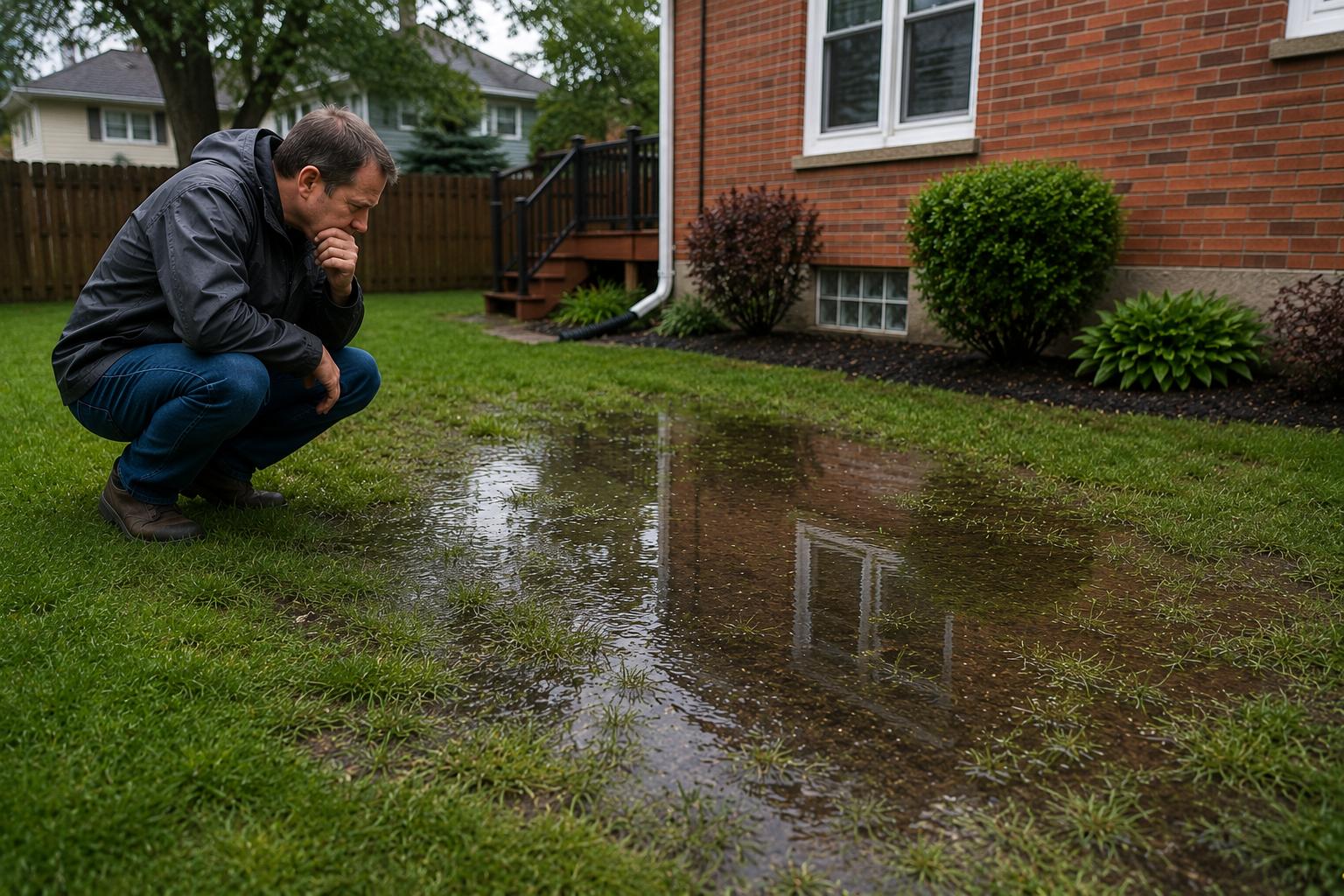
Water pooling in the yard can be caused by ordinary drainage problems, heavy rain, poor grading, downspouts, compacted soil, or irrigation issues. But it can also be a warning sign of a sewer problem when the pooling appears near the sewer line route, smells like sewage, keeps returning during normal household water use, creates soft or sinking soil, or appears with slow drains, gurgling toilets, recurring clogs, or basement backups.
For Chicago homeowners, this question can be tricky because many properties have small yards, gangways, parkways, sidewalks, older sewer laterals, clay pipe sections, mature trees, and paved surfaces that can hide what is happening underground. A sewer leak or damaged lateral may not always create a dramatic puddle. Sometimes the first clues are damp soil, a foul odor, unusually green grass, or recurring indoor drainage symptoms.
Water in the yard does not automatically mean the sewer line is broken. The key is to look at the pattern, location, smell, timing, and related plumbing symptoms. If yard pooling appears alongside sewer warning signs inside the home, the issue deserves more careful investigation.
Key Takeaways
- Water pooling in the yard may be caused by rain, grading, downspouts, sump discharge, or soil drainage, but it can also point to a sewer line problem.
- Sewer-related pooling is more concerning when it smells bad, appears near the sewer route, or happens during normal water use.
- Related warning signs include slow drains throughout the house, gurgling fixtures, sewer odors, recurring clogs, and basement backups.
- Older Chicago homes with clay sewer pipes, mature tree roots, and compact lots may be more vulnerable to hidden sewer lateral problems.
- A damaged sewer line may leak wastewater into the soil, cause soft ground, create odors, or contribute to sinkholes and settling.
- A sewer camera inspection or professional diagnosis may be needed when yard pooling is paired with plumbing symptoms.
- Homeowners should avoid assuming the problem is only landscaping until sewer-related warning signs are ruled out.
When Yard Water May Point to a Sewer Issue
Water pooling in the yard may be a sewer problem if it appears near the likely sewer line path, smells like sewage, creates soft or sunken ground, returns even when there has not been much rain, or happens along with slow drains, gurgling toilets, sewer smells inside the house, repeated sewer clogs, or basement drain backups.
The strongest warning sign is a pattern that connects outdoor water with indoor drainage problems. If the yard is wet and the home also has slow drains or sewage odors, the issue may involve a leaking, cracked, root-damaged, bellied, offset, or collapsed sewer line.
Common Non-Sewer Causes of Water Pooling in the Yard
Poor Yard Grading
Many yard pooling problems come from surface drainage. If the yard slopes toward a low spot, water may collect after rain or snowmelt. This is especially common where soil has settled, landscaping has changed, or paved surfaces direct water into one area.
Poor grading may create standing water without any sewer involvement. The difference is that grading problems usually relate to weather, surface runoff, and low areas rather than sewage odor or plumbing symptoms inside the home.
Downspouts Discharging in the Wrong Place
Downspouts can send large amounts of roof water into a small area. If they discharge near the foundation, a gangway, a low yard section, or a compacted area, pooling may develop quickly during storms.
Downspout-related pooling usually appears during or after rain. It should not normally cause sewer odors, slow drains throughout the house, or basement floor drain backups.
Compacted Soil or Clay Soil
Some soil drains poorly because it is compacted or naturally dense. Water may sit on the surface after rain, especially in shaded areas or places with heavy foot traffic.
Compacted soil can be a landscaping issue rather than a sewer issue. However, if the wet area is near the sewer route and appears with odor or soil sinking, homeowners should look more closely.
Sump Pump or Drainage Discharge
Some homes discharge sump pump or drainage water into the yard. If that discharge point is poorly located, the yard may stay wet. This type of water is usually not sewage, but it can still create drainage concerns.
The homeowner should identify where any discharge lines, downspouts, or exterior drains release water before assuming the sewer lateral is involved.
Signs Yard Pooling Could Be Sewer-Related
Foul or Sewage-Like Odor Outside
A bad smell near wet soil is one of the more important warning signs. Sewer water may produce a foul odor, especially if wastewater is leaking into the ground or if a damaged pipe is allowing sewer gas to escape.
Odor alone does not prove the sewer line is leaking, but water pooling with a sewage smell should not be treated like a normal puddle. If the smell is also noticeable inside the home, Why Your House Smells Like Sewage can help homeowners compare possible sources.
Soft, Sinking, or Unstable Soil
A damaged sewer line can saturate soil or allow soil to wash into the pipe. Over time, the yard may feel soft, spongy, or unstable. Small depressions or sunken areas may appear near the sewer route.
This can be especially concerning if the ground continues to settle or if the wet area appears near the foundation, sidewalk, parkway, driveway, or gangway. Soil movement can raise the urgency of diagnosis.
Unusually Green or Fast-Growing Grass
A leaking sewer line may create a wet, nutrient-rich area that causes one patch of grass to look greener or grow faster than the surrounding lawn. This sign is not always obvious on small Chicago lots, but it can be a clue when combined with odors or drainage symptoms.
Greener grass alone is not enough to diagnose a sewer issue. It matters most when it appears with wet soil, sewage smell, or repeated sewer problems inside the home.
Pooling Near the Sewer Line Route
Location matters. If pooling appears along the path where the private sewer lateral likely runs from the home toward the street, alley, parkway, or city connection, the sewer line becomes a more relevant possibility.
The exact sewer route is not always obvious. It may pass under a yard, gangway, basement floor, sidewalk, parkway, or paved area. If the wet spot lines up with known cleanouts, floor drains, or previous sewer work, it deserves attention.
Water Appears Without Much Rain
Standing water after a major storm may be a drainage issue. Water that appears during dry weather, after normal household water use, or without an obvious surface source is more concerning.
Homeowners should note whether the pooling appears after laundry, showers, dishwashing, or heavy indoor water use. That timing may suggest a connection to the plumbing system.
Indoor Warning Signs That Make Yard Pooling More Serious
Outdoor pooling becomes more concerning when it appears with indoor sewer symptoms. The combination can suggest that wastewater is not moving properly through the main sewer line.
| Indoor Symptom | What It May Suggest | Why It Matters With Yard Pooling |
|---|---|---|
| Slow drains throughout the house | Main sewer line restriction | The yard issue may be connected to a downstream pipe problem. |
| Gurgling toilets or drains | Air movement caused by poor flow or venting issues | May indicate pressure changes in the sewer line. |
| Basement floor drain backup | Wastewater reversing through the lowest drain | Suggests the main line may be blocked or damaged. |
| Frequent sewer clogs | Roots, belly, offset, crack, or partial collapse | Repeated clogs may point to the same defect causing outdoor symptoms. |
| Sewage smell inside | Sewer gas, contamination, or drainage problem | Odor inside and outside increases concern. |
| Water use worsens the yard wet spot | Possible wastewater leak | Timing may connect the pooling to household plumbing. |
If several drains are slow at the same time, the issue may be more than yard drainage. See What Slow Drains Throughout the House Can Mean for more detail on whole-house drainage symptoms.
Sewer Problems That Can Cause Yard Pooling
Cracked Sewer Pipe
A cracked sewer pipe can allow wastewater to escape into the surrounding soil. It can also allow soil, roots, and water to enter the line. Over time, this can create both exterior wet areas and interior drainage problems.
Cracked clay pipe is especially relevant in older Chicago homes. If the pipe wall has opened, roots and soil may enter while wastewater leaks out. Homeowners can learn more in Cracked Clay Sewer Pipes: Causes and Risks.
Tree Root Intrusion
Tree roots usually enter through an opening in the pipe, such as a crack, loose joint, or offset. Root intrusion can restrict flow, trap waste, and worsen pipe damage. If the damage allows wastewater to leak, pooling or wet soil may appear outside.
Tree roots are a common concern in older neighborhoods with mature trees. The related guide Tree Roots in Sewer Lines: Signs and Solutions explains how roots get into sewer lines and why they often cause recurring problems.
Offset Sewer Pipe Joints
An offset joint occurs when two pipe sections shift out of alignment. Waste can catch at the joint, roots can enter through the gap, and soil conditions around the pipe may change. Severe offsets may contribute to leaks, recurring clogs, or eventual pipe failure.
Sewer Line Belly
A sewer line belly is a low spot where wastewater sits instead of draining fully. A belly does not always leak into the yard, but it can cause repeated clogs, odors, and backups that appear alongside other sewer symptoms.
If a belly is suspected, What Is a Sewer Line Belly? explains why standing water inside the pipe can become a recurring problem.
Collapsed Sewer Line
A collapsed sewer line can block wastewater flow and may allow soil or debris into the pipe. Depending on the location and severity, it can contribute to backups, soggy soil, sinking ground, or foul smells outside.
Collapse is more serious than a routine clog because the pipe itself has failed. If yard pooling appears with repeated backups or severe drainage problems, homeowners should consider this possibility.
Chicago-Specific Considerations
Small Lots and Paved Surfaces Can Hide Clues
Many Chicago properties have limited yard space, side gangways, sidewalks, patios, garages, or paved areas. A sewer leak may not create a large visible puddle. Instead, water may appear along a seam, near a parkway, at a low spot, or inside the basement before the yard shows obvious signs.
Older Sewer Laterals May Be Vulnerable
Older private sewer laterals may include clay pipe, cast iron, or older repair sections. As materials age, pipes can crack, shift, offset, or collapse. A wet yard area near the sewer route should be evaluated in the context of the home’s age and sewer history.
Mature Trees Can Complicate Diagnosis
Mature trees can contribute to root intrusion where pipes have cracks or gaps. However, not every wet yard area near a tree is a sewer problem. The key is whether roots have entered the sewer line or whether the wet area lines up with drainage symptoms.
Basements Raise the Stakes
If yard pooling is connected to a main sewer restriction, the next visible problem may be a basement backup. Many Chicago homes have basement floor drains and lower-level plumbing that can receive wastewater when the main line is blocked.
If wastewater has already appeared in the basement, Sewer Backup in Basement: Causes and Warning Signs is a useful next resource.
Parkways, Sidewalks, and Public Way Issues
If the suspected sewer problem is near the sidewalk, parkway, alley, or street, repair planning may become more complex. Access, permits, restoration, and the exact location of responsibility can affect the next steps.
How Homeowners Can Narrow Down the Cause
Track When the Water Appears
Write down whether the pooling happens after rain, after laundry, after showers, after heavy household water use, or during dry weather. Timing can help separate surface drainage from sewer-related water.
Look for Odor
A sewage smell near the wet area is an important clue. Homeowners should avoid direct contact with suspicious water and should not treat foul-smelling pooling as ordinary rainwater.
Compare Indoor Drainage Symptoms
Check whether toilets flush normally, tubs drain properly, basement floor drains stay dry, and laundry drains without gurgling. Yard pooling paired with indoor symptoms is more concerning.
Identify the Likely Sewer Route
The sewer lateral usually runs from the home toward the municipal connection, but the exact route can vary. Cleanouts, previous repair areas, basement drain locations, and property layout may provide clues.
Consider Camera Inspection When Symptoms Overlap
A camera inspection can help identify cracks, roots, offsets, bellies, standing water, or collapse. It may also help locate the problem area so homeowners can understand whether yard pooling and sewer symptoms are connected.
Practical Homeowner Tip
Water pooling alone can be a drainage issue. Water pooling with sewage odor, slow drains, gurgling, recurring clogs, or basement backup symptoms should be treated as part of a broader sewer warning pattern. The Sewer Problems & Warning Signs hub can help compare related symptoms.
Repair, Drainage Fix, or Sewer Replacement: How the Decision Is Made
The right solution depends on the source of the water. A surface drainage problem needs a different response than a cracked or collapsed sewer line. Homeowners should avoid jumping to sewer replacement without evidence, but they should also avoid dismissing sewer warning signs as landscaping issues.
Surface Drainage Work May Be Enough When
- Pooling happens only after rain.
- There is no sewage odor.
- Indoor drains work normally.
- The wet area is clearly connected to downspouts or grading.
- No sewer defects are found during inspection.
Sewer Cleaning or Maintenance May Be Needed When
- There are slow drains or minor backups.
- The line has buildup but no major structural defects.
- Cleaning restores normal flow.
- The pipe drains properly after service.
Targeted Sewer Repair May Be Needed When
- A camera inspection shows one cracked, offset, or root-damaged section.
- The wet area lines up with the damaged pipe location.
- The rest of the sewer lateral appears stable.
- The problem is isolated and repair access is practical.
Replacement May Be Considered When
- The line has multiple cracks, offsets, or root entry points.
- The pipe has collapsed or is severely deteriorated.
- Repeated backups continue after cleaning.
- Several sections would need repair.
- Yard pooling appears with broad sewer failure symptoms.
If pooling is one sign among several sewer failure symptoms, Signs Your Sewer Line May Need Replacement can help homeowners understand when replacement becomes more likely.
Cost Factors and Tradeoffs
The cost to address water pooling in the yard depends on whether the source is surface drainage, a private sewer lateral, a damaged pipe section, or a broader sewer failure. The same visible puddle can lead to very different repair paths.
Important cost factors include:
- Cause of the pooling: Grading and downspout issues are different from sewer pipe damage.
- Location of the problem: A wet area in open soil is different from one near a basement wall, sidewalk, driveway, alley, or parkway.
- Pipe depth: Deeper sewer lines can make repair more complex.
- Pipe condition: Cracks, roots, offsets, bellies, and collapse all affect the scope.
- Inspection needs: Camera inspection or locating may be needed to confirm the source.
- Restoration: Landscaping, concrete, flooring, sidewalks, or parkways may require repair after sewer work.
- Urgency: Active sewage backup or unstable soil can make timing more urgent.
- Insurance coverage: Coverage depends on the policy, endorsements, cause of damage, and whether there is related backup or property damage.
The main tradeoff is avoiding both overreaction and delay. Not every puddle is a sewer emergency. But if wastewater is leaking underground or the pipe is failing, waiting can increase cleanup, excavation, and restoration risks.
When Yard Pooling Becomes an Emergency
Water pooling in the yard becomes more urgent when it is accompanied by sewage odors, active backups, sinking ground, or loss of normal drainage inside the home. These signs suggest the issue may be more than ordinary drainage.
Urgent warning signs include:
- Sewage smell near the wet area
- Water or sewage backing up into the basement
- Multiple drains refusing to drain
- Soft, sinking, or unstable ground
- Wet soil near the sewer route during dry weather
- Toilets gurgling or backing up
- Standing wastewater inside or outside the home
- Camera footage showing collapse or severe pipe damage
If the issue appears urgent, When Does a Sewer Problem Become an Emergency? can help homeowners compare the severity of their symptoms.
Common Mistakes Homeowners Make
Assuming All Yard Water Is From Rain
Rain is a common cause, but not the only one. Pooling that appears during dry weather, smells bad, or appears with indoor sewer symptoms should be investigated more carefully.
Ignoring the Sewer Route
The location of the pooling matters. Water near the likely sewer path, cleanout, parkway, or previous repair area may be more relevant than water in an unrelated low spot.
Overlooking Indoor Warning Signs
Slow drains, gurgling toilets, sewage smells, and basement drain activity can connect an outdoor symptom to a main sewer problem.
Touching or Disturbing Suspicious Water
If the water smells like sewage or appears contaminated, avoid contact. Keep children and pets away and treat the area as potentially unsafe until the source is known.
Approving Major Work Without Diagnosis
Yard pooling alone does not prove the sewer line needs replacement. Homeowners should ask for evidence, inspection findings, and a clear explanation of the source.
Waiting Until a Basement Backup Happens
If the pooling is connected to a sewer line defect, waiting may allow the problem to become a more damaging indoor backup.
FAQ
Can a sewer line leak cause water to pool in the yard?
Yes. A cracked, separated, or collapsed sewer line can leak wastewater into the surrounding soil. This may create wet areas, soft ground, sewage odors, or sinking soil near the sewer route.
How can I tell if yard pooling is from rain or a sewer problem?
Rain-related pooling usually follows storms and low yard drainage patterns. Sewer-related pooling is more concerning when it smells bad, appears during dry weather, lines up with the sewer route, or happens with slow drains, gurgling, recurring clogs, or basement backups.
Can tree roots cause water pooling in the yard?
Tree roots can contribute if they enter and damage a sewer line. Roots may worsen cracks or joints, restrict flow, and contribute to leaks or backups. Roots alone do not prove the yard water is sewer-related, but they are a common factor in older sewer laterals.
Is water pooling near the foundation a sewer warning sign?
It can be, but it may also be caused by grading, downspouts, foundation drainage, or rainwater. If the water has a sewage odor or appears with indoor drainage symptoms, the sewer line should be considered.
Should I get a sewer camera inspection for yard pooling?
A camera inspection may make sense when pooling appears near the sewer route, smells like sewage, happens during dry weather, or appears with slow drains, gurgling, sewer odors, recurring clogs, or basement backups. The inspection can help identify cracks, roots, offsets, bellies, or collapse.
Can a collapsed sewer line cause sinking soil?
Yes. If a sewer line collapses or allows soil to wash into the pipe, the ground above or near the line may settle. Sinking soil, soft spots, or depressions near the sewer route should be evaluated carefully.
Will homeowners insurance cover sewer-related yard damage?
Coverage depends on the policy, endorsements, cause of damage, and whether there is related property damage or sewer backup. Service line coverage and sewer backup coverage may have separate terms. Gradual deterioration, roots, settling, and wear may be treated differently from sudden covered events.
Is yard pooling with sewage smell an emergency?
It can be urgent, especially if the smell is strong, the ground is unstable, drains are backing up, or wastewater is entering the home. Keep people and pets away from suspicious water and arrange diagnosis promptly.
Conclusion
Water pooling in the yard is not always a sewer problem. It may be caused by rain, poor grading, downspouts, compacted soil, or drainage discharge. But pooling becomes more concerning when it smells like sewage, appears near the sewer route, happens during dry weather, or appears with slow drains, gurgling toilets, recurring clogs, or basement backups.
For Chicago homeowners, outdoor clues can be subtle because sewer laterals may run beneath small yards, gangways, sidewalks, parkways, or concrete. Older clay pipe, mature tree roots, soil settlement, and past repairs can all create conditions where a sewer problem shows up as wet ground before it becomes an obvious indoor backup.
The best approach is to compare the outdoor symptom with indoor warning signs, document timing and location, avoid contact with suspicious water, and use inspection when the pattern suggests a sewer issue. That helps homeowners distinguish ordinary yard drainage from a damaged sewer line that may need repair.