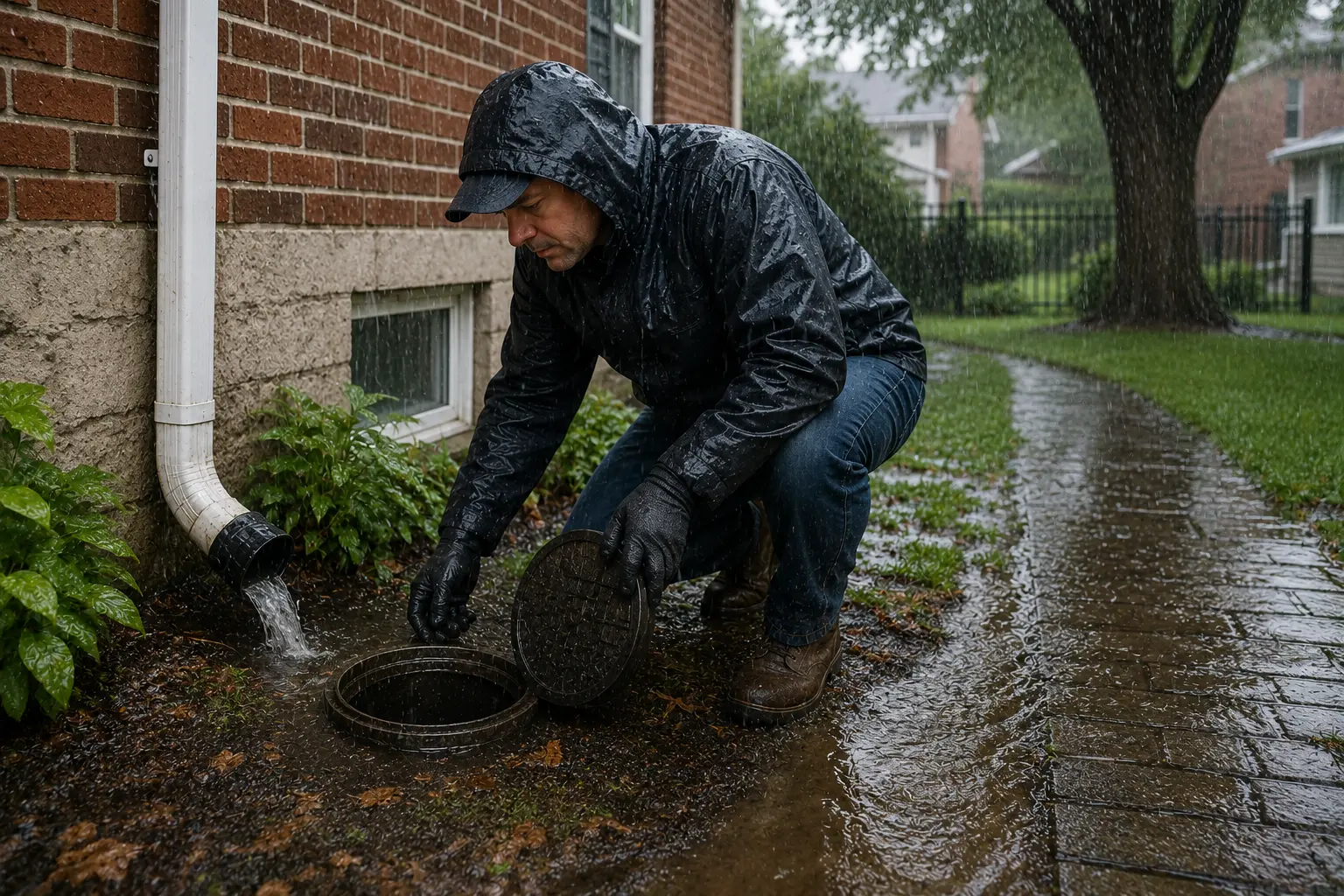
Heavy rain can turn a minor sewer concern into a major basement problem. When rainfall overwhelms drainage systems, fills low areas, or adds pressure to already restricted sewer lines, homeowners may notice gurgling drains, sewer odors, basement floor drain backups, or wastewater entering the home.
The best way to prevent sewer problems during heavy rain is to maintain the private sewer line before storms arrive, keep drains and cleanouts accessible, reduce household blockage risks, manage tree root intrusion, understand the difference between sump pump and sewer problems, and consider backwater protection when reverse sewer flow is a realistic concern.
For Chicago homeowners, heavy-rain sewer prevention is especially important because many homes have older sewer lines, mature trees, basement plumbing fixtures, and below-grade living or storage areas. A clear prevention plan can reduce avoidable backup risks and help homeowners respond more confidently when storms hit.
Key Takeaways
- Heavy rain can stress municipal sewer systems and expose private sewer line problems.
- Basement drains are often the first place sewer backup symptoms appear.
- Private sewer maintenance cannot prevent every municipal surcharge, but it can reduce avoidable restrictions.
- Tree roots, grease, wipes, debris, and damaged pipes can make heavy-rain backups more likely.
- Backwater valves may help some homes during reverse-flow sewer conditions.
- Sump pump problems and sewer backups are different issues that require different solutions.
How Can Homeowners Reduce Sewer Backup Risk During Heavy Rain?
Homeowners can reduce sewer backup risk during heavy rain by keeping the main sewer line clear, avoiding wipes and grease, maintaining cleanout access, inspecting older sewer lines when symptoms appear, managing tree root intrusion, and evaluating backwater valve protection if the home has a history of storm-related backups.
No prevention method can control the public sewer system, but a well-maintained private sewer line and proper backup protection can reduce the chance that avoidable problems turn into basement wastewater damage.
Why Heavy Rain Causes Sewer Problems
Heavy rain can create sewer problems in two main ways. First, it can overwhelm public sewer infrastructure. Second, it can expose weaknesses in the homeowner’s private sewer line.
If the public sewer system is under heavy load, wastewater may struggle to move away from properties as expected. In some situations, sewer flow can reverse toward homes, especially where basement fixtures are connected below grade.
At the same time, a private sewer line that is already restricted by roots, grease, wipes, sludge, or pipe damage has less capacity to handle normal household wastewater. During a storm, even small restrictions can become more noticeable.
For a broader prevention framework, see How to Prevent Sewer Line Backups.
Private Sewer Problems vs. Municipal Sewer Surcharge
One of the most important homeowner decision points is identifying whether the issue is coming from the private sewer line or from reverse pressure in the broader sewer system.
| Problem Type | Common Cause | Typical Signs | Possible Prevention Focus |
|---|---|---|---|
| Private sewer restriction | Roots, grease, wipes, debris, pipe damage | Slow drains, recurring clogs, backups during water use | Inspection, cleaning, repair, better drain habits |
| Municipal sewer surcharge | Heavy rain overwhelming sewer capacity | Backups during storms, especially through basement fixtures | Backwater valve evaluation, basement protection planning |
| Sump pump or groundwater issue | Groundwater around foundation or pump failure | Clear water near sump pit, seepage, pit overflow | Sump pump maintenance, discharge correction, backup power |
The source matters because the solutions are different. Cleaning a sewer line may help if roots or grease are restricting flow. A backwater valve may help with certain reverse-flow events. A sump pump repair may help with groundwater, but not sewage coming from floor drains.
Inspect and Maintain the Sewer Line Before Storm Season
The most practical heavy-rain prevention step is to address private sewer line problems before storms arrive. A sewer line that is already partially blocked is more vulnerable when drainage systems are under stress.
Maintenance may include:
- Reviewing prior sewer backup history
- Watching for slow drains or recurring clogs
- Scheduling a camera inspection when symptoms appear
- Cleaning the line when roots, grease, or buildup are present
- Repairing severely damaged pipe when cleaning is no longer enough
- Keeping the sewer cleanout accessible
A full maintenance overview is available in Sewer Line Maintenance for Homeowners.
Homeowner decision point: If sewer symptoms only appear during heavy rain, the issue may involve surcharge conditions. If symptoms also appear during normal water use, the private sewer line may need closer evaluation.
Keep the Sewer Cleanout Accessible
The sewer cleanout provides access to the main sewer line for inspection, cleaning, and emergency clearing. During heavy rain, fast access can make a major difference when drains are backing up or the cause is unclear.
Before rainy periods, homeowners should:
- Locate the cleanout
- Keep the cap visible and secure
- Clear mulch, soil, leaves, or storage from the area
- Avoid covering outdoor cleanouts with landscaping or hardscaping
- Keep basement cleanouts reachable
- Watch for wastewater, odors, or standing water around the cleanout
If wastewater appears at the cleanout during a rain event, that may indicate a blockage, surcharge, or overloaded line. More guidance is available in Sewer Cleanout Maintenance: What Homeowners Should Know.
Reduce Blockage Risks Inside the Home
Heavy rain is not the only cause of sewer backups. Household drain habits can make storm-related problems worse by reducing sewer line capacity before rain even begins.
Keep Grease Out of Drains
Grease can cool and harden inside pipes, trapping other debris. During heavy water use or storms, a grease-narrowed pipe may be more likely to back up.
Do Not Flush Wipes or Paper Products
Wipes, paper towels, feminine hygiene products, and cleaning wipes can catch on roots, grease, or rough pipe surfaces. Even items labeled flushable can contribute to sewer restrictions.
For a full list of items to avoid, see What Not to Flush: Protecting Your Sewer Line.
Use Drain Screens
Drain screens can reduce hair, food scraps, and debris entering the plumbing system. This is especially helpful in older homes where drain lines may already have rough interiors or partial restrictions.
Manage Tree Root Intrusion
Tree roots are a major sewer concern in many Chicago neighborhoods. Roots can enter older sewer lines through cracks, loose joints, or pipe separations. Once inside, they catch debris and restrict flow.
During heavy rain, a sewer line already narrowed by roots may have less ability to move wastewater away from the home.
Warning signs of root-related sewer risk include:
- Recurring main line clogs
- Slow drains throughout the home
- Toilets gurgling during heavy water use
- Basement drain odors
- Backups that return after cleaning
- Prior camera inspection showing roots
For prevention strategies, review Tree Root Prevention for Sewer Lines.
Consider Preventative Cleaning When Conditions Support It
Preventative sewer cleaning can remove roots, grease, sludge, and debris before a full blockage occurs. It is not necessary for every home, but it can be valuable for homes with documented buildup or prior backup history.
Cleaning may be worth considering before rainy seasons when:
- A camera inspection shows buildup or roots
- The home has a history of basement backups
- Clogs return after basic clearing
- Several drains slow down together
- The sewer line has known older clay pipe
- Grease or sludge has been found before
Cleaning frequency should be based on actual conditions, not a universal schedule. See How Often Should a Sewer Line Be Cleaned?.
When Hydro Jetting May Help
Hydro jetting may be useful for grease, sludge, debris, and certain root-related restrictions when the sewer line is structurally suitable. Older or damaged lines should often be inspected before high-pressure cleaning is used.
More information is available in Hydro Jetting for Preventative Sewer Maintenance.
Evaluate Backwater Valve Protection
A backwater valve is designed to help prevent wastewater from flowing backward into a home during certain sewer surcharge conditions. It can be especially relevant for homes with basement fixtures or prior storm-related sewer backups.
Backwater valves are not universal solutions. They need proper installation, maintenance, and access. They also do not fix private sewer clogs located upstream of the valve.
A backwater valve may be worth evaluating when:
- Backups occur during heavy rain
- The basement has floor drains or plumbing fixtures
- The home has a finished basement
- Neighbors report similar storm-related backups
- The private sewer line has been inspected and maintained
For a detailed explanation, see Backwater Valve Installation in Chicago.
Do Not Confuse Sump Pump Problems With Sewer Backups
Heavy rain can cause both sump pump problems and sewer backup problems, but they are not the same.
A sump pump handles groundwater collected around the foundation. A sewer backup involves wastewater coming through plumbing fixtures or drains.
Homeowners should compare the symptoms:
- Clear water near the sump pit may indicate a sump or groundwater problem.
- Sewage odor from a floor drain may indicate a sewer problem.
- Water entering through foundation cracks may point to seepage.
- Wastewater backing up into a tub, shower, or toilet suggests drain or sewer involvement.
For a full comparison, read Sump Pump vs Sewer Backup Problems: Understanding the Difference.
Chicago-Specific Heavy Rain Considerations
Older Sewer Lines
Many Chicago homes have older sewer lines that may include clay, cast iron, or previous repair sections. These lines may have cracks, offsets, root intrusion, or rough interiors that reduce flow capacity.
Basement Fixtures
Basement floor drains, laundry sinks, showers, and toilets are common in Chicago homes. Because these fixtures are low in the plumbing system, they may be the first place wastewater appears during a backup.
Homeowners with basement concerns should review How to Prevent Basement Sewer Backups.
Mature Trees
Tree roots near older sewer lines can create restrictions that become more noticeable during heavy rain or high water use.
Finished Basement Risk
Finished basements increase the consequences of a backup. Flooring, drywall, furniture, storage, laundry equipment, and mechanical systems can all be affected.
Additional homeowner resources are available in the Prevention & Maintenance hub.
What to Do Before a Heavy Rain Event
When heavy rain is expected, homeowners can take practical steps to reduce risk and prepare for warning signs.
- Avoid running unnecessary laundry or dishwashing during severe storms
- Keep basement valuables elevated in vulnerable areas
- Check that the sump pump is working if groundwater is a concern
- Confirm the sewer cleanout is accessible
- Avoid flushing wipes, paper towels, or problem materials
- Do not pour grease into drains
- Watch basement floor drains for odors or bubbling
- Review prior backup patterns during storms
- Know whether the home has a backwater valve and where access is located
Safety note: If water may contain sewage, avoid contact. Sewer backup water can present health risks and should be treated differently from ordinary rainwater seepage.
Cost Factors for Heavy-Rain Sewer Prevention
Costs vary depending on whether the home needs basic maintenance, cleaning, inspection, backflow protection, or structural sewer repair.
| Prevention Step | Purpose | Cost Factors |
|---|---|---|
| Camera inspection | Identify roots, damage, buildup, or blockages | Access, pipe length, reporting detail |
| Preventative cleaning | Remove roots, grease, sludge, or debris | Severity, cleaning method, cleanout access |
| Hydro jetting | Deep cleaning for suitable sewer lines | Pipe condition, buildup type, inspection needs |
| Backwater valve | Reduce reverse-flow sewer risk | Location, excavation, permits, plumbing layout |
| Pipe repair | Correct structural sewer defects | Depth, location, damage extent, restoration needs |
| Insurance review | Understand financial protection | Policy terms, endorsements, exclusions, deductibles |
For broader budgeting context, see Sewer Line Maintenance Plan Cost.
Common Mistakes During Heavy Rain
- Assuming every basement water problem is a sump pump issue
- Ignoring sewer odors from basement floor drains
- Running heavy water use during known surcharge conditions
- Waiting until a backup happens to locate the cleanout
- Assuming a backwater valve needs no maintenance
- Flushing wipes or paper towels during storms
- Pouring grease into drains before or during heavy rain
- Cleaning the sewer line repeatedly without diagnosing recurring problems
- Failing to review sewer backup insurance coverage before a loss
Warning Signs During or After Heavy Rain
Homeowners should take these signs seriously, especially if they happen repeatedly during storms.
- Basement floor drains bubbling
- Sewer odors from lower-level drains
- Water backing up into tubs, showers, or toilets
- Toilets gurgling when drains are used
- Cleanout overflow or standing water
- Multiple drains slowing at the same time
- Backups occurring only during heavy rain
- Repeated wet areas near the sewer route
These symptoms may point to private sewer restrictions, municipal surcharge conditions, groundwater issues, or a combination of problems. The pattern and source of water matter.
Frequently Asked Questions
Why does my basement drain back up during heavy rain?
Basement drain backups during heavy rain may be caused by municipal sewer surcharge, a restricted private sewer line, tree roots, grease buildup, pipe damage, or a combination of issues. A pattern of storm-related backups should be evaluated carefully.
Can sewer cleaning prevent heavy-rain backups?
Sewer cleaning can reduce backups caused by private line restrictions such as roots, grease, sludge, or debris. It may not prevent backups caused by public sewer surcharge conditions.
Will a backwater valve stop storm sewer backups?
A backwater valve may help with certain reverse-flow sewer conditions, but it must be properly installed and maintained. It does not fix clogs or damaged pipe upstream of the valve.
Should I avoid using water during heavy rain?
If your home has a known history of storm-related sewer backups, reducing unnecessary water use during severe storms may help limit stress on the drainage system. This does not solve the underlying problem, but it may reduce risk during active surcharge conditions.
How do I know if rainwater or sewage is in my basement?
Clear water near foundation walls or a sump pit may indicate groundwater. Water with sewage odor, waste, or backup through floor drains, showers, tubs, or toilets suggests sewer involvement.
Does homeowners insurance cover sewer backups during storms?
Coverage depends on the policy. Sewer or water backup damage may require a separate endorsement. Flooding, groundwater seepage, sump overflow, and sewer backup may be treated differently by insurers.
Are older Chicago homes more vulnerable during heavy rain?
Many older Chicago homes have aging sewer lines, mature trees, basement drains, and older plumbing layouts. These factors can increase backup risk when heavy rain stresses the sewer system.
Conclusion
Preventing sewer problems during heavy rain requires a layered approach. Homeowners should maintain the private sewer line, avoid drain habits that cause clogs, keep cleanouts accessible, monitor tree root risks, understand sump pump versus sewer symptoms, and evaluate backwater protection when storm-related backups are a concern.
For Chicago homeowners, heavy rain can expose both private sewer problems and broader sewer surcharge risks. A clear prevention plan helps reduce avoidable backups and makes it easier to choose the right solution when warning signs appear.
The most effective time to prepare is before the next storm, not after wastewater enters the basement.